


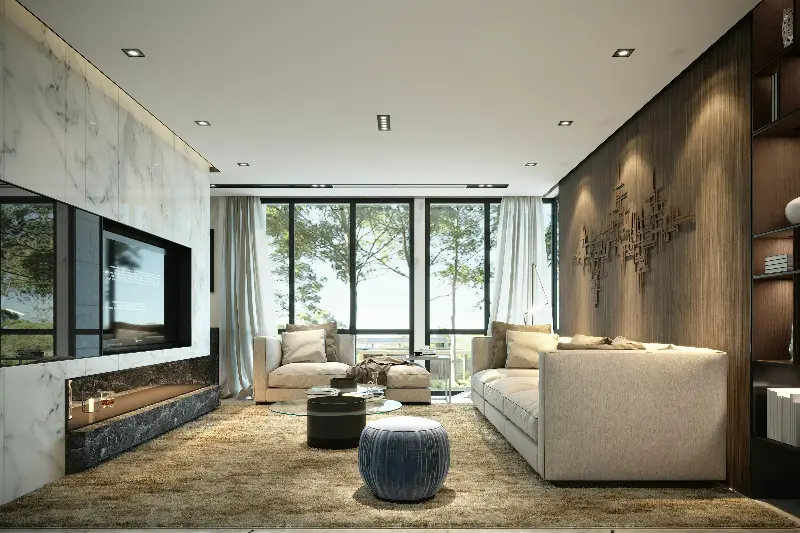
Ever notice how some rooms simply feel harmonious, as if every piece of art and every mirror seems intuitively placed? Chances are, these spaces have been designed with an age-old mathematical secret—the golden ratio. This fascinating proportion isn’t just for artists and architects; it’s a powerful tool you can use to transform your own home. By understanding how the golden ratio influences arrangement and lighting, you can create stunning interiors that appeal to both the eye and the soul.
The Allure Of The Golden Ratio
The golden ratio, often written as 1.618:1, is a proportion that appears in nature, from the swirl of a seashell to the branching of trees. For centuries, creators like Leonardo da Vinci and Le Corbusier have embraced its magic to craft visually pleasing works, whether in the form of paintings or iconic buildings.
In interior design, employing the golden ratio can make arrangements of art and mirrors appear balanced and intentional. When something aligns with this ratio, it subconsciously signals beauty and order to our brains, promoting a sense of relaxation and well-being within a space.
Arranging Art: Less Guesswork, More Harmony
Placing art on your walls can feel overwhelming, especially in a large or oddly shaped room. The golden ratio takes the guesswork out of the process by providing a formula for proportion. Rather than measuring blindly, consider this: if your wall is 100 inches wide, divide it by 1.618, and you get about 62 inches—the ideal width for your main art feature or grouping.
When hanging multiple frames, try grouping the largest piece at around 62% of the wall space, with smaller pieces organized around it. This arrangement not only creates balance but also draws the eye naturally to your focal masterpiece.
Spacing between frames is equally important. Too close, and your art feels cramped; too far apart, and the connection is lost. Use the golden ratio again by placing pieces about 60% of the width of the largest piece apart from one another. This subtle consistency brings cohesion to gallery walls or pairings.
