



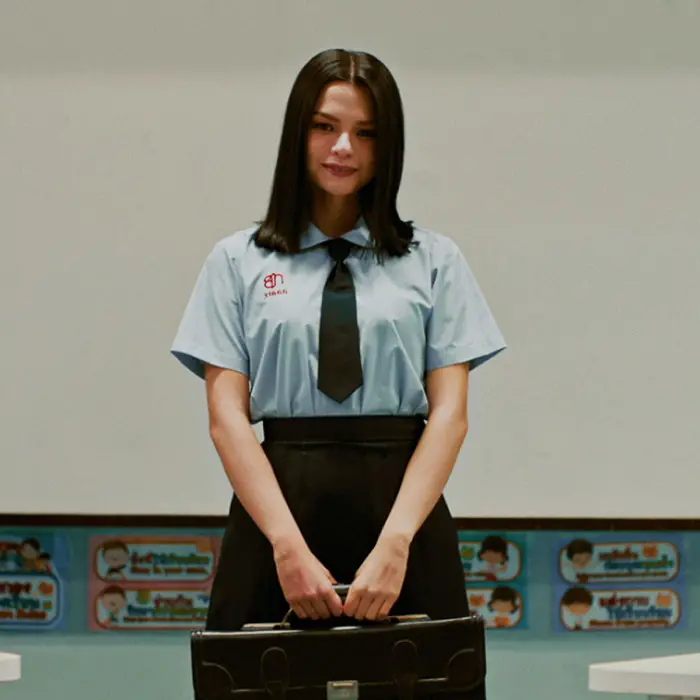
After becoming a national phenomenon, Girl From Nowhere returns in a bold new form with Girl From Nowhere: The Reset. This reimagined version introduces Rebecca Patricia Armstrong -- professionally known as Becky Armstrong -- as a new incarnation of "Nanno", the enigmatic student who moves from school to school, exposing uncomfortable truths beneath the surface of society.
This latest chapter is a collaboration between Gingerx and Sour Bangkok, the creative forces behind the series. At a recent press conference at Siam Paragon, key figures behind the project, including Varunporn Treethepvichit, content director of Gingerx, and Damisa Ongsiriwattana, co-founder of Sour Bangkok and CEO of Gingerx, shared insights into the origins of Girl From Nowhere, its cultural impact and the reasoning behind this ambitious "reset".
In the beginning, when Sour Bangkok was established, Damisa explained: "The intention was clear: to create a creative space centred on women's voices and perspectives.
"At the start, Sour was already an agency for women. We felt that a Thai series at that time still had certain norms -- women had to be demure and not too rebellious. Many inner qualities of women were suppressed. But women wanted to see main characters who didn't have to stay within those boundaries."
From that observation came the idea of a character who would defy those expectations entirely -- a figure who could embody rebellion, contradiction, and the unspoken frustrations many felt but rarely saw represented onscreen. That character became Nanno. Mysterious, unpredictable and often unsettling, Nanno arrives in different schools not simply as an observer, but as a catalyst-- revealing hypocrisy, cruelty and moral ambiguity within students and authority figures alike.
When Girl From Nowhere first premiered in 2018, it quickly resonated with audiences both in Thailand and internationally, driven by its sharp social commentary and unconventional storytelling. But Nanno's appeal goes beyond narrative structure or shock value.
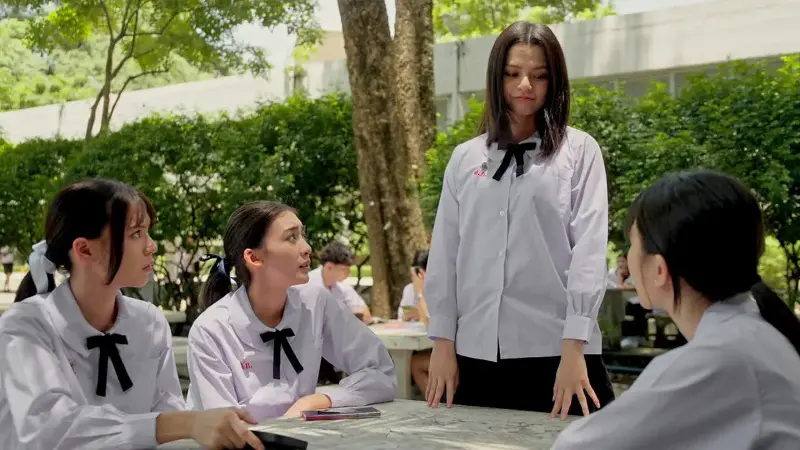
"She's more than just a character," the creators suggested. "She reflects deeper emotion, rebellion and even satire that stays with the viewer."
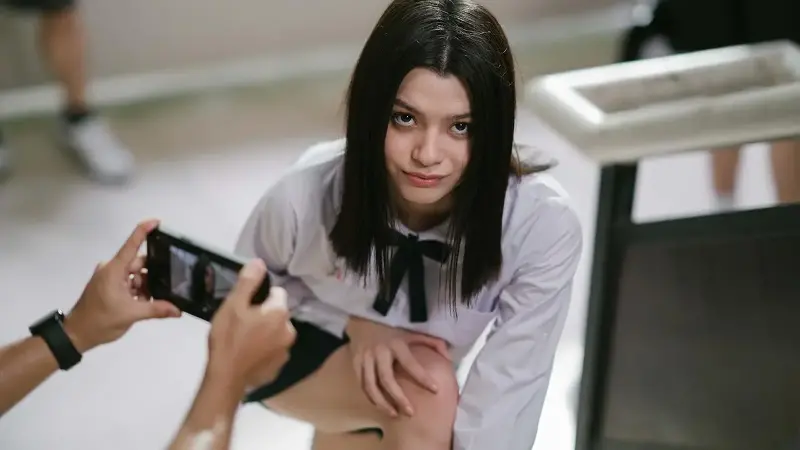
Central to this transformation is the casting of Becky Armstrong as the new Nanno. Introducing a new actress into such an iconic role was, by the creators' own admission, one of the project's greatest challenges. However, their decision was guided by a clear principle: rather than imitate the original, the new Nanno should emerge organically from the performer herself.
"When we saw Becky's clips, we felt that she wasn't trying to replicate the Nanno people had seen before," Varunporn recalled. "She was creating her own version of Nanno."
What sets Becky apart, they emphasise, is her adaptability. "Becky is like a canvas," Damisa added. "Each director can paint something different onto her. Whether it's impressionist, pop art or something else entirely -- she can adjust without losing consistency."
This flexibility allows the character to shift across episodes in tone and expression, while still maintaining an underlying identity.
"In Episode 1, you'll see one interpretation," said Damisa. "But if you continue to Episode 2, it changes. By Episode 3, it may feel like another character -- but the core is still Nanno."
Throughout the series, Nanno's true nature has never been explicitly defined. She has been described as a spirit, a force and even a "daughter of Satan", but never fully explained. This ambiguity is not a limitation -- it is the core of her power.
By leaving her identity open-ended, the creators allow each viewer to interpret Nanno differently. She becomes a mirror rather than a fixed figure, one that reflects the audience's own perceptions of justice, morality and consequence.
It is precisely this quality that makes her, in a sense, immortal. However, with that enduring relevance comes a creative challenge: How does one bring such a character back without repeating the past?
"It's been a long time since the last season," explained Varunporn. "We felt it was time to reset -- to make the show feel fresh again, and to address issues that are relevant to today's generation."
The concept of "reset" is not simply about updating the storyline, it is about rethinking the nature of Nanno herself.
"One key idea is that Nanno is not just a person, but a symbol, or even a spirit," she continued. "If she comes from nowhere, then her form doesn't have to stay the same."
This perspective opens the door to reinterpretation. In The Reset, Nanno is no longer tied to a single face or identity. Instead, she becomes something more fluid -- capable of transformation while still retaining her essential core.
This creative direction extends into the structure of the new season. Consisting of six episodes, The Reset employs six different directors -- an intentional choice designed to expand the series' storytelling range.
"The charm of this series has always been its variety," Damisa pointed out. "In previous seasons, one director might handle multiple episodes. But this time, with only six episodes, we felt that having six directors would give each story its own distinct voice."
Each episode functions almost as its own world, shaped by the perspective and style of its director. While the core themes remain consistent, the tone, pacing and interpretation vary, creating a viewing experience that is both cohesive and unpredictable.
"Once a director gets the script, it becomes their playground," said Damisa. "They can interpret it, experiment with it. We give them a lot of freedom, although we still discuss anything that might be too complex for audiences."
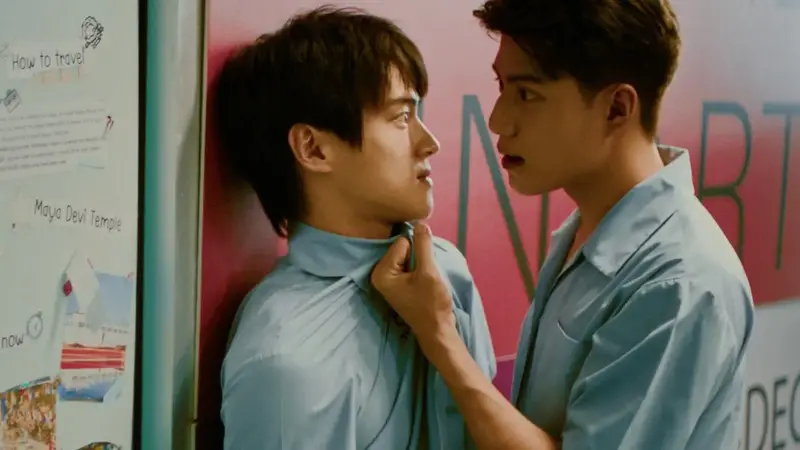
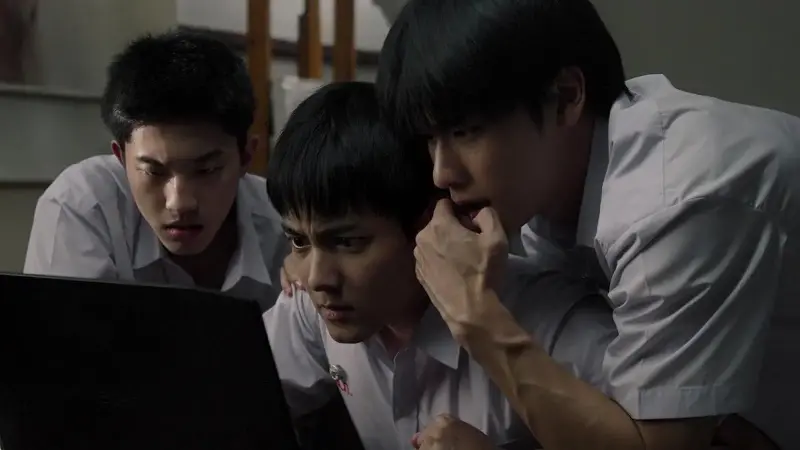
Despite these stylistic differences, the thematic focus of Girl From Nowhere remains firmly rooted in contemporary social issues. Topics such as school bullying, both in physical and even digital spaces continue to be central.
The creators point out that while society evolves, certain problems persist. Bullying, in particular, has not disappeared -- it has simply adapted, with online platforms amplifying its reach and impact.
"What's happening today isn't limited to one country any more," they noted. "Many of these issues are global. In this sense, The Reset is not just a continuation of the series, it is an attempt to recontextualise it within a rapidly changing world."