open menu

Universe

Webb has confirmed a galaxy, MoM-z14, whose light left just 280 million years after the Big Bang, after travelling about 13.5 billion years. The shock was not that one galaxy shone 100 times brighter than expected, but that JWST is finding bright galaxies from this era far more often than pre-Webb models predicted, and MoM-z14 even shows unusual nitrogen enrichment, hinting that star formation and chemical evolution were already moving faster than astronomers expected.
When Cancer Becomes A Parent: The Zodiac’s Natural Protectors And Heart Of Family Bonds
First detection of magnetic fields on exoplanets.
From Ripples To Giants: The Fascinating Physics Behind Ocean Waves And Their Energy Journey
How To Photograph The Stars: A Beginner’s Guide To Astrophotography With Basic Equipment
Deep inside the planet Neptune, the pressure is so extreme that carbon atoms are crushed into actual diamonds — which then rain downward in solid showers through the planet’s interior — and recent laboratory experiments have successfully recreated the conditions in which this happens, producing tiny synthetic diamonds in the process.
For a decade the Pink Planet was too faint for any ground telescope to study — and when James Webb finally caught its spectrum, the best fit to the light was an atmosphere hazed with salt clouds
When NASA lost contact with the Pioneer 10 spacecraft in January 2003, it was more than 12 billion kilometres from Earth and still faintly transmitting on a 30-year-old transmitter weaker than a refrigerator bulb, and the final signal took eleven hours to crawl back across the void before fading into noise forever.
Starship grounded after SpaceX ‘mishap’ during latest launch
NASA’s 3-Phase Plan for Moon Base Explained—As New Images Released
Unlocking Cancer’s Power In The Workplace: Loyalty, Sensitivity, And Team Spirit Unveiled
NASA names Artemis III astronauts: What crew will be paid for risky mission
Inside The Cancer Zodiac: Emotional Wisdom And The Secret Strengths Few Truly Understand
The leading explanation for how the Moon was born is that a world the size of Mars called Theia slammed into the young Earth and flung out the debris that became the Moon, and recent research suggests Theia itself never fully left, with two continent-sized blobs buried near our planet’s core possibly being the last remains of the world that struck us.
Discover The Most Comforting Dishes Every Cancer Zodiac Will Instantly Fall In Love With
Understanding Gravity: Discover the Invisible Force That Shapes Our Entire World and the Whole Universe
Mercury is not the hottest planet in the solar system despite sitting closest to the Sun, because Venus traps so much heat under its thick atmosphere that it stays hotter day and night.
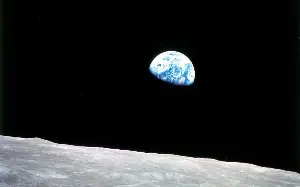
There is no permanently dark side of the Moon. The far side gets sunlight just like the near side — we simply don’t see it from Earth because the Moon is tidally locked, taking about as long to spin once as it does to orbit us once.
The Moon is so far from Earth that, using its average distance, you could line up every other planet in the solar system between us and still have about 4,400 kilometres left over.
When Cancer Loves: The Amazing Quiet Sacrifice And Loyal Heart Of This Zodiac