



Bangkok is often described in superlatives -- vibrant, chaotic, energetic, spiritual, fast-moving. But after living here for many years, I have come to see the city through a slightly different lens. Bangkok may be one of the most creatively catalytic cities in the world, not because it tries to be, but because of how it is built.
Bangkok thrives on contrast. Golden temples rise beside glass skyscrapers. Monks in saffron robes walk barefoot at sunrise while suited executives rush into air-conditioned towers. Street vendors craft culinary masterpieces a few steps away from Michelin-starred restaurants. The city does not resolve contradictions. It allows them to coexist.
Creativity itself is deeply paradoxical. It requires discipline yet surrender; intense focus yet complete detachment. Sometimes it takes hundreds of ideas to find one gem. Sometimes one breakthrough arrives quietly, out of nowhere.
In Bangkok, opposites sit side by side long enough for the mind to start connecting unlikely dots. Here, "thinking outside the box" feels unnecessary -- the box is already dissolving.
INTENSITY WITHOUT BURNOUT
Bangkok hums. It moves fast. It sweats. It pulses with activity. But what makes it powerful is not just its intensity. It is the rhythm.
You can move from a high-stakes business meeting to a quiet temple courtyard within the same hour. From navigating traffic to watching the river drift by at sunset. From a crowded mall to a park filled with monitor lizards and exotic birds.
Creative work requires oscillation: preparation and immersion, followed by release. Focus, followed by rest. Bangkok naturally supports that cycle. You work. You walk. You observe. You let go. And often, creative breakthrough arrives when you least expect it.
Psychologist Mihaly Csikszentmihalyi described "flow" as the "state of optimal experience" in which challenge and skill meet in perfect proportion. It is when time seems to disappear and work feels almost effortless.
Bangkok provides challenges daily. Cultural nuance. Improvisation. Language shifts. Rapid adaptation. Sensory richness. You cannot move through this city mechanically. You are alert. Engaged. Responsive.
That stretch keeps the mind agile. Combined with the city's natural rhythm of intensity and pause, it becomes easier to slip into moments of deep immersion. Bangkok keeps you awake without exhausting you.
EMOTIONAL WARMTH
An often overlooked ingredient of creativity is emotional climate. Thailand's reputation as the "Land of Smiles" reflects a genuine cultural preference for warmth and social harmony. Interactions tend to be polite, light and non-confrontational. When people feel psychologically safe -- not constantly judged or attacked -- their thinking expands.
Bangkok is surprisingly tolerant. Artists, entrepreneurs, academics, corporate leaders, tech founders and digital nomads -- individuality is visible and accepted. You can be who you truly are. Originality requires exactly that.
Creative work does not thrive in environments dominated by fear or rigid conformity. It thrives where people feel allowed to explore and be themselves.
MENTAL SPACE
Another underrated factor is practical liveability. In Bangkok, daily life can be remarkably frictionless. Great food is always just a few steps away. Healthcare is excellent, services are efficient, regional travel is convenient. The city is one of Asia's great aviation hubs, making the rest of the region only a few hours away.
Less logistical stress means more mental space. You can build stable routines and still be surrounded by constant novelty. That balance between groundedness and stimulation supports long-term creative performance.
Bangkok is a sensory ecosystem: colours, sounds, smells, architecture, rituals, markets, skylines. Fresh dots everywhere.
But there is also a strategic dimension. As a central gateway to Asia, Bangkok sees a constant influx of thinkers, founders, investors, designers and innovators passing through. Instead of travelling constantly to stay connected, the world often comes here.
Conversations cross-pollinate ideas from Singapore, Seoul, Jakarta, Tokyo and beyond. And when travel is required, the city's connectivity makes it swift and affordable.
Creative breakthroughs often happen when we connect ideas across domains. Bangkok provides both the dots and the connectors. As Steve Jobs once said, "Creativity is just about connecting things."
COMFORT WITH AMBIGUITY
Bangkok does not operate on rigid linearity: timetables shift, plans adapt, improvisation is normal. At first, this can feel unsettling. Over time, it builds resilience.
Creativity requires tolerance for ambiguity -- the ability to move forward without having all the answers. Bangkok prototypes itself daily: imperfectly, resourcefully and creatively. If you stay long enough, you begin to mirror that adaptability.
For many people, Bangkok is more than a destination. It is a turning point. Something about its rhythm -- intensity and release, stimulation and reflection -- creates space for creative insight.
The city invites both movement and pause. It is neither polished nor sterile, but alive and authentic. For anyone engaged in creative work -- whether in business, art, technology or education -- aliveness and authenticity are everything.
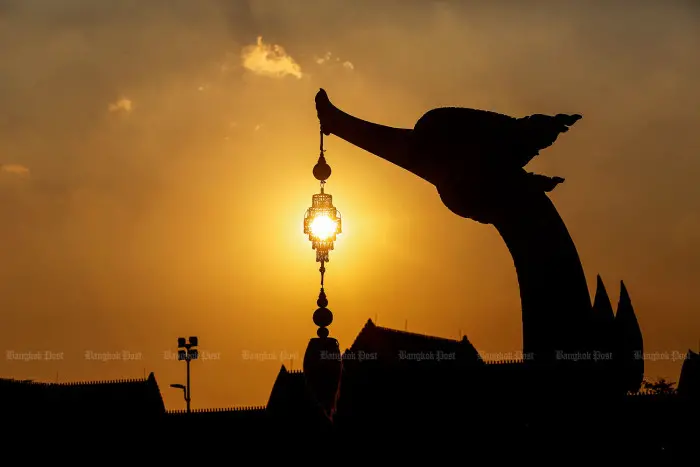
Perhaps that is why so many reinventions quietly begin here. I know this because my own professional reinvention began with a creative breakthrough here many years ago -- just as the sun was setting over Bangkok.
Dr Detlef Reis is the Founding Director and Chief Ideator of Thinkergy Limited (www.thinkergy.com), the Creative Breakthrough Company in Asia and the author of the book "Unleashing Wow!". He is also an innovation expert and creativity catalyst at the Institute for Knowledge & Innovation -- South-East Asia (IKI-SEA), Bangkok University. He can be reached at [email protected]