



Often referred to as "the voice of modern Bahrani cuisine", chef Tala Bashmi -- the UN Gastronomy Tourism Ambassador for the Gulf country -- was on her way to becoming a football star.
"When I was growing up, football was all I wanted to do. That was my dream; I wanted to be a professional footballer," says chef Bashmi.
"I went to university to study sports management to pursue football. However, in 2006, the only league you could play in professionally and be paid was in the US. So for you to actually make it to that league, you would have to be the top 0.01% compared to men where there are professional leagues in every country.
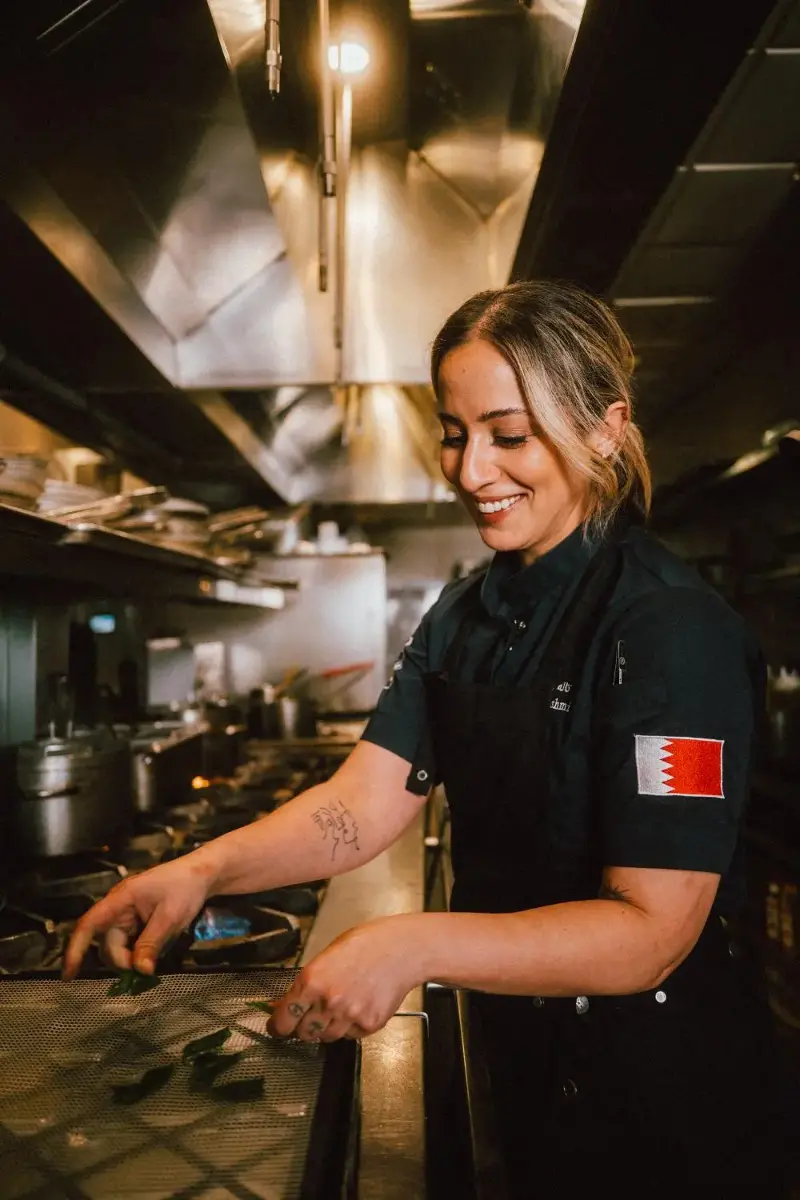
Chef Tala Bashmi. (Photos: Tala Bashmi)
"I soon realised that there's really no future in it. Even when I played with the national team, we didn't get a steady salary and we had to have a second job. Then I had an injury and couldn't continue studying, so I had to make a huge shift.
"This is when everything came crashing down and made me rethink life. I had to rediscover myself. I switched to the arts and combining the discipline of football with being a chef helped me become the chef I am."
Known for championing Bahrani cuisine, chef Bashmi says her culinary philosophy is ever-evolving.
"My philosophy and what's true to my heart is just my roots and my culture and kind of studying and understanding our history to then evolving our cuisine," she adds.
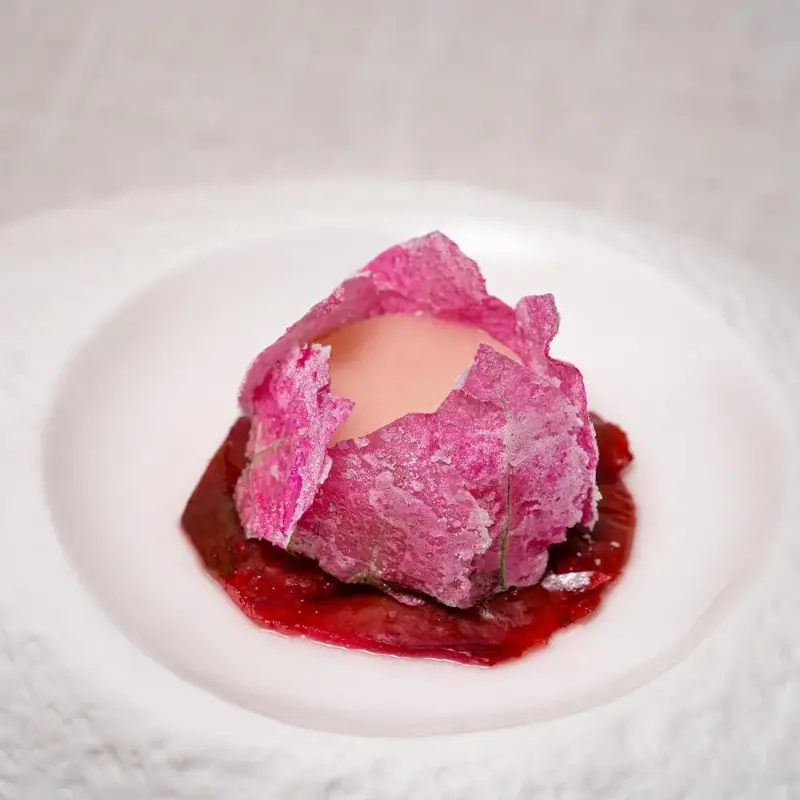
Looz with crystalised bougainvillae.
"Gulf cuisines all have links to each other, but Bahrain is unique because of our pearl-diving and fishing history.
"A lot of our dishes stand out in comparison and as part of my philosophy feature local seasonal ingredients, not for the trendy part, but because that's what makes it unique -- using an ingredient that is native to a country and is only available in a particular season.
"It's when you come to Bahrain and eat something in season. You probably can't eat it anywhere else. For me, that has been part of my philosophy and is luxury.
"Cuisines in the Gulf countries like Kuwait, Qatar, Oman, Saudi, Bahrain and the UAE is not just one thing. Our cuisine has a lot of influence from India, Iran and Portugal. Everyone that passed through the region over time, through the Silk Road, created who we are.
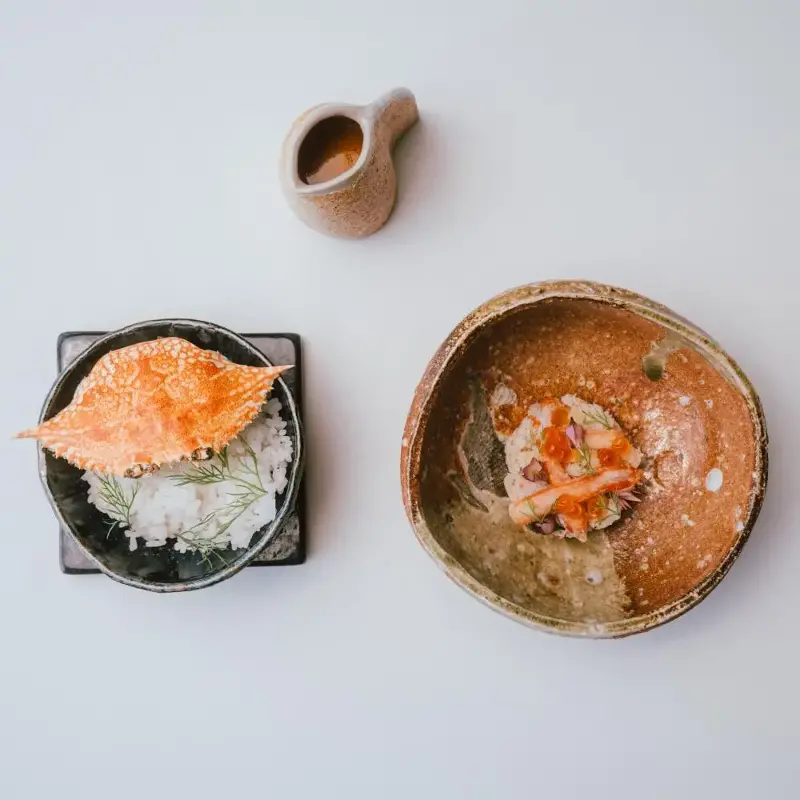
Saloonah and rice, chef Bashmi's signature crab.
"Every cuisine is built on necessity, so you will always see whatever is available being used the most wherever you are in the world.
"In our region, rice came from India, but now it is a staple that you will find in every household. Because we're an island, you'll see a lot of seafood and pickles on tables but that again is an influence from India.
"If I can describe a common Bahraini meal table, it would have rice sprinkled with saffron and zirish, which are blackberries from Iran. You will have a daal soup, fresh vegetable salad, crispy fried fish, a saloonah made with crabs and a bunch of seasonal pickles."
However, going from a traditional table to creating modern Bahraini cuisine hasn't been easy for chef Bashmi.
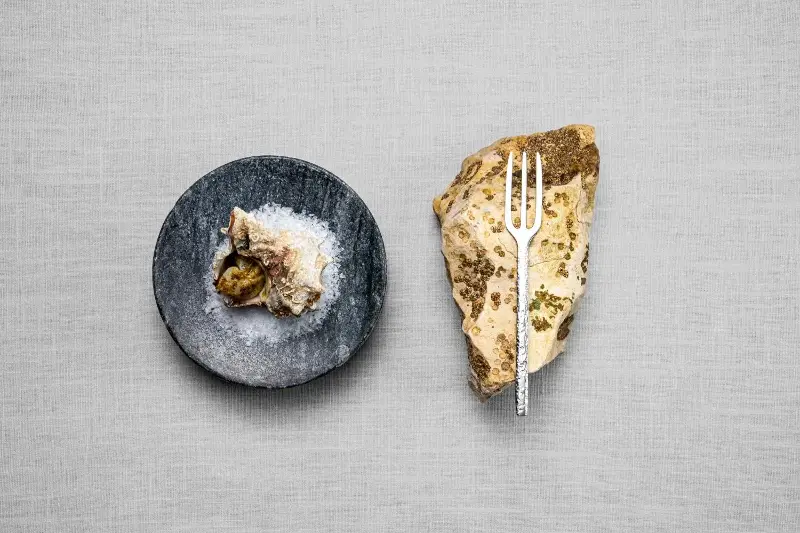
Kooz, a sea snail or whelk, with mehyawa butter and citrus oil.
"I like to say that it's nice to have a path that hasn't been walked on before because you can create your own rules. But it is challenging because there's no one you can look up to and be like, 'Hey, this is how it's been developed'," she says.
"So right now there are no rules. It's great. I create it and I do it in whatever way I see fit. So I follow a tasting menu format, but I also have an a la carte menu. For me, it's all about building flavours and anticipation."
As she gears up to open a new restaurant in Bahrain, her signature dishes are ever-evolving.
"Muhammar is a dish very unique to Bahrain. It's sweet rice cooked with date molasses and fried salty fish. I turn this into a bite," says chef Bashmi.
"Visually, you look at it and wouldn't guess if it was a dessert or if it was savoury. But in that bite with the flavour, you are immediately taken home to something that you know. Another dish, I would say is a signature is my crab saloonah.

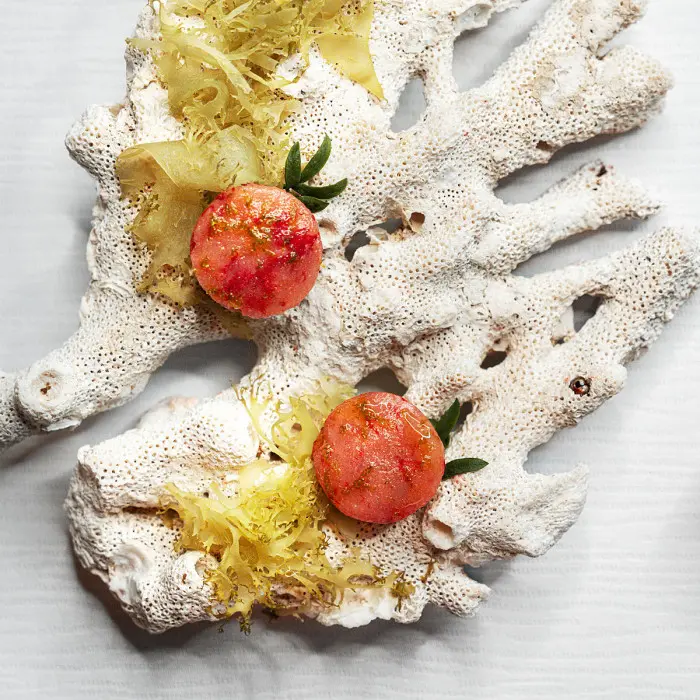
Triny 2.0 features the citrus fruit with labneh and jameed.
"It's an ever-evolving dish and one that is close to my heart as my dad makes it. It's not something I want to change too much from its essence. Sometimes you just want to eat good food, even in a tasting menu. I want warm, good, hearty, delicious, comforting.
"The triny dessert is another signature. Triny is a citrus fruit from Bahrain and traditionally made into a jam, flavoured with saffron, cardamom and nigella seeds. I decided to challenge myself and see how many different ways I could use it when it is in season. I confit and carry it wherever I go. I turn it into a jam ice cream, triny-cello, salt, oil and pickle."
In the future, chef Bashmi plans to open a school for chefs.
"Why are chefs in this region learning the foundations of European cuisine? Why aren't we learning the foundations of our own cuisine? Why are we not putting our recipes in history books?" she asks.
"I am thinking of putting down recipes from the Gulf countries and our food in a book and teaching the future generations not to forget it. This is a work in progress.
"A lot of my knowledge comes from my parents. My mum is Saudi and my dad's Bahrani, so I get a little bit of their food backgrounds. It's just really immersing yourself in people's homes and their grandmothers.
"And for me, it's just embracing the old and learning every day. There are still homes that make a specific fish sauce and I go there and learn from them. You have to keep this alive; people are forgetting it. Things are not written down as they are always communicated in a form of verbal stories. We need to document this, because we can't forget it.
"For me, it's learning that and transferring it and evolving it into something new while maintaining its integrity, its honesty and then doing my version, as well. But always keep that as the base."
Three years after winning the Middle East and North Africa's Best Female Chef, chef Bashmi was crowned winner of the Chefs' Choice Award last year, as part of the Middle East & North Africa's 50 Best Restaurants.
"To see a woman being championed and achieving greatness, is challenging in every region and field," she says. "I've worked in Europe and I know what it's like to be a woman in this field in Europe, and I know what it's like in our region. I think achieving anything of this standard is a challenge everywhere.
"If you look at the US, at Europe, you look at the top restaurants, the number of women in this industry is constantly growing. I think to have this achievement is about what you do with it. So all I do with it now is hope. It inspires the next generation to push and to do more and do better and kind of dream.
"Who thought this was possible and here I am. I'm living proof that hard work, hustle, passion and having kind of blinders on will get you somewhere."