



The very first movie I ever saw about Michael Jackson was 1988's Moonwalker. It was also one of the first films I ever paid to see in a cinema with my own money as a kid. Why? Because, like everyone else at the time, we all adored the King of Pop. He wasn't just a pop star -- he was a global phenomenon, something larger than life.
His stage persona, his precision-engineered dance moves, and a run of era-defining hits like Smooth Criminal, Dirty Diana and Man In The Mirror made that period feel almost untouchable. It was a magical time, driven by music and the excitement of pop culture -- long before the scandals and controversies that would later complicate his public image and leave fans divided, uncertain, and at times sceptical.
That's why Michael arrived with such weight behind it. Yet, for a film that carried this level of anticipation, its reception has been surprisingly underwhelming, with platforms like Rotten Tomatoes reflecting a notably low score. So what went wrong?
One important clarification: Michael is not a cradle-to-grave biopic. Instead, it presents fragments of Jackson's life, focusing primarily on his early years, from his time with the Motown soul of Jackson 5 in the 1960s to the beginnings of his solo career. This narrower scope is not inherently a flaw, but it does shape the film's priorities in a very specific way.
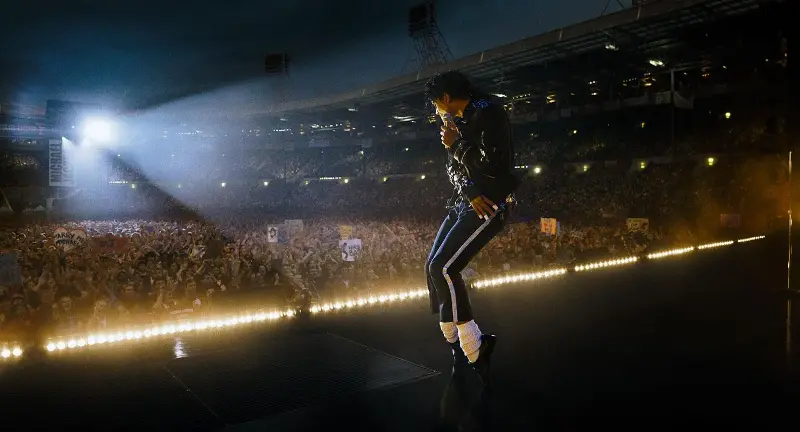
A scene from Michael.
The production itself makes those priorities clear. One of the key producers is John Branca, Jackson's former manager and co-executor of his estate, who is also depicted in the film by Miles Teller. The list of executive producers includes members of Jackson's own family, including his eldest son. This context matters, because Michael is, by design, a film that exists to preserve and elevate Jackson's legacy. Anything controversial is completely omitted.
That immediately splits the conversation into two separate discussions: Michael as a film, and Michael as a concept.
I think expectation-setting is crucial going in. Whether the film works for you depends almost entirely on what you're looking for. If you're a fan who wants a streamlined introduction to Jackson's rise -- his origins, his early pressures and his eventual breakthrough -- you'll likely find enough here to enjoy. But if you're expecting a deeper psychological portrait, or any attempt to interrogate his public image, this film simply isn't interested in going there.
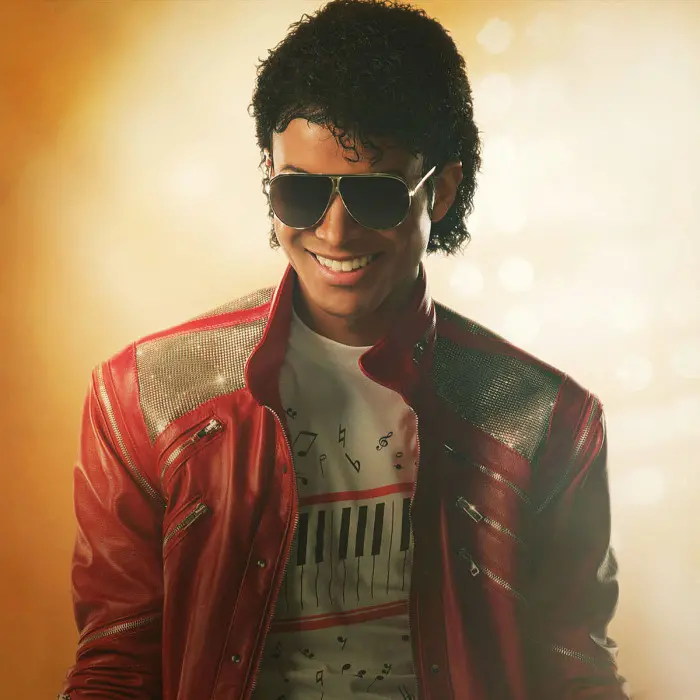
Casting Jaafar Jackson as Michael is both an inspired and risky choice. Playing one of the most recognisable figures in modern history is already a daunting task. Doing so as a first-time actor, while also portraying your own uncle, adds another layer of pressure that could easily overwhelm.
I think that Jaafar acquits himself well enough in the role. I did believe him as Michael Jackson, which is already a difficult task, and he becomes more comfortable as the film goes on. He nails the dance moves, which is no small thing. But in terms of acting, it's acceptable at best.
This isn't a transformational performance like what we saw from Rami Malek in Bohemian Rhapsody (2018), or Timothée Chalamet in A Complete Unknown (2024). Still, the film would have fallen apart if he didn't work in the role -- and he does, just about.
The script, however, feels far more familiar. It plays like a product of the biopic assembly line: a quick framing device, followed by a flashback to childhood, then a series of key milestones stitched together in chronological order. We move from the Jackson 5 years into solo stardom with very little time to sit with any one moment.
Colman Domingo appears as Joseph Jackson, Michael's domineering father, and delivers one of the film's stronger performances. His portrayal captures the intensity and control that defined Joe's role in shaping the family's success, though even this thread feels somewhat abbreviated.
For roughly the first two-thirds, the film moves at a relentless pace. Major events are introduced, briefly dramatised and then left behind in favour of the next milestone. Among these is a near shot-for-shot recreation of the Thriller music video -- an impressive technical achievement, but one that ultimately functions more as homage than storytelling.
The film does attempt to touch on more personal struggles, including Jackson's discomfort with his appearance and the pressures of fame. But these moments are brief and often overshadowed by the film's reliance on montage sequences set to his music. While these sequences are undeniably entertaining and effective at energising the audience, they often replace deeper narrative exploration rather than complement it.
It's only in the third act that the film slows down. Here, we see the tension between Michael and his father resurface, particularly around the pressure to reunite with his brothers for a tour following the success of Thriller. This leads into the depiction of the Pepsi commercial accident, one of the more serious moments in the film.
The final stretch shifts again, transforming into what is essentially a concert film. The performances -- first with his brothers, then as a solo artist, are staged with energy and scale. The comparison to Bohemian Rhapsody is inevitable, but where that film builds towards the Live Aid performance as a narrative climax, Michael's ending feels more like a convenient stopping point than a true resolution.
Regardless of where you stand on Michael Jackson as a person, it's difficult to argue against his impact as an artist. His influence remains global and enduring. And this is where the film's identity becomes clear: Michael is less an exploration and more a celebration.
For those who continue to admire him, the film offers a chance to revisit his peak -- his artistry, his charisma and his cultural dominance. But for people who see Jackson as a fallen idol, I think this movie will be resented for exactly the same reasons, because it refuses to depict Jackson's legacy as anything other than that of a transcendent icon.
As a film alone, I feel that Michael is well-crafted in certain respects. It's competently directed, visually polished, and carried by a good central performance. It's accessible, and designed to please a broad audience. But it ultimately doesn't push beyond the established formula of modern music biopics.
By leaning heavily on Jackson's catalogue, the film generates momentum and emotional familiarity. What it lacks is depth, any real attempt to understand the complexities of its subject. And without that, it never quite reaches the level of something truly distinctive or lasting.