



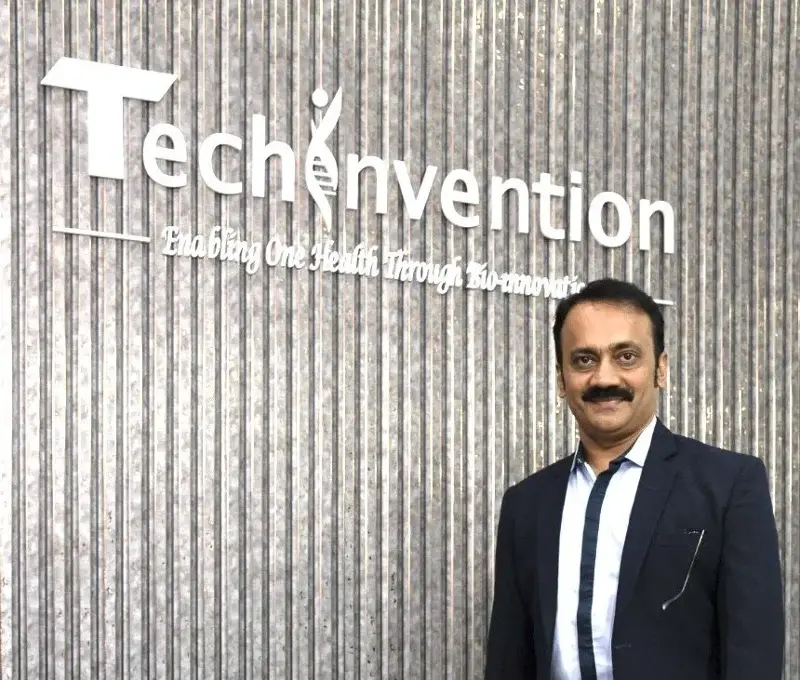
India, Jan. 1 -- Your team has been recognised for Best Vaccine Efforts of the Year. What core breakthrough or strategic decisions do you believe played the biggest role in achieving this recognition?The most consequential strategic choice that, in my view, played the biggest role was our decision to centre our entire vaccine effort on the unmet needs of low- and middle-income countries (LMICS). Instead of trying to develop products in a generic, one-size-fits-all manner, we deliberately built an end-to-end ecosystem - from early research to process development, manufacturability and regulatory readiness - with LMIC realities in mind.
This meant investing in platforms that can be scaled in resource-limited settings, designing candidates that are not only scientifically robust but also affordable and operationally practical, and working closely with partners who share a commitment to equitable access. That intentional alignment between innovation and real-world public-health needs is, I believe, the breakthrough that most strongly contributed to this recognition.
TechInvention has consistently focused on making vaccines and biologics more accessible for developing regions. What were the toughest challenges in this journey, and how did your team overcome them?
One of the toughest challenges has been balancingaffordability with scientific and regulatory rigor. Vaccines are inherently complex to develop and manufacture, and cost pressures are highest in LMICs.We addressed this by designing products withcost-efficient platforms from day one, investing in in-house capabilities, and minimizing dependency on expensive external supply chains.
Another key challenge was ensuring our solutions truly reflectedregional disease burden and on-ground realities, rather than adopting a one-size-fits-all approach. We overcame this through developing region-specific products, alongside close engagement with public health stakeholders, researchers, and policymakers in developing regions, allowing us to prioritise pathogens and delivery models that matter most locally.
Finally, buildingself-reliance in LMICshas not been easy, given gaps in infrastructure, skilled workforce, and manufacturing ecosystems. Our response has been to focus ontechnology transfer, capacity building, and local manufacturing, enabling regions to not just access vaccines, but sustainably produce them.
The company now works across multiple geographies with diverse public health needs. How do you ensure that your vaccine innovation remains both globally relevant and locally impactful?
We ensure our vaccines are both globally relevant and locally impactful by aligning scientific innovation with contextual adaptation. On a global scale, our vaccines are developed using state-of-the-art platforms that meet stringent international quality standards. At the same time, we integrate region-specific factors such as health system capabilities, disease prevalence, and affordability, ensuring that each solution is not only globally recognised but also feasible and effective in its intended environment.
You operate across the entire vaccine value chain, from advisory and R&D to regulatory support and manufacturing. Which part of this chain do you see as the strongest driver of future vaccine innovation?
While each segment of the vaccine value chain plays a critical role, I believe that the strongest driver of future vaccine innovation will be the integration of R&D, regulatory support, and manufacturing.
Advances in R&D, particularly with next-generation platforms such as mRNA and viral vector technologies, are accelerating the pace of vaccine development. However, it is the seamless integration with agile regulatory pathways and scalable manufacturing capabilities that will truly set the stage for rapid innovation and global access. Combining these elements with real-time data from epidemiological studies will ensure that vaccines are not only scientifically advanced but also aligned with real-world needs, enabling quicker and more efficient responses to emerging health threats.
With this award marking a major milestone, what are the next strategic goals for TechInvention over the next three to five years, both within India and internationally?
Over the next five years, TechInvention aims to strengthen its leadership in vaccines and biologics by building capabilities that serve not just India, but the global public health ecosystem. A key part of this vision is our upcomingGMP vaccine manufacturing facility, conceived as a technology development and transfer hub.
Today, Centres of Translational Research Excellence-bringing together startups, academic institutions, R&D organisations, and SMEs-are generating breakthrough science. However, many struggle to cross the critical mile:GMP scale-up, regulatory approvals, and structured technology transfer for capacity building. This gap often delays or prevents promising innovations from reaching populations that need them most.
To address this, TechInvention is establishing theGlobal Collaborative Centre for Medical Countermeasures (GCMC)-a state-of-the-art GMP facility designed to bridge innovation and deployment. GCMC will support end-to-end technology scale-up, resulting inrobust technology packages that are process-optimised, regulatory-compliant, IP-secured, and ready for global tech transfer or commercialisation, either at partner manufacturing sites or within GCMC itself.
This approach is already translating into action. We have recently signed alicensing agreement with ICMRfor the GMP scale-up of a recombinant multi-stage chimeric malaria vaccine, and atechnology transfer agreement with IIT Bhubaneswar and the Institute of Life Sciences (ILS)for a next-generation recombinant TB vaccine.
On a personal leadership note, what continues to inspire you to push forward in the mission of advancing affordable and equitable vaccine access worldwide?
What continues to inspire me is the belief that'access to essential & next-gen vaccines should NOT only be the privilege of the affording few'. Science has advanced rapidly, but its impact is only meaningful when it reaches those who need it most-particularly underserved populations in LMICs.
Every step we take in advancing vaccine innovation, strengthening manufacturing, or enabling technology transfer brings us closer toclosing long-standing inequities in global vaccine access. Knowing that our work can help prevent avoidable deaths, reduce disease burden, and protect communities that are often the last to benefit from medical breakthroughs is a powerful motivator.
What drives us forward each day is the opportunity to createlasting global impact-not only by responding to immediate public health challenges, but by building sustainable systems that improve preparedness, resilience, and self-reliance worldwide. Contributing to a future where life-saving vaccines are accessible, affordable, and available to everyone, regardless of geography or income.