



CAGAYAN DE ORO – Following similar moves by other local government units in Mindanao, Mayor Rolando Uy has ordered the implementation of a four-day compressed workweek for all City Hall offices and employees to help conserve energy amid rising global fuel prices.
City Information Officer Jade Adecer said the mayor directed the implementation of the policy starting Monday, pending the signing of the executive order.
“Beginning today, City Hall employees will leave their offices at 7 p.m., with two additional hours added to their regular workdays from Monday to Thursday,” Adecer said.
Under the arrangement, city government offices will operate longer hours for four days each week as part of the local government’s effort to reduce electricity consumption and operational costs.
There will be no work on Fridays in line with Memorandum Circular No. 114 issued by President Ferdinand Marcos Jr., which encourages energy conservation measures as tensions in the Middle East continue to affect global fuel prices.
Adecer said essential service units are exempted from the order, including the City Hospital, the Road and Traffic Administration, the City Health Office, and the City Disaster Risk Reduction and Management Office.
The memorandum also directs department heads to strictly limit electricity consumption and adopt other energy-saving measures in their respective offices.
Mayor Uy is also encouraging local traders and private establishments to consider adopting a similar compressed workweek arrangement.
However, some business leaders expressed caution about the program, saying it may pose challenges for the local economy.
George Goking, former city councilor and president of the Xavier University Alumni Association, said he is uncertain whether the compressed workweek would lead to actual savings for the city government.
“Extending work hours means additional expenses for employees, who may need to buy dinner instead of eating at home,” Goking said.
Meanwhile, Ralph Paguio, senior vice president of Cagayan Electric Power and Light Company and business sector representative to the Regional Development Council Region 10, said their firm is exempt from the program as an essential power utility.
Paguio added that many local traders may hesitate to adopt the four-day workweek, noting that businesses are already preparing for possible increases in commodity prices.
“Many establishments would rather recover rising costs through increased sales than absorb additional expenses,” he said.
Meanwhile, the provinces of Sultan Kudarat and North Cotabato have also begun implementing a four-day workweek and work-from-home setup this week as part of their energy-saving measures.
-
Oro adopts 4-day workweek to conserve energy
 CAGAYAN DE ORO — Mayor Rolando Uy has officially implemented a four-day compressed workweek for City Hall employees as a strategic move to reduce energy consumption amid rising global fuel costs. Following Memorandum Circular No. 114, city offices will now operate from Monday to Thursday, extending daily hours until 7:00 PM, with Fridays designated as non-working days. While essential services like the City Hospital and CDRRMO remain exempt, the policy has sparked debate among local leaders. Former councilor George Goking questioned the actual savings for employees, citing increased personal expenses, while CEPALCO’s Ralph Paguio noted that private traders might hesitate to adopt the shift. This energy-saving measure aligns CDO with other Mindanao provinces, including Sultan Kudarat and North Cotabato, in response to ongoing Middle East tensions.
 -
Millennials and the future of governance
 IN my graduate class on Dynamics of Change and Leadership in the Workplace, I pose a question that unsettles the Zoom room. Most of my students are government employees. Some of them supervise divisions; others manage units. They come to class with years of service etched into their posture. I ask them: How do you observe millennials behaving in your offices? The answers come quickly. “They have their own world.” “They don’t even say good morning.” “They go absent without notice.” I can sense a frustration here. Not anger, however. But something closer to disbelief.The image they paint is familiar.… Read more: Millennials and the future of governance
 -
Fatty meat and water
 “FATTY meat and water. Fatty meat and water. Fatty meat and water.” This was the mantra I muttered on repeat as I pushed my grocery cart down S&R’s processed-food aisles. While scanning each chocolate brand: “Fatty meat and water.” There was sugar-free Hershey’s. But that’s not fatty meat and water. While eyeing the cookies and biscuits: “Fatty meat and water.” At the aisles of fruit juices, tomato juices, aloe juices, milk drinks, soy milk drinks, chocolate drinks, yogurt drinks, lattes, teas, and lemonades: “Fatty meat and water.” While staring at the wall of regular soda, diet soda, caffeine-free soda, and… Read more: Fatty meat and water
 -
Local trader warns of fuel hoarding, urges early rationing in Oro
 CAGAYAN DE ORO — Veteran businessman George Goking is calling for immediate fuel rationing and price monitoring in the city to prevent hoarding and economic instability as Middle East tensions escalate. Drawing parallels to the logistics management of the COVID-19 pandemic, Goking warned that local businesses might exploit the crisis by raising prices on old stocks. While President Ferdinand Marcos Jr. recently assured the public of a 50-to-60-day national fuel stockpile—including 50.5 days of diesel and 51.5 days of gasoline—Goking insists the city should “play it safe” by planning for a 30-day window. Under DOE Circular No. DC2003-01-001, refiners must maintain a 30-day supply, but Goking urges City Hall to be proactive rather than relying on national estimates to protect the local economy from panic buying.
 -
Officials say Bangsamoro peace pact intact despite clashes
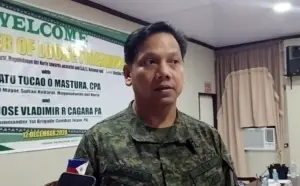 CAGAYAN DE ORO — Malacañang and military leaders have issued a firm assurance that the historic peace agreement between the national government and the Moro Islamic Liberation Front (MILF) remains fully operational. Despite recent armed skirmishes in the Bangsamoro region, Special Assistant to the President Anton Lagdameo Jr. reaffirmed the Marcos administration’s commitment to the peace process and human rights. Major General Vladimir Cagara, commander of the 6th Infantry Division, clarified that recent violence stems from “horizontal conflicts” or personal clan disputes (rido) rather than a breakdown of the overarching peace framework. Military officials emphasized that the established peace mechanisms continue to function, serving as vital tools for stability as the region works toward long-term peace and the upcoming 2026 parliamentary elections.