



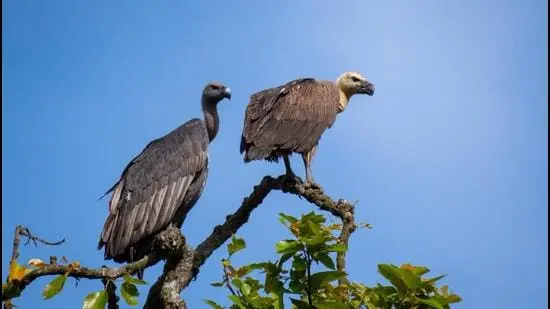
Silchar: The Vulture Conservation and Breeding Centre (VCBC), Assam, on Monday released 35 captive-bred vultures into Kaziranga National Park & Tiger Reserve under the Bishwanath Wildlife Division.
The batch includes 30 White-rumped Vultures (Gyps bengalensis) and 5 Slender-billed Vultures (Gyps tenuirostris), both listed as Critically Endangered on the IUCN Red List and protected under Schedule I of the Wildlife Protection Act.
Chief minister Himanta Biswa Sarma wrote on social media, “Glad to announce the release of 30 White-rumped & 5 Slender-billed Vultures from VCBC, Rani into Kaziranga National Park’s 6th Edition.”
He added, “Like Jatayu soaring in the Ramayana, these guardians of our health return to the wild, marking a triumph of our dedicated conservation efforts.”
He said the initiative reflects Assam’s renewed commitment to restoring ecological balance and strengthening wildlife protection.
According to the director of Kaziranga National Park, Sonali Ghosh, Assam remains the last stronghold of the slender-billed vulture in India, with small but surviving breeding populations around Kaziranga. The White-rumped vulture, once abundant across the subcontinent, has also suffered a catastrophic decline since the 1990s due to diclofenac poisoning from livestock carcasses.
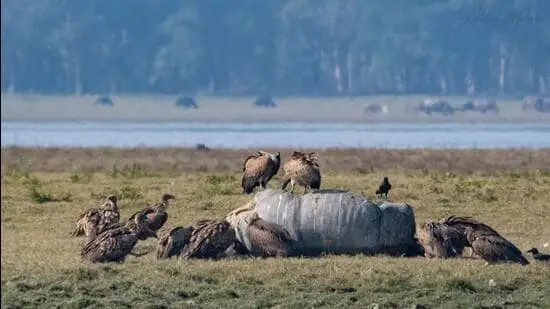
“Populations of both species crashed by over 97 per cent in less than two decades, considered the fastest decline ever recorded in any bird group,” she said.
Officials said the release site was selected for its large forested landscape, abundant carrion from wild herbivores and strong anti-poaching protection. A soft-release aviary constructed near the Tewaripal forest camp will support acclimatisation and post-release monitoring.
The vultures were bred at VCBC-Rani, a joint initiative of the Assam Forest Department and the Bombay Natural History Society (BNHS), which has been working for over 15 years to rebuild South Asia’s Gyps vulture populations. More than 800 vultures have been bred nationwide under the programme.
BNHS plans to release additional birds — including slender-billed and white-rumped vultures, in early 2026 in Kamrup and Biswanath districts, with support from the Royal Society for the Protection of Birds (RSPB).
Alongside the release, authorities have conducted awareness campaigns in local communities and veterinary networks to curb the use of harmful NSAIDs such as diclofenac, aceclofenac and nimesulide, and to prevent carcass poisoning, two persistent threats in Northeast India.
Officials said Monday’s release marks one of Assam’s most significant reintroduction efforts and a major step toward restoring wild vulture populations across the northeastern landscape.