



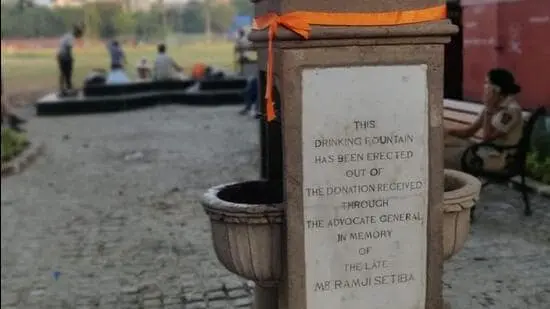
MUMBAI: The BMC has set in motion an ambitious plan to revive 17 defunct British-era drinking water fountains, locally known as pyaavs, across South Mumbai. Once an integral part of the city’s public welfare system, these structures served as a vital source of drinking water not only for residents but also for cattle and birds.
Dating back to the mid-nineteenth century, pyaavs were built primarily through philanthropic efforts by prominent citizens and charitable communities. Their restoration is now being undertaken through a fresh tendering process by the heritage conservation cell, bringing a largely forgotten aspect of Mumbai’s civic and cultural history back into focus.
Architectural firm Vaastu Vidhaan has been appointed as a consultant for the project by the heritage conservation cell. Architect and co-founder Rahul Chemburkar told HT that the drinking water fountains were once widespread across bustling marketplaces such as Crawford Market and trading hubs like Masjid Bunder and Bhat Bazar. Many of them were funded by noted philanthropists such as Sir Cowasjee Jehangir, who is believed to have donated 70 to 80 across the city.
“The pyaavs were more than functional water dispensers,” said Chemburkar. “Designed with intricate architectural details, they have been classified as Grade II-B heritage structures, highlighting their historical and aesthetic value. While most fall under the BMC’s jurisdiction, some are managed by agencies such as the Mumbai Port Authority and the Railways. Often described as ‘street furniture’, their presence in the public realm makes them both accessible and vulnerable to neglect.”
The restoration initiative goes back to the 1990s when several pyaavs were included in Mumbai’s heritage listing. In 2018, Vaastu Vidhaan, commissioned to document two such structures, submitted a detailed report to the BMC. This eventually led to the firm being entrusted with the restoration of additional fountains.
A civic official from the heritage cell told HT that 17 pyaavs were being tendered and were expected to undergo restoration in the coming months. “Once revived, they are expected to serve not only as functional water sources but also as visually appealing heritage fixtures for both residents and tourists,” he said.
The pyaavs once operated on a gravity-based water supply system, catering to a much smaller population. Over time, as Mumbai’s water supply became more regulated and limited to specific hours, they fell into disuse. Neglect, coupled with rapid urbanisation, led to their deterioration.
The restoration process presents some unique technical challenges. “Over the decades, rising road levels have altered the original design context of many pyaavs, making them less accessible,” said Chemburkar. “In some cases, the structures must be physically lifted using cranes and repositioned to align with current street levels. Additionally, new dispensing mechanisms are being designed to minimise human intervention while maintaining usability.”
The architect explained that modern restoration efforts had to adapt to current realities. “We have incorporated storage tanks and filtration systems to ensure a consistent and safe water supply,” he said.
Work is currently underway on a large pyaav at Bhat Bazar in Masjid Bunder, marking the second phase of restoration. This particular structure is being revived for the second time after earlier efforts in 2007 were undermined by subsequent neglect. Since 2022, Vaastu Vidhaan has been working towards preparing the groundwork for the restoration of all 17 identified pyaavs, with the tendering process expected to conclude shortly.
The cost of restoring each pyaav varies by size and the extent of repairs required, though all 17 will be covered under a consolidated budget. The project is expected to be completed in nine months to a year.
Over the years, six pyaavs under the BMC’s jurisdiction have been restored and are operational: three located within Rani Baug, one in Shivaji Park, one along Dr Ambedkar Road in Kalachowki, and one on Gokhale Road.