



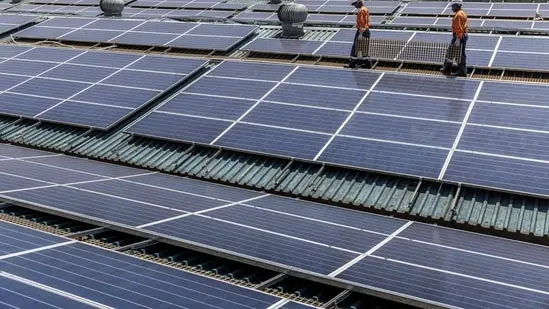
India’s renewable energy transition has entered a decisive stage where the traditional metrics used to celebrate progress no longer capture the real challenges facing the grid. For more than a decade, national and state governments have pushed aggressively to expand solar generation, and the cumulative installed capacity figures have given the impression of a sector advancing smoothly toward its long-term goals. Yet a fundamental limitation persists beneath the surface: Solar electricity production is tied to sunlight, while the country’s peak demand routinely arises after sunset. As a result, the central issue for the next phase of India’s energy strategy is no longer how much clean power can be generated, but whether that power can be dispatched at the precise hours when the grid requires it most.
This structural mismatch is forcing a conceptual shift in the broader energy landscape. The installation paradigm—where investors, policymakers, and analysts measured progress by adding more gigawatts of clean capacity—worked well during the expansion phase, when the priority was to build scale and reduce renewable tariffs. With those objectives largely achieved, particularly in solar, the sector is now confronted by the more complex task of integrating variable renewable generation into a system that still depends on coal and hydro for load balancing. Without intervention, intermittency risks delaying India’s ambition to become a clean energy powerhouse.
The solution lies in transforming solar from an intermittent generation source into one that can serve as a dependable contributor to the grid’s baseload, and this transformation cannot happen without energy storage. Battery storage—whether standalone or coupled with solar projects—is emerging as the critical technology that closes the gap between clean generation and real-time electricity consumption. What was once viewed as an expensive add-on to renewable projects is increasingly regarded as a non-negotiable component of future contract design. The market has begun to reflect this change, with recent tenders shifting from price-driven procurement toward performance-driven contracts that emphasise dispatchability, evening peak delivery, and grid support services.
Several new developments in the sector illustrate how storage is being operationalised in practice. Solar-storage hybrids, in which panels are paired directly with batteries, are now being tendered to deliver specified energy blocks during evening peaks rather than merely injecting power whenever the sun happens to be shining. Standalone storage facilities are also gaining traction, not to generate electricity themselves but to stabilise regional grids, mitigate frequency imbalances, and reduce reliance on fossil-based peaking plants. The emergence of these models demonstrates that the Indian market is beginning to acknowledge the value of dispatchable megawatt-hours over simple nameplate megawatts.
The policy implications of this shift are significant. India’s long-term target of achieving 500 GW of non-fossil capacity by 2030 will be insufficient if the grid cannot make use of the renewable energy produced at the times when it is most needed. Regulatory frameworks must, therefore, evolve from incentivising capacity installation to encouraging round-the-clock and firm renewable power delivery. Such an evolution would entail modifications in tariff structures, contracting mechanisms, and storage-specific incentives. It may also require new market instruments that reward flexibility, such as ancillary services markets or capacity markets that compensate providers for availability rather than generation alone.
At the state level, the trend is equally visible. Regional governments that are grappling with demand volatility and weak grid infrastructure have begun integrating storage directly into new solar projects. Recent agreements reflect a clear preference for reliability over impressive capacity numbers, indicating that states recognise storage as a tool for energy security rather than a peripheral technological experiment. These early moves could become templates for wider adoption across the federal system, supporting interstate power stability and reducing the strain on ageing transmission networks.
Economically, the move towards storage-backed renewables represents the logical next step for a maturing sector. While storage adds cost, it also adds value—particularly in the form of peak shaving, grid stability, reduced curtailment, and deferred infrastructure investment. As costs for lithium-ion and alternative storage technologies continue to fall globally, the economics are likely to shift further in favour of dispatchable clean power.
The era in which progress could be measured through headline solar installations is drawing to a close. To create a renewable system capable of supporting the electricity demands of a rapidly industrialising economy, India must prioritise the delivery of assured energy over the production of intermittent power. The future of the sector rests on whether it can replace the vanity of installed megawatts with the substance of dispatchable megawatt-hours and, in doing so, convert abundant solar potential into a reliable, 24/7 clean energy reality.
This article is authored by Samir Kapur, strategic academy advisor and board member, Xavier Institute of Management, Bhubaneshwar and visiting faculty, IIMC.