



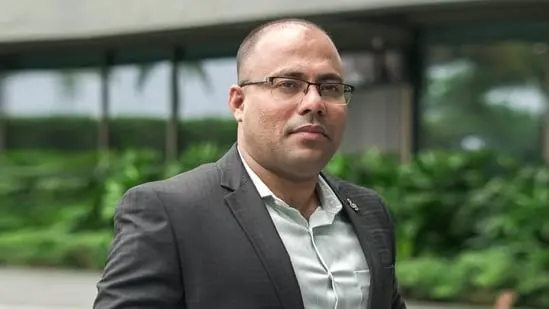
Indian higher education has expanded rapidly over the past two decades, but graduate outcomes have not kept pace. Enrolments are up, campuses are fuller than ever—and yet employability remains a persistent concern. The problem, argues Kuldip Sarma, Co-Founder and Pro-Chancellor of Medhavi Skills University, is not a shortage of qualifications, but a shortage of graduates who are prepared for real work.
Sarma’s argument challenges a long-held assumption: that more degrees automatically translate into better opportunities. In practice, many students graduate having mastered theory but lacking sustained exposure to workplaces where decisions are constrained by time, cost, accountability, and consequences. Learning about work, he suggests, is not the same as learning through work.
A key shift he advocates is moving workplace exposure from the margins to the centre of education. Instead of treating internships as short, end-of-course requirements, students should spend extended periods embedded in real organisations—early and repeatedly—so that skills are developed in context. This includes understanding how teams function, how quality is measured, and how responsibility is exercised when outcomes are uncertain.
At Medhavi Skills University, this philosophy is reflected in programmes where work-integrated learning is formally assessed and credited. Students document outcomes from on-the-job training through structured logs, reviewed by both faculty and industry mentors. The point, Sarma argues, is not to replace academic rigour but to align it with how skills are actually acquired.
Another gap he highlights is the limited role industry traditionally plays in education. Employers often enter the picture only during placement season, long after curricula and assessments are set. Sarma contends that this is too late. For education to remain relevant, industry must help define competencies, shape curricula, and participate in assessments—acting as a co-educator rather than a last-mile recruiter.
This deeper integration, he argues, benefits both sides. Students train on current tools and processes, while employers reduce onboarding time and risk. More importantly, graduates leave with experience that makes them productive sooner—challenging the idea of the “fresher” as someone starting from scratch.
Sarma is also wary of how success is measured. Placement percentages and starting salaries, he says, offer only a narrow snapshot. Careers today are longer and less linear; roles change as technology reshapes work. What matters more than the first job is whether graduates can adapt, reskill, and move across roles over time. From this perspective, employability is a journey, not a single milestone.
Affordability and access form another crucial part of the equation. For many students—particularly those from rural, low-income, or first-generation backgrounds—financial pressure shapes educational choices and completion rates. Integrating paid apprenticeships and earn-while-you-learn models, Sarma argues, reduces dependence on loans and allows students to study with dignity rather than distress.
Participation gaps also persist in technical and vocational pathways, especially for women and underrepresented communities. Skills-based education, he suggests, can be a route to economic independence and mobility when it leads to formal certification and clear career pathways—particularly in sectors where informal work has long limited progression.
Looking ahead, Sarma points to healthcare, data, analytics, and digital roles as areas of growing demand, noting that opportunities are expanding beyond traditional professional tracks. Non-clinical healthcare roles, digital support functions, and hybrid tech positions will require education systems to adapt quickly and inclusively.
Policy, he believes, has begun to create space for change. Provisions under the National Education Policy (NEP) 2020—such as flexible entry and exit, credit mobility, and recognition of prior and workplace learning—offer a framework to rethink rigid academic pathways. The challenge lies in implementation at scale.
Ultimately, the message is not anti-degree, but pro-relevance. Degrees still matter—but only when paired with experience, adaptability, and judgement. For Indian students navigating a crowded education landscape, what they need more than another qualification is learning that connects classrooms to careers, and ambition to opportunity.