



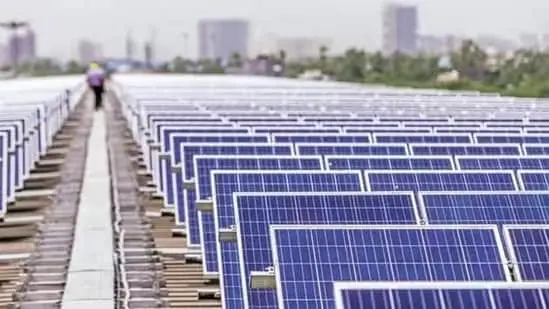
Solar power has a vital role to play in these uncertain times. It is cheap, abundant and carbon-free. It can uniquely balance demands for energy security, economic resilience, job creation and climate change. Combined with storage capacity, reliable solar power is now available for 16-18 hours a day at a price about 30-40% lower than greenfield thermal, hydro or nuclear power.
Here is some good news. India’s solar sector has been booming thanks to strong policy support combined with ongoing improvements in technology and falling cost. Last 2 years have seen annual growth of over 50% in installations. Despite all this, share of solar power in the grid stands at a measly 9%. The question is why not do more.
A key challenge in augmenting solar capacity relates to the limited domestic manufacturing eco-system. The government’s flagship PLI scheme has not had the intended results because of glut of cheap imports from China. Policies such as the Approved List of Models and Manufacturers (a sort of QCO) and Basic Customs Duty have helped bring a change – share of domestically made modules has grown from about 15% just three years ago to over 90%. But the reality is that imports of finished products have merely been replaced by imports of upstream materials including silicon wafers, cells, even glass and aluminium frames. This supply chain vulnerability not only weakens our ambition of self-reliance but also exposes the industry to global price volatility and geopolitical disruption. Targeted policy action is needed to support upstream integration to make India a true manufacturing powerhouse.
Upstream manufacturing is a highly capital-intensive business – necessitating total investment of about ₹1.5 lakh crores over next five years – made more difficult by complex technology and long gestation period. China has been able to dominate this space with vast investments in R&D, overcapacity and cost subsidies. Private companies around the world have been forced into bankruptcy in the face of such asymmetric competition. Low asset turnover, suppressed China prices and lack of policy visibility make it difficult to attract private investment.
This piece lists out four specific suggestions to build a resilient solar manufacturing ecosystem, crucial for our energy security. First, we need a clear policy articulation and long-term commitment to support the sector. Investors need a minimum 10-year roadmap on trade policies, demand outlook, domestic content requirements and incentive mechanisms. Second, the government should announce substantial new incentives specifically for upstream manufacturing. Targeted financial support of up to 40% of capital cost for polysilicon, ingot and wafer facilities through viability gap funding, tax credits and low-cost financing is needed to reduce investment risk and keep prices low for end consumers.
Third, India needs to invest aggressively in technology development and manufacturing clusters. Dedicated R&D facilities, testing labs and solar manufacturing parks with shared infrastructure would accelerate technological innovation and reduce costs. Last but not the least, demand expansion is vital to ensure scale and demand for domestically produced modules. There are several attractive demand segments including green hydrogen, electric mobility, domestic cooking and data centres amenable to solar power. Corporate decarbonisation is another huge opportunity. India must also develop new export partnerships across West Asia, Africa and Europe as other countries look to diversify their supply sources away from China.
India’s solar manufacturing sector has come a long way in the last three years. It has already created more than 100,000 direct jobs, reduced module prices and positioned India as an emerging alternative to China. Now is the perfect time to leverage shifting trade routes and advancing technology to assume global leadership in this domain. India must seize this moment and build end-to-end manufacturing capability to capture full value chain benefits.
This article is authored by Chiranjeev Singh Saluja, managing director, Premier Energies Ltd. and president, Indian Solar Manufacturers Association.