



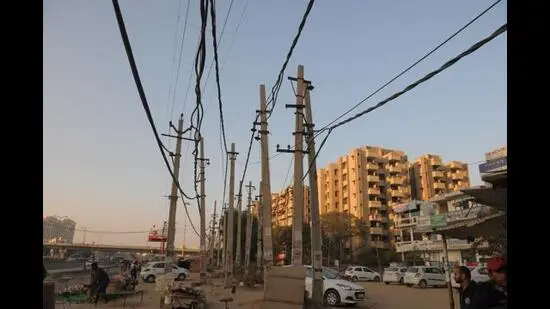
The Dakshin Haryana Bijli Vitran Nigam has allowed dual-source power supply from independent feeders of different sources for critical public infrastructure such as hospitals, irrigation canals and the Delhi Metro Rail Corporation, officials said on Monday. The move aims to ensure uninterrupted electricity supply to essential services, they added.
Officials said that until now, such infrastructures were permitted to draw power only from independent feeders of DHBVN within Haryana. Under the revised policy, consumers performing functions of public importance can also seek connections from independent feeders of other sources, including discoms in Delhi or neighbouring states, particularly if they are located near the state border.
Vikram Singh, managing director of DHBVN, said such consumers would be required to declare one feeder as their primary source of electricity, while the second feeder would remain on standby. “A series of directions have been issued to avail the facility,” he said.
Sanjay Chugh, public relations officer of DHBVN, said the policy would apply to all consumers with public-benefit infrastructure in Haryana. “Such consumers can switch to the alternate 11kV or higher capacity feeder whenever required in case of outage. If they declare the DHBVN feeder as their primary source of supply then the other feeder from another source will be the stand-by source,” Chugh said.
He added that drawing power from both sources simultaneously or splitting load between them would not be permitted, as it could damage infrastructure. “A circular has been issued to all concerned officials of DHBVN to make them aware of the new policy,” he said.
A senior DHBVN official said consumers such as DMRC earlier had to draw power from DHBVN upon entering Haryana. “However, with the new policy, they can even opt for drawing power from Delhi too,” he said. Officials said the policy resolves a long-standing issue faced by essential services at state borders, which previously had no backup option during outages. The decision follows an order issued by the Haryana Electricity Regulatory Commission on May 13 last year.
DHBVN officials said fixed charges would apply on both sources. Consumers must install interlocking mechanisms or automatic transfer switches, a common meter after changeover, and billing will be done by adding consumption from both substations. A no-objection certificate from Haryana Vidyut Prasaran Nigam Limited and inspection clearance from the chief electrical inspector of the Haryana government will also be required.