



Slavery is intimately associated with food production through a historical and, in many cases, contemporary reliance on forced labour to cultivate, harvest, and process high-demand commodities. Historically, it was the backbone of plantation economies producing sugar, cotton, coffee, and tobacco.
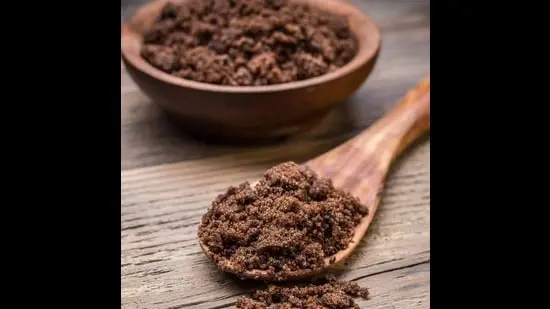
Muscovado sugar, a coarse, unrefined sugar rich in molasses, was inseparable from the history of slavery. From the seventeenth century onward, Europe’s rising demand for sugar transformed it into a prized commodity, driving the rapid expansion of plantation economies across the Caribbean and Brazil. These plantations depended almost entirely on the forced labour of enslaved Africans. Muscovado produced under these conditions was exported to Europe, where it entered everyday consumption and fuelled further demand.
Enslaved labourers carried out every stage of production, from planting and harvesting cane to operating mills and tending boiling vats. During harvest time, work continued day and night with little rest. The risks were severe: crushing injuries from machinery, burns from boiling syrup, and chronic exhaustion were common.
Mortality rates on sugar plantations were exceptionally high. Poor nutrition, disease, and relentless labour meant that many enslaved workers lived only a few years after arrival. Plantation owners responded not by improving conditions, but by relying on the continuous importation of enslaved people to replace those who died, treating human lives as expendable inputs to production.
Muscovado sugar sat at the centre of the wider plantation economy and the transatlantic trade network. Enslaved Africans were transported to the Americas, forced to produce sugar, and the product was shipped to European markets for profit. Some plantations yielded returns of 15–20 per cent, even as enslaved people resisted through sabotage, escape, and open revolt, most dramatically in the Haitian Revolution of 1791.
By the late eighteenth century, awareness of this brutality began to shape public debate. Abolitionists urged consumers to boycott “slave-grown sugar” and promoted alternatives such as “free-grown sugar” from India. Yet the legacy of muscovado remained clear: Europe’s appetite for sweetness was sustained by a system of violence, exploitation, and coerced labour on a massive scale.
In the early decades of the nineteenth century, “free-grown sugar” emerged as a distinct market category, allowing consumers opposed to slavery to pay a premium for sugar produced without the use of enslaved labour. By around 1840, however, this category had largely vanished, even as substantial amounts of slave-grown sugar continued to be imported into the UK.
It was around the same time that muscovado sugar began to be manufactured near Poona, and a possibility arose that if the experiment succeeded, it could be sold in Britain as “free-grown sugar”.
In the late 1830s, the cultivation of Mauritius cane was widespread in and around Junnar. The land was well-suited to the cause, the water supply was abundant, and the farmers were eager to cultivate it. Mr Dickinson, a planter of considerable experience in the West Indies, was employed at Hivra in making sugar. I have not been able to find more information about Dickinson and the sugar factory at Hivra, which employed him, except that the “Sugar-works” there was established by a Joint Stock Company and was later acquired by him.
Dickinson’s sugar, at first, did not find a ready market. Dickinson turned his refuse sugar and treacle to account by manufacturing rum.
In 1841, besides fifty-seven acres planted by the people on their own account, about a hundred acres were planted in Junnar under contract with Dickinson, who had then taken over the sugar factory at Hivra. The sugar was used only by the European inhabitants of Poona and Ahmednagar.
At first, Dickinson was in the habit of contracting with the husbandmen to plant cane for him. He was afterwards able to obtain a sufficient supply at all times, chiefly from the gardens of local cultivators. In 1842, he made 87,000 pounds of sugar worth £1,500 ( ₹15,000), more than the outturn of the previous year.
That year, the area under sugar cultivation in Mauritius rose from 157 to 388 acres. The cultivation spread from Junnar to Khed and Pabae.
The sugar factory at Hivra encouraged other cultivators to plant Mauritius cane and start their own sugar factories. In Bhimthadi, a local gentleman had planted sugarcane in Chakar Baug to produce sugar. The crop yielded sugar comparable in texture to Dickinson’s, though it was not entirely free of impurities. They also made jaggery, which was sold at a higher price than that produced from the local cane.
Around the same time, Messrs Sundt & Webbe also planted about three acres of land with Mauritius cane in their gardens at Mundhwa. They made about 2.5 tons of jaggery annually.
In 1844, the area under Mauritius cane rose from 388 to 547 acres. Dickinson’s farming continued successfully, partly because he was able to dispose of his rum and sugar through government contracts. Many native husbandmen were willing to make sugar, but from want of capital and of local demand were obliged to content themselves by producing jaggery.
Among the natives, the demand was trifling, and this discouraged its more extended manufacture. Most of the sugar produced in the nineteenth century India was consumed in the form of “gur”, or unrefined sugar corresponding to the muscavado, because of its adaptability for native sweetmeats and cookery. The natives, even in the immediate neighbourhood, preferred the soft, blanched sugars sold by the shopkeepers; their objection to Dickinson’s muscovado sugar was its colour, but to refine it would have caused a serious loss in quantity.
In 1847, a committee formed in Poona to judge the best specimens of superior field products awarded a prize of ₹300 to two persons. One of the prize specimens was some granulated muscovado sugar; the other was sugar made by evaporation. Before crystallisation had set in, this sugar had been poured into pots with holes in the bottoms through which the treacle was allowed to pass. A prize of ₹200 was awarded to two other natives for the best brown sugar, and a third prize of ₹100 to two others for the best specimens of inferior sugar.
In 1849, Dickinson’s sugar had a good year at Hivra. He made five tons of muscovado sugar and sold it to the families of the soldiers and other Europeans at Poona and Ahmednagar.
Dickinson and his sugar factory went into oblivion by the 1860s. A few decades later, campaigns were initiated across continents endorsing refined sugar.
Advertisements were placed in prominent newspapers urging consumers to use only refined sugars. Manufacturers alleged that raw sugars contained “great numbers of disgusting insects, which produced a disgusting disease”. The Willett & Gray’s Weekly Statistical Sugar Trade Journal published an ad on September 29, 1910, that quoted a certain Professor Cameron, public analyst of the City of Dublin, who cautioned its readers about the perils of Acarus sacchari that allegedly infested Muscovado. According to Cameron, the Acari sacchari did not occur in refined sugar of any quality, because they could not pass through the charcoal filters of the refinery, and because refined sugar did not contain nitrogenous substances upon which they could feed.
Imported white sugar was often cheaper than locally produced gur or muscovado. It quickly became popular. Indigenous sugar manufacturers started perfecting the art of refining by the early twentieth century. The muscovado from around Poona vanished into oblivion.