



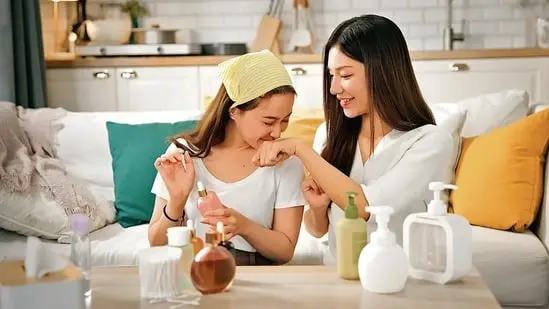
While some people still obsess over finding their signature perfume, some are returning to an ancient practice of stacking scents one over the other. The age-old practice of scent layering is now returning to the spotlight under a new, social-media-friendly name: scent stacking.
This revival is a part of social media platform Pinterest’s 2026 trend predictions report. According to the platform, this trend is defined as Gen Z and millennials playing potions with bespoke notes by mixing oils and perfumes to craft their very own fragrance formulas. With over 20k views on posts and videos tagged #scentstacking on Instagram alone, this trend looks at combining different perfume scents, colognes, body mists, fragrant lotions, oils, and other types of fragrances to make a whole different kind of smell, which is highly personalised.
Where did it come from?
Scent stacking may be trending today, but the practice is as old as perfumery itself. Also known as scent layering, this modern term originates from ancient Middle Eastern traditions, where it was a daily ritual for centuries. It involved the use of oil-based attars, single-ingredient oils, and rich oud to layer them. The practice is believed to have originated from the ancient Mesopotamian culture, which saw worshippers layering up to seven different scents during religious ceremonies.
How to scent stack?
Perfumer Neha Vij recommends building a fragrance in soft layers that blend with your skin. She suggests a 3-layer rule:
- One oil (skin-close, warm)
- One perfume (emotional core)
- One fresh lift (optional)
Start with clean, neutral skin. Begin with the heaviest texture first; this allows deeper notes to anchor lighter ones. Apply a small amount of a fragrance oil or attar, like sandalwood, vanilla, musk, or amber, first to act as a warm base. This is the scent that grounds everything else, usually warm, soft, or skin-like. Apply lightly on pulse points: wrists, inner elbows, and collarbone,” she suggests.
She further advises adding one light spray of perfume, floral, woody, or spicy, to give the scent its character. “This layer adds personality and emotion. Apply one light spray, slightly away from where the oil sits. If you like, finish with a fresh note like citrus or green tea for brightness. This top layer creates the first impression,” she adds.
What scents go best with each other?
Certain scents perfectly complement each other. It is important to know which notes work best with each other to create a personalised scent that doesn't feel confusing. Perfumer Dimple Fouzdar suggests attars like musk, sandalwood, amber, and oud that work best for layering and go with everything. “With sandalwood attar, you can use spicy and floral perfumes, and with rose attar, you can use amber or musky perfumes. Some combinations that do not clash are rose and oud, vanilla and amber, white florals and musk, sandalwood and spices, jasmine and woody, citrus and neroli, and incense and resin,” shares Dimple.