



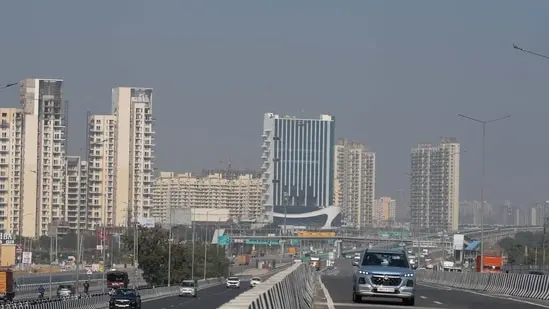
A social media post claiming that Gurugram is the only Indian city capable of becoming the next Singapore has triggered a debate on urban infrastructure and quality of life.
Jasveer Singh, co-founder and CEO of KnotDating, wrote on X that Gurugram already possesses most of the elements needed to rival Singapore: capital, talent, corporate presence, population density, and infrastructure. Describing it as a “just 20-year-old city,” Singh highlighted the presence of Fortune 500 headquarters, leading consulting firms, strong real estate demand, and some of North India’s wealthiest residents.
“Only one Indian city can become Singapore—Gurgaon. Everything is already here - money, talent, companies, density, and infra…” he said in his post, alongside photos comparing Singapore and Gurugram.
However, the post drew strong counter-reactions from residents and professionals who have lived and worked in both Gurugram and Singapore. Several users said the comparison glosses over glaring civic and infrastructure gaps. Some cited broken roads, poor stormwater drainage, garbage piles, traffic chaos, weak public transport, lack of public parks, and severe air pollution as everyday realities in Gurugram.
One commenter noted that access to basic public spaces such as parks remains limited. Others pointed to civic indiscipline, wrong-side driving, dust, potholes, and the frequent burning of waste, even during peak pollution periods, as issues that make any comparison with Singapore unrealistic.
“Having worked in gurgaon for a decade n Singapore as well , I can say the difference is stark . Ggn lags far behind in infra and civic discipline. N In a city choking with pollution, liquor shops exist every kilometer, yet a public park is nowhere to be found within 5 km,” a commentor said.
“You are so far away from reality. The garbage piles, toads with craters, lack of options for local commute, air quality....the list is endless. Remove the glasses of privilege and see the real Gurgaon please. Thanks,” said another.
“Sort out stormwater drainage, garbage, and traffic first,” said a commenter.
“I wake up to the smell of burning waste even in middle of serious pollution crisis. There are broken roads, dust, potholes, filth & waste all around the city. There are People who callously drive on wrong ways without thinking. And we are comparing this utter chaos with Singap?,” a commenter said.
The post drew comparisons with New Mumbai and Hyderabad
Some users went further, arguing that New Mumbai offers far superior infrastructure and planning compared to Gurugram. A few said that Mumbai, despite its challenges, remains the only Indian city approaching international standards, with others still “well below” that benchmark.
“The only city which is close to or already is an international standard city in India is Mumbai. Rest all are 50% below it. There's no competition with Mumbai,” said a commenter.
"Come to Hyderabad," said another.
Here’s what experts say about the Gurugram–Singapore comparison
Real estate experts say the comparison with Singapore is largely limited to the quality of Gurugram’s real estate offerings. The city has a handful of 40-plus-storey towers that are either completed or under construction, mainly along Golf Course Extension Road and the Dwarka Expressway.
Also Read: DLF to foray into senior living housing segment with Gurugram project worth ₹2,000 crore
In terms of apartment interiors and specifications, large-format homes with private elevators, concierge services, branded partnerships and ultra-luxury configurations can rival top-end condominiums in Singapore. Amenities such as golf-course views, sky lounges, wellness floors and hotel-style services have also become standard in high-end launches.
Gaurav Gupta of Zeno Realty told Hindustan Times Real Estate that Gurugram already has more than 10 towers, largely from recent launches, that rise to nearly 50 storeys. On the amenities front, several ultra-luxury projects offer best-in-class facilities, with global branded residences emerging as a key new trend. One upcoming super luxury development is expected to feature a 50-acre lake and a world-class club in the basement with a controlled indoor air-quality environment.
That said, significant gaps remain in civic infrastructure. Persistent issues around drainage, traffic congestion and cleanliness, particularly garbage management, continue to weigh on the city’s livability, he said.
Also Read: Are ultra-luxury properties the new blue-chip stocks for India's wealthy?
Price points reflect Gurugram’s growing luxury ambitions. Entry-level high-rise apartments typically start at ₹3–4 crore, while ultra-luxury homes are priced anywhere between ₹20 crore to ₹100 crore. Rental values mirror this spread, ranging from about ₹50,000 a month for a standard two-or three-bedroom home depending on location to ₹10–18 lakh per month for top-end ultra luxury apartments, he said.
However, experts point out that Singapore continues to lead decisively in overall infrastructure.
Singapore still leads comfortably in key areas such as urban planning, with seamless public transport, walkable neighbourhoods and ample green buffers. It also manages density more effectively. Civic infrastructure, including roads, drainage, power supply and public spaces, functions efficiently in the background.
Sarang Kulkarni, MD of Descon Ventures told Hindustan Times Real Estate that Gurugram is a district spread over about 732 sq km, while Singapore is a country covering roughly 735 sq km. While the two may be comparable in terms of land area, the differences in governance and planning are significant: one is a district, the other a country.
Singapore is also a major global tourist destination, which necessitates world-class infrastructure. It offers excellent connectivity, hosts several international universities and has extensive biodiversity parks. In contrast, comparisons with Gurugram in this case are largely limited to tall buildings and real estate, he said.
He argues that Gurugram cannot become Singapore on this metric. Frequent flooding in the city raises fundamental questions about stormwater management, including how excess water can be channelled and sustainably managed.
He stresses that cities, especially new ones, need clear themes centred on heritage, tourism, industrial township, financial hub, administrative centre, education hub. So it becomes important to identify the intent of city development and then work on the infrastructure accordingly. High-rise buildings by themselves do not create a Singapore-like city, he said.
“What is required is a holistic master plan that allows for high density alongside wider roads, ample green spaces and infrastructure aligned with the area’s natural topography before development begins,” he adds.
Disclaimer: This report is based on user-generated content from social media. HT.com has not independently verified the claims and does not endorse them