



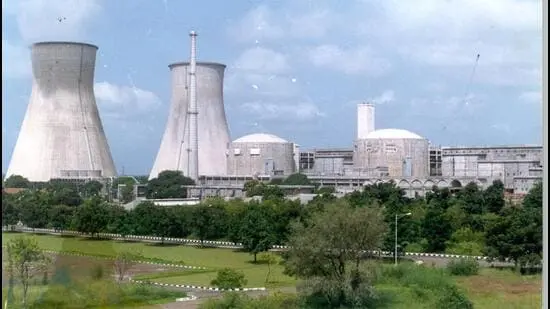
Rapid deployment of nuclear energy at scale has become essential for realising the goal of Viksit Bharat. In addition to access to clean energy, nuclear energy also promises a long-term supply. Thanks to the sustained efforts of the department of atomic energy, India has emerged as a self-reliant, responsible country with advanced nuclear technology, despite the embargoes imposed on it by the international community. The country is now ready, in terms of technology, to realise the Nuclear Energy Mission (NEM)’s target of 100 GW generating capacity by 2047. While this may appear to be ambitious, given our past track record, the policy initiatives and actions, particularly the legislative ones on the cards, should help overcome the challenges. Apart from securing clean energy and addressing climate risks, the NEM can boost the economy significantly, given that the entire value-chain will be within the country. It would create jobs at all levels across the full spectrum of activities involving materials, manufacturing, construction, commissioning, operations and maintenance, quality assurance, safety and neighbourhood engagement. There are also challenges, such as the availability of trained and qualified talent. While India is well placed to address all these challenges, industry confidence in the continuity of the programme would be a prerequisite.
What are the challenges that lie ahead? The most important one is accelerated deployment at scale, commensurate with the time targets. More than 90 GW, or around 200 reactors, are to be added in just two decades. Clearly, India needs multiple implementing agencies in addition to the Nuclear Power Corporation of India Limited (NPCIL), NTPC, and Bharat Nabhikiya Vidyut Nigam (BHAVINI) to take up projects with standardised reactor-plant designs, in a fleet mode. While India should deploy the programme with technologies consistent with its nuclear energy policy, pressurised heavy water reactor (PHWR) technology is clearly a proven and economically competitive indigenous technology ready for rapid scaling up. NPCIL should mentor other entities in PHWR technology while implementing its own programme. Other mature technologies can also be considered as an additionality, provided they meet economic and safety criteria.
There is also the crucial issue of investments, which, for the nuclear power utility segment alone, would be close to ₹20 lakh crore. The investments for fuel cycle infrastructure would be in addition to this. Private sector finance supplementing public expenditure in the area is thus critical. While nuclear energy has a sound economic case, policy support on a par with other clean energy technologies would be inevitable.
Securing nuclear fuel for the intended capacity is the next key challenge. Globally, uranium resources are substantial, but rising demand — thanks to nuclear energy expansion and the constraints on uranium supply — could lead to an interim supply deficit and price volatility. This could challenge fuel supply security given the complex geopolitics associated with nuclear commerce.
India, with its vast thorium resources, should thus switch to thorium and become energy secure at the earliest. This needs accelerating the country’s thorium-based nuclear power programme and related technology development. Utilisation of thorium as well as realising much higher energy value from uranium — which will become the need of the hour — will inevitably involve reprocessing and recycling of nuclear fuel. India’s capability in the closed nuclear fuel cycle would thus come in handy to ensure a secure and sustainable energy supply and realise credible long-term nuclear waste management. This, however, is sensitive nuclear technology, and its governance and control need to remain with the government. Most countries, including the US, have not been able to resolve the issue of permanent disposal of used nuclear fuel. The fuel management interface between privately-owned nuclear utilities and government-owned nuclear recycling enterprises needs to be properly codified into law.
The thrust to nuclear energy worldwide makes it seem that a greater emphasis on nuclear recycling will become inevitable. The backend fuel cycle, compared to the front end, would thus become an equally large, if not larger, enterprise. Thorium, because of its proliferation resistance, becomes even more relevant in this context.
India’s PHWR systems are the most flexible and best suited for facilitating a wide variety of fuel cycles, particularly in the context of the country’s plans to transition to thorium. While fast breeder development needs to be accelerated to enable large-scale conversion of thorium to fissile uranium-233, now that India is able to set up large PHWR capacities leveraging imported uranium, PHWRs offer a ready choice to do the same and advance towards thorium utilisation. Development work necessary for this purpose should be the prime preoccupation of R&D in the department of atomic energy, even as nuclear utilities in the public and private sectors accelerate capacity addition by leveraging standardised, proven designs. The nuclear energy Bill presented in Parliament on Monday can be expected to address concerns of all stakeholders, including some discussed in this article and propel NEM to achieve its expected goals.
Anil Kakodkar is member and former chairman, Atomic Energy Commission, and former secretary, department of atomic energy. The views expressed are personal