



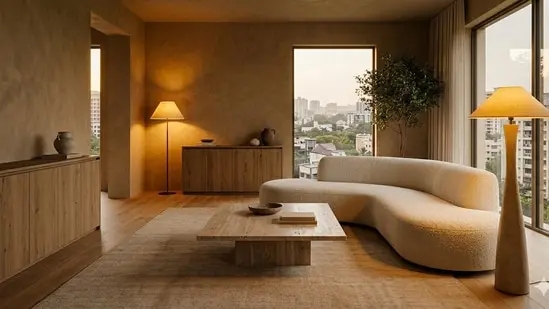
Minimalism was once the design world's favourite child, offering a sense of breathing space in a chaotic world with its clean, uncluttered interiors and generous empty spaces. Most contemporary homes naturally leaned into this aesthetic, embracing its calm and restraints in its own way. It is zen-like and meditative in nature because of its spacious and streamlined style, perfect for an overstimulating world. As you wrap up work and step indoors, the minimalist interiors induce a sense of calm.
ALSO READ: Distracted in your study room? 5 decor tips to boost focus and improve productivity
But over time, what once felt calming became cold and impersonal, resembling showrooms with its sterile touch more than lived-in homes. It felt more curated and performative, lacking individuality. As a result, homeowners are now looking to move beyond the stark aesthetic and tweak their spaces into something more emotionally grounded with character and warmth.
In a conversation with HT Lifestyle, Romit Savla, founder and principal designer at Soch Design Studio, agreed that there is a trend shift, with warm minimalism being preferred in 2026, and emphasised that it is a ‘long-overdue cultural correction.’
“For nearly a decade, we were sold a version of minimalism that felt more like a clinical laboratory than a living room, all sharp glass, cold steel, and high-gloss white," Salva explained, suggesting how minimalism was widely embraced, but it came at the cost of warmth and personality. More and more homeowners are realising this.
The designer further walked us through how there is a shift, revealing that spaces are no longer solely meant for display like air galleries, but are increasingly designed to support emotional well-being, comfort, and a sense of everyday ease. This showcases the change in how people are now moving away from purely aesthetic-based styles and embracing styles which feel personal with a touch of lived-in style.
"We no longer want homes that look like empty galleries; we want sanctuaries that offer a ‘sensory reset’. The trend is emerging because we’ve realised that visual clarity shouldn’t have to come at the cost of emotional comfort. We are finally moving away from ‘showroom chic’ and toward a version of luxury that actually feels human."
Salva shared five ways to nail the warm minimalism style for your interiors:
1. Prioritise the "glow" of earth-toned neutrals
- First step is a total rejection of blue-toned, clinical whites.
- To ground a room, go for a palette that mimics the natural world, like soft biscuit, toasted oatmeal, and raw linen.
- Earth-toned neutrals don't just sit on the wall; they catch the light and diffuse it, creating a "sun-washed" effect that feels warm.
2. Celebrate the weight of raw stone
- In a minimalist home, furniture needs to feel architectural.
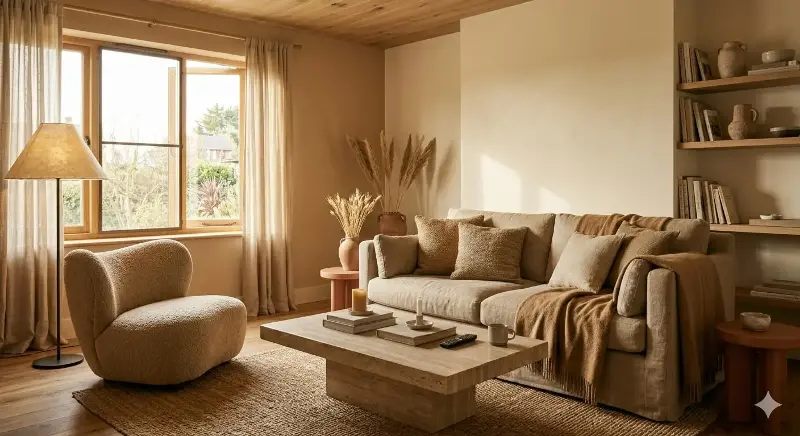
- Incorporating travertine, honed marble, or even terracotta adds a sense of "permanence" that lightweight plastics can’t touch.
- A low-slung coffee table in a matte, unpolished stone provides a heavy, grounding focal point that allows the rest of the room to stay airy and light.
3. Lean into sustainable, ‘lived-In’ timber
- Wood is the heartbeat of warm minimalism, but the finish decides everything.
- Avoid high-gloss stains. Instead, opt for sustainable white oak or reclaimed teak with a matte, oiled finish.
- Seeing the actual grain and the slight ‘wabi-sabi’ imperfections in the wood makes a room feel storied rather than staged. It’s about the tactile joy of running hand over a surface that feels alive.
4. Soften the edge with organic silhouettes
- Harsh, 90-degree angles can feel aggressive in a quiet space. To lower the ‘visual volume,’ introduce organic, fluid shapes.
- A kidney-shaped sofa or a circular dining table mimics the curves found in nature, which subconsciously signals the brain to relax. These ‘human-centric’ silhouettes prevent a minimalist room from feeling rigid or ‘stiff.’
5. Sculptural, atmospheric lighting
- Kill the ‘interrogation’ feel of bright overhead LEDs. Warm minimalism relies on ‘pools of light’ rather than total saturation.
- Use sculptural floor lamps with parchment or linen shades that wash light across your textured walls.
- When the light hits a lime-washed surface or a grain-heavy wooden cabinet, it creates depth and shadow, making the space feel intimate and layered without needing a single piece of ‘clutter.’