



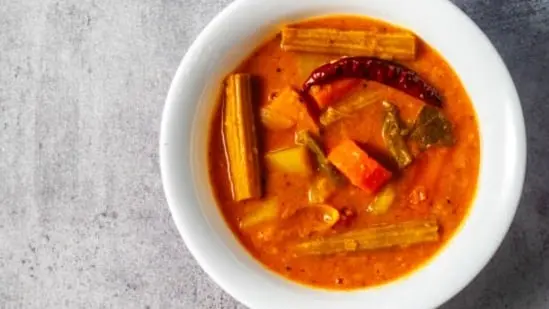
Sambar with Drumstick and Tomato is one of the most popular South Indian dal recipes, prepared using toor dal, vegetables, tamarind, and a fragrant spice blend. Originating from the southern states of India, this versatile curry is served with rice, idli, dosa, vada, and many other regional dishes. The combination of vegetables, lentils, and spices creates a meal that remains a staple in homes throughout the year.
Drumsticks contribute Vitamin C, calcium, iron, and plant compounds">Vitamin C, calcium, iron, and plant compounds">Vitamin C, calcium, iron, and plant compounds that support everyday wellness. Tomatoes provide antioxidants, Vitamin C">antioxidants, Vitamin C">antioxidants, Vitamin C, and natural sweetness that balance the tanginess of tamarind. Toor dal adds protein, fibre, and complex carbohydrates">protein, fibre, and complex carbohydrates">protein, fibre, and complex carbohydrates, making sambar a valuable part of a balanced meal. Ingredients such as turmeric, cumin, coriander, fenugreek, curry leaves, and mustard seeds contribute flavour while adding beneficial plant compounds that complement the nutritional profile of the dish.
The preparation begins with cooked toor dal combined with drumsticks, tomatoes, tamarind extract, and sambar powder. A tempering of mustard seeds, curry leaves, hing, and spices is then added to enhance the aroma. The result is a golden-orange curry with a smooth lentil base, soft vegetables, and a tangy-spicy flavour profile. The combination of creamy dal and vegetable pieces creates a texture that pairs beautifully with both rice and breakfast dishes.
Drumstick and tomato sambar is generally thicker and contains larger vegetable pieces, making it suitable for meals with rice. Rice sambar often has a richer consistency and more vegetables. Idli sambar is usually thinner and slightly milder, allowing it to soak into soft idlis easily. Dosa sambar tends to be lighter and more pourable to complement crisp dosas. While the base ingredients remain similar, each variation is adjusted to suit the dish it accompanies.
Drumstick Tomato Sambar vs Regular Sambar
Feature |
Drumstick Tomato Sambar |
Regular Sambar |
|---|---|---|
Main Vegetables |
Drumstick and tomato are the key ingredients |
Can include pumpkin, brinjal, radish, carrots, okra, or mixed vegetables |
Protein Content |
High due to toor dal base |
High due to toor dal base |
Fibre Content |
Higher because drumsticks add extra fibre |
Depends on the vegetables used |
Vitamin C |
Higher from drumsticks and tomatoes |
Varies according to ingredients |
Calcium Content |
Higher due to drumsticks |
Moderate |
Iron Content |
Good source from drumsticks and lentils |
Moderate to good |
Taste Profile |
Tangy, slightly sweet, and earthy |
Can range from tangy to mildly sweet depending on vegetables |
Texture |
Soft drumsticks with smooth dal consistency |
Varies from chunky to smooth |
Colour |
Bright orange-red from tomatoes and spices |
Usually yellow-orange or brownish-orange |
Aroma |
Fresh tomato aroma with South Indian spices |
Depends on vegetable combination and sambar powder |
Best Paired With |
Rice, idli, dosa, and vada |
Rice, idli, dosa, uttapam, and pongal |
Summer Suitability |
Excellent due to lighter vegetable profile and tangy flavour |
Depends on the vegetables used |
Digestive Benefits |
Enhanced by drumsticks, tomatoes, tamarind, and spices |
Good due to lentils, vegetables, and spices |
Nutritional Highlight |
Rich in fibre, Vitamin C, calcium, and plant protein |
Balanced source of protein, fibre, and vegetables |
Ideal For |
People looking for a vegetable-rich, nutrient-packed sambar |
Those who enjoy a variety of seasonal vegetables |
Quick Facts About Drumstick Tomato Sambar
Preparation Time: 15 minutes
Cooking Time: 30 minutes
Servings: 4–5
Calories: Approx. 140 per serving
Cuisine: South Indian
Difficulty Level: Easy
Best Paired With: Rice, Idli, Dosa
Texture: Smooth with soft vegetables
Authentic Drumstick Tomato Sambar Recipe
Tender drumsticks, juicy tomatoes, protein-rich lentils, and aromatic spices combine beautifully in this classic South Indian favourite.
Ingredients
- 1 cup toor dal
- 2 drumsticks, cut into pieces
- 2 tomatoes, chopped
- 1 tablespoon tamarind pulp
- 2 tablespoons sambar powder
- ½ teaspoon turmeric powder
- Salt to taste
- 5 cups water
For Tempering
- 1 teaspoon mustard seeds
- 8 curry leaves
- 1 pinch hing
- 2 dried red chillies
- 1 tablespoon oil
Method
- Pressure cook toor dal with turmeric until soft. Mash lightly.
- Cook drumsticks and tomatoes in water until tender.
- Mix tamarind pulp, sambar powder, and salt into the vegetables.
- Combine cooked dal with the vegetable mixture and simmer for 10 minutes.
- Heat oil and add mustard seeds, curry leaves, hing, and red chillies.
- Pour the tempering over the sambar and mix well before serving.
Smart Ways to Make Sambar More Nutritious
- Pumpkin, carrots, radish, bottle gourd, and brinjal increase fibre, vitamins, and variety.
- Fresh coriander adds flavour, antioxidants, and visual appeal.
- Freshly ground spices provide better aroma and flavour.
- Drumsticks contribute additional fibre, calcium, and Vitamin C.
- Combining toor dal with moong dal can enhance texture and nutritional diversity.
- Curry leaves contribute plant compounds and enhance flavour.
- Brown rice increases fibre intake compared to white rice.
Nutritional Profile of Drumstick Tomato Sambar
Sambar combines lentils, vegetables, tamarind, and spices to provide protein, fibre, vitamins, and minerals in a balanced meal.
Nutrient |
Approx. Amount Per Serving |
|---|---|
Calories |
140 kcal |
Carbohydrates |
20 g |
Protein |
7 g |
Fat |
3 g |
Fibre |
6 g |
Vitamin C |
Moderate |
Calcium |
60 mg |
Potassium |
320 mg |
FAQs
Why are drumsticks commonly used in sambar?
Yes, drumsticks add flavour, texture, and valuable nutrients while absorbing the spices beautifully.
Which dal is best for sambar?
Toor dal is the most commonly used lentil for authentic sambar.
Can sambar be prepared without tamarind?
Yes, though tamarind provides the characteristic tangy flavour.