



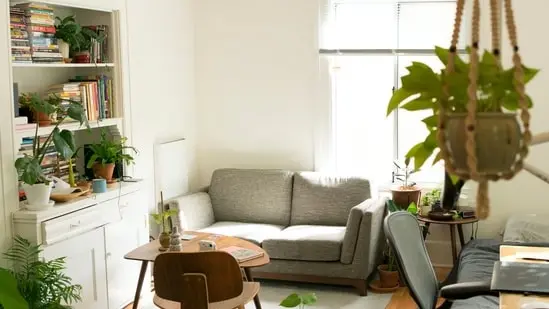
Living in any bustling city often means you find yourself amid a noisy environment, whether it is traffic on a busy road, construction work, or other urban clatter. But with some intentional design choices, you can turn your home into a relaxing, serene haven. The changes are simple, from textured walls, soft lighting, to cosy corners, so that the outdoor sound gets absorbed and doesn't disturb you indoors. This way, your home becomes your personal sanctuary, and you can truly rest and be at peace, which is especially relevant after a long day at work or when you are ill.
ALSO READ: Want your home to feel ‘lived-in’? Know the top design and decor tips for comfy interiors
To understand how one can make their indoors cosy and peaceful, Varun Poddar, founder of VOX India, shared that while you cannot eliminate every sound, smart design choices can turn your space into a soothing sanctuary.
He elaborated, “While you can’t silence every sound, you can transform your living space into a soothing space. Achieving a calmer home doesn’t have to involve major renovations; with thoughtful materials and design, you can significantly reduce the chaos and breathe the peaceful air.”
Here are some of the design pointers he listed:
1. Use functional wall and ceiling solutions for better acoustics
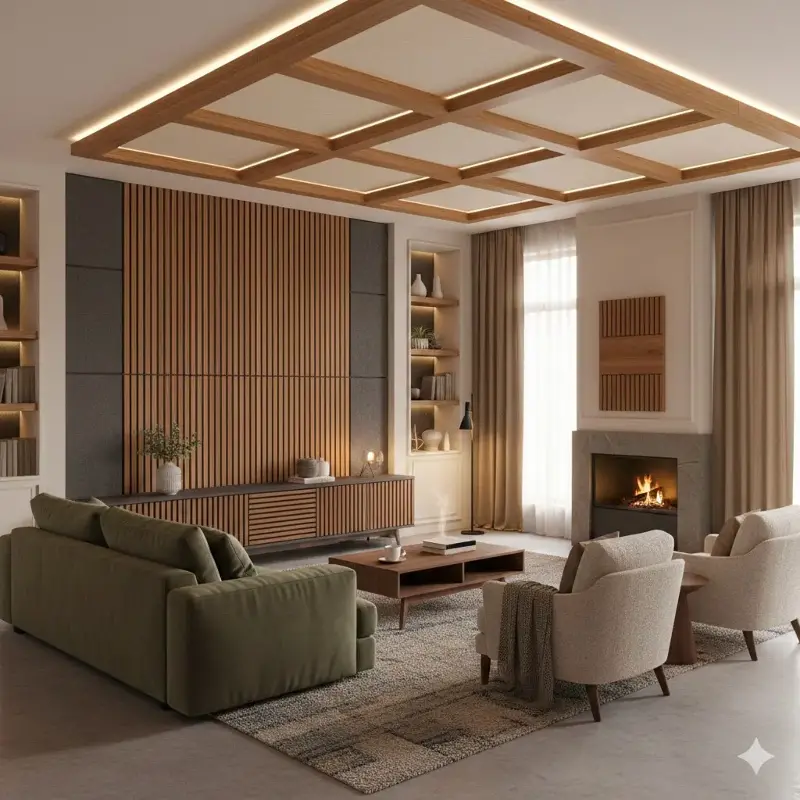
- Walls and ceilings are often the biggest contributors to how sound travels inside a home.
- Modern wall panels, slatted surfaces, and ceiling systems can act as a practical buffer by absorbing sound and reducing echo.
- A textured accent wall or thoughtfully designed ceiling can instantly make living rooms, bedrooms, and study corners feel more private - even in a noisy neighbourhood.
2. Choose lighting that visually softens the space

- Lighting has a direct impact on how calm a room feels.
- Warm, diffused lighting paired with textured surfaces - such as grooved panels or soft-toned ceilings - helps reduce glare and visual stress. Indirect lighting, lampshades, and dimmers add an evening softness that signals the mind to slow down.
3. Bring in natural materials to add warmth and reduce sound
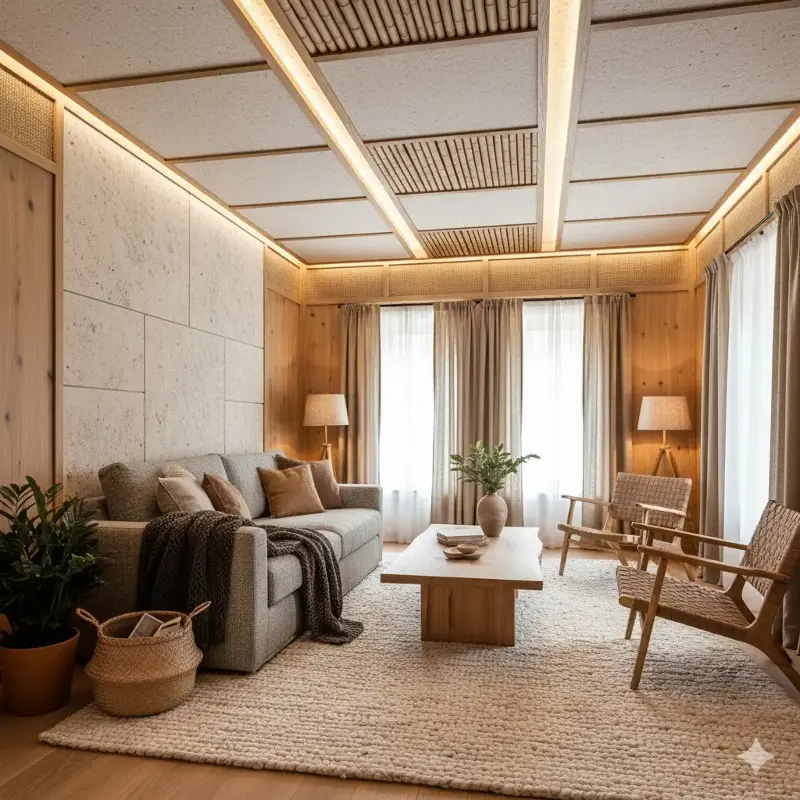
- Natural, tactile materials have an innate calming effect.
- Elements like jute, linen, cork, bamboo, and wool help absorb sound and add softness to interiors.
- These can be paired with natural-inspired wall or ceiling finishes that mimic wood, stone, or woven textures, materials that not only elevate aesthetics but also help in subtly improving acoustics.
- Incorporating these elements through rugs, furniture, throws, or panel surfaces brings warmth and reduces the harshness of noise.
4. Add calming colours through textured surfaces

- Colours influence mood, but the surface on which colour sits changes how we experience it.
- Textured wall panels, grooved designs, or softly toned ceiling treatments can bring muted greens, beiges, browns, or blues into a space in a more calming and layered way than plain paint.
- A single accent wall with subtle texture can reduce visual noise, soften the energy of a room, and create a tranquil backdrop without altering the entire interior.
5. Create grounding corners using flooring textures
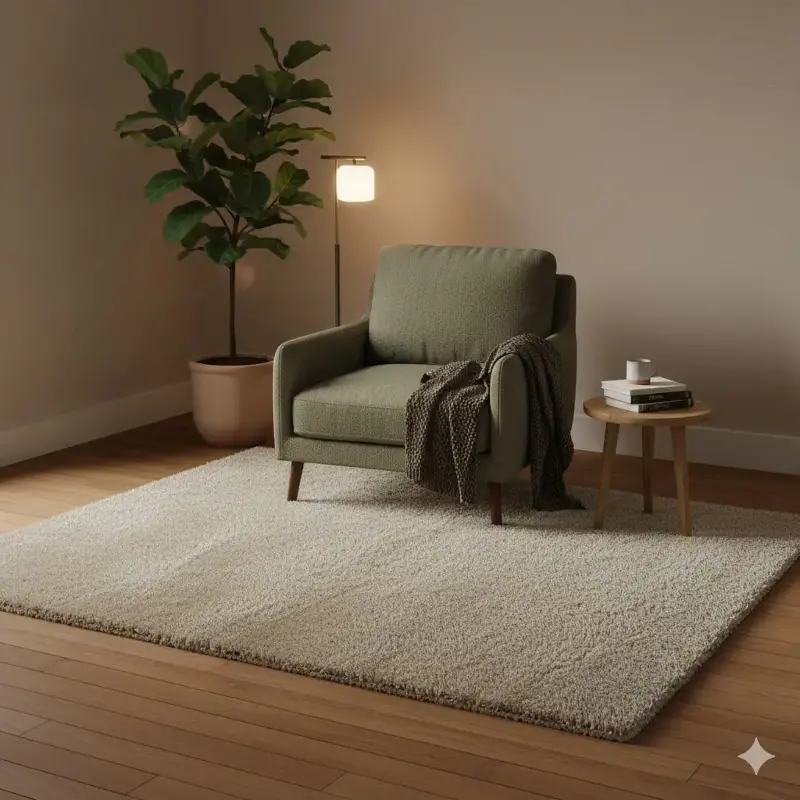
- Wood-inspired planks, soft-touch flooring, or layered rugs create tactile zones where one can unwind, stretch, or read.
- These sensory corners feel even more soothing when paired with plants and gentle lighting.