



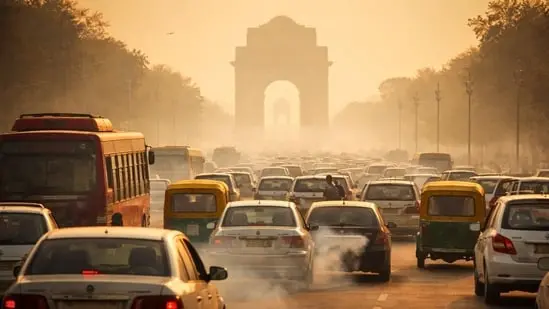
Mounting health concerns linked to worsening air quality in Delhi-NCR have prompted the Commission of Air Quality Management to consider aggressive measures targeting vehicle emissions. An expert panel set up by the authority has drafted a roadmap that could significantly alter the region’s vehicle landscape over the next two decades.
According to a report by the Times of India, the panel has highlighted alarming health indicators, noting that when AQI levels exceed 250, newborns are exposed to pollution comparable to inhaling smoke from 10–15 cigarettes daily. Rising sales of inhalers and nebulisers have also been cited as indicators of the growing public health burden.
Why the panel says urgent action is needed
Against this backdrop, the panel has proposed an immediate phase-out of BS-I, BS-II and BS-III vehicles in Delhi-NCR. It is also examining a five-year window to remove BS-IV vehicles from the region. Over the longer term, the draft suggests phasing out BS-VI two-wheelers by 2035 and BS-VI four-wheelers by 2040.
What the draft roadmap is proposing
The panel, chaired by IIT Madras professor Ashok Jhunjhunwala, has shared the draft roadmap for feedback. The proposal prioritises reducing reliance on petrol and diesel vehicles, limiting the use of internal combustion engines, and accelerating the transition to zero tailpipe emission (ZTE) vehicles, including electric and hydrogen fuel-cell models.
Given their higher contribution to urban pollution, commercial vehicles are also in focus. The draft recommends that all new commercial two-wheelers and taxis registered after April 2027 should be ZTEs. Light goods vehicles registered from April 2028 onwards would fall under similar rules, while new car registrations may be limited to electric vehicles starting April 2030.
(Also Read: Looking for dual-channel ABS? Top 5 budget motorcycles to offer the feature)
How this could affect vehicle owners and manufacturers
To protect recent BS-VI buyers, a transition period of 10–15 years has been proposed. Additional measures under consideration include seasonal usage restrictions for older vehicles, incentives for clean vehicle adoption, a legal ‘right to charge’ at homes and workplaces, and tighter enforcement of emission norms through remote-sensing-based PUC checks.