



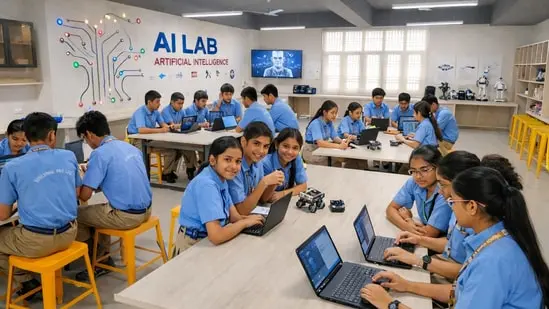
The growth of technology in classrooms has raised an important debate in modern education: AI Writing Tools vs Student Creativity. While artificial intelligence offers efficiency and new learning possibilities, it also raises a concern: Does dependence on AI affect a child’s ability to think, imagine, and express original ideas?
For parents, understanding this balance is important. As an established school in Greater Noida West, BLS World School maintains that education is not just about adopting new tools, but also about protecting thinking and creativity. This guide explores the role of AI in education, the risks it poses to creativity, and why creativity remains essential.
What Is an AI Writing Tool?
An AI writing tool is software powered by artificial intelligence that helps users generate, edit, or improve written content. In schools, these tools assist with grammar correction, sentence structure, vocabulary enhancement, and clarity.
The concern: when AI does too much of the thinking, students may engage less with the process.
At BLS World School, AI writing tools are treated as supportive learning aids, not substitutes for a child’s ideas or imagination.
How AI Writing Tools Work for Students
AI writing tools analyse vast language patterns and predict likely words or sentence structures. While this can help address writer’s block, it also introduces a risk:
If students accept AI suggestions without reflection, creativity can decline over time.
Smarter learning must involve effort, struggle, and reflection.
What Parents Must Know
AI does not think, feel, or understand meaning. It cannot replace:
- Emotional intelligence
- Personal experience
- Moral reasoning
- Original imagination
This distinction is explained to students at BLS World School, ensuring children understand that thinking must come before tools.
What Is Student Creativity?
Student creativity is the ability to think independently, generate original ideas, and solve problems in individual ways. Creativity is not limited to art—it includes writing, reasoning, communication, and innovation.
Role of Creativity in Child Development
Creativity helps children:
- Build confidence in their own ideas
- Develop emotional intelligence
- Strengthen decision-making skills
- Adapt to real-world challenges
In the future of education, creativity will continue to matter alongside academic knowledge.
Originality in Student Writing
Original writing reflects a child’s voice and understanding. Overuse of AI risks producing technically correct but emotionally limited content—a concern in many classrooms.
AI Writing Tools vs Student Creativity:
AI Writing Tools |
Student Creativity |
|---|---|
| Fast content generation | Slow, meaningful thinking |
| Pattern-based output | Emotion-driven originality |
| Predictable structure | Unique personal expression |
| Reduces effort | Builds resilience through effort |
| Efficient | Deep and lasting learning |
This is the heart of the debate: efficiency vs originality.
Impact of AI Writing Tools on Student Creativity
Positive impact (when controlled):
- Reduces fear of writing
- Supports language accuracy
Negative impact (when overused):
- Weakens idea formation
- Reduces independent thinking
- Encourages shortcut learning
At BLS World School, the focus is on minimising creative loss while maximising learning value.
Human Creativity vs Artificial Intelligence
Human creativity develops through curiosity, mistakes, and imagination. AI develops through data patterns.
When AI replaces struggle, creativity is affected.
How AI Supports Smarter Learning
AI writing tools can:
- Improve grammar and sentence flow
- Expand vocabulary
- Provide structural guidance
AI in Classrooms for Skill Development
Used responsibly, AI can support skill development without replacing thinking.
Disadvantages of AI Writing Tools in Student Learning
Over-Dependence on AI
Students who rely heavily on AI may lose confidence in their own ideas.
Threat to Original Thinking
Using AI-generated content without reflection can reduce originality and weaken creative thinking skills in students.
Plagiarism and Ethical Concerns
AI-generated text is not automatically plagiarism-free. Ethical guidance remains important.
Long-Term Impact on Creativity
Unchecked AI use may slow creative growth, which can be difficult to rebuild later.
Can Students Use AI Ethically?
Yes— when AI supports learning, not replaces it.
School Guidelines for AI Use
- Independent drafting first
- AI used only for refinement
- Human creativity always leads
How Parents Can Help Balancing AI Tools and Creativity
- Ask children to explain ideas verbally before using AI
- Encourage handwritten drafts
- Promote discussion-based learning
Creativity Development Programmes
BLS World School emphasises creativity through:
- Project-based learning
- Open-ended questions
- Creative expression activities
AI in Classrooms: What Parents Should Know
Should Schools Allow AI Writing Tools?
Yes—with structure, supervision, and clear limits.
Role of AI in Education Today
The role of AI in education is to assist learning, not dominate it.
Future of Education: AI Must Not Replace Creativity
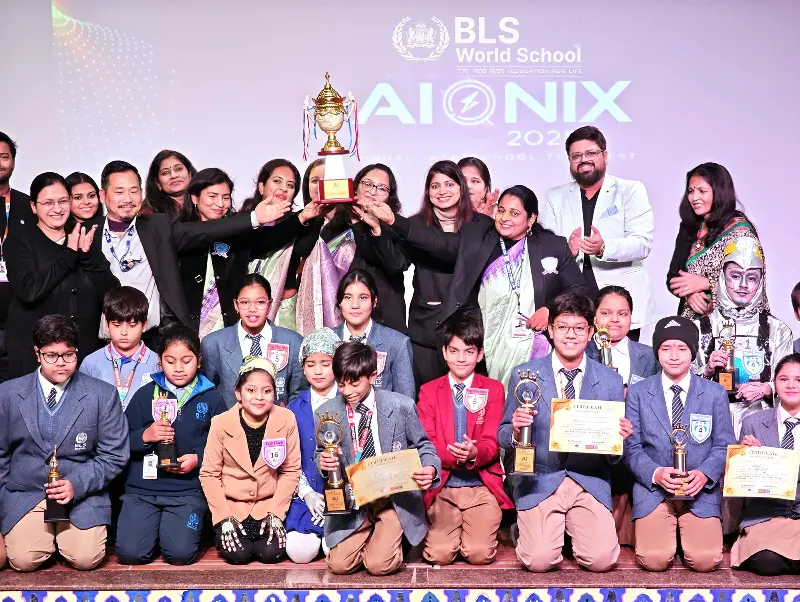
The future of education lies in blending technology with human creativity. AI literacy is important, but creative thinking will always remain essential.
Conclusion
AI writing tools are powerful, but student creativity requires care. Once originality and independent thinking decline, they can be difficult to restore. In the debate of AI Writing Tools vs Student Creativity, creativity remains central.
BLS World School focuses on ensuring technology supports learning without limiting imagination—preparing students to engage with an AI-driven world while retaining creative capacity.