



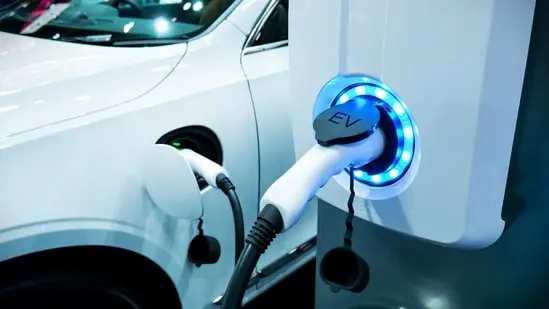
Copper, the metal of conductivity, is the unsung hero, which is reimagining India's electric vehicle (EV) industry. As India targets 30% electric vehicle (EV) penetration by 2030, copper demand could double to 2-2.2 million tonnes annually, surging from batteries to chargers across the entire value chain. EVs guzzle three to four times more copper than internal combustion engines (ICE) vehicles—83 kg vs. 23 kg—making supply security mission-critical for net-zero 2070.
India imports 60% of its copper and domestic output is stagnating at 0.5 million tonnes per year. The anode copper foil, which acts as a current collector for EV battery's negative electrode (anode), enables lithium-ion flow between electrodes. Such copper foils with unrivalled conductivity cuts resistance by 25%, boosting range and safety, but requires 36-39 kg of copper.
EV traction motors demand 30-50 kg copper windings for efficiency—3x ICE. Wiring harnesses require 20-30 kg to handle 350 kW fast-charging bursts without overheating. Moreover, vehicle-to-grid (V2G) technology allows electric vehicles (EVs) to send stored energy from their batteries back to the power grid, acting as mobile energy storage to support grid stability, integrate renewables, and reduce peak demand. It turns EVs into a large, distributed battery system that can both charge grid-to-vehicle (G2V) and discharge (V2G) energy.
India targets 3.9 million EV chargers by 2030 to support 30% EV penetration (10-30 million vehicles), as per NITI Aayog and MoPNG roadmaps. This mix prioritises urban alternating current (AC) hubs (7-22 kW slow chargers, 80% of total) for apartments, offices and highway DC fast chargers (50-120 kW, 1,000-2,000 units) for intercity travel. Each requires substantial copper for cables, transformers, and busbars to handle high-current flows safely.
While the demand is expected to grow exponentially, supply will lag substantially. Major producers like Chile (25% global supply) and Peru (10%) face chronic output shortfalls from declining ore grades, water shortages, strikes, and delays, with forecasts suggesting a cumulative gap of 19 million tonnes by 2050 without new mines or recycling facilities being developed.
Moreover, US President Donald Trump's Section 232 tariffs imposing 50% tariffs on semi-finished copper in August 2025, triggered a rapid accumulation of physical copper inventory in the COMEX (Commodity Exchange Inc.) warehouses—the primary US futures exchange. It was driven by traders anticipating price spikes or supply disruptions, resulting in copper pricing rising to $12,000/tonne.
Copper shortages threaten to derail India's EV revolution, potentially driving battery costs up 25% and stalling the critical 30 million EV target by 2030, derail the FAME III programme. and jeopardise the 5 lakh jobs. Yet this crisis provides an unprecedented opportunity to slash the $15 billion annual copper import bill among other benefits. No wonder, India's ministry of mines Vision Document on Copper Sector (released in July 2025) charts a roadmap for self-reliance with plans to auction 12-15 new copper blocks.
Additionally, there is also a move to extract copper from deep-sea nodules-- potato-sized mineral concretions—found at 4,000-6,000m depths via the government’s National Mineral Exploration Trust (NMET). The pilot extraction is targeted for 2028-30, yielding 0.1-0.2 million tonnes per annum potential.
Copper isn't just metal; it's India's green mobility multiplier—rewiring import dependence into domestic dominance, powering Viksit Bharat's 2070 net-zero pledge. Hence, India must urgently bridge its copper demand-supply gap through targeted short- and long-term strategies.
It could fast-track auctions of 12-15 copper blocks in Rajasthan, Jharkhand, and Odisha with single-window clearances within 90 days, provide a ₹10,000 crore PLI scheme—offering zero import duty on equipment and five-year goods and service tax GST exemptions to attract the major players to build smelters in Kutch areas and reopen the Sterlite copper smelter plant in Tamil Nadu .
In the longer term, companies like Vedanta Zambia and Adani Chile should be allowed to enter into deals with foreign governments, build more recycling plants because it uses 85% less electricity than digging new copper. Under ASEAN, India can enter a government-to government deal with Indonesia for copper before Trump tariffs hit. After all, the metal doesn't just conduct electricity—it powers India's green ascent.
This article is authored by Amir Ullah Khan, development economist and public policy strategist.