



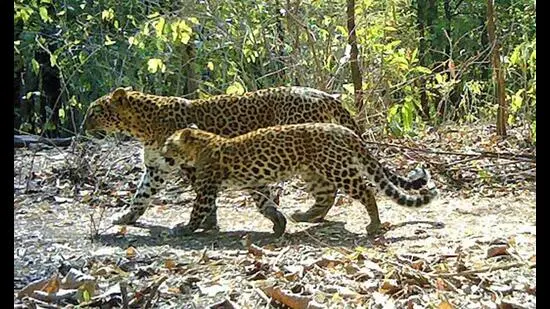
The Rajasthan forest department is considering fitting leopards in Jhalana Leopard Reserve with radio collars and increasing the night patrolling to prevent leopards from straying into Jaipur’s residential areas.
“The proposal is being considered after incidents of leopards from Jhalana straying into the city and creating panic. The radio collars will help us track them in real-time and come up with a better strategy to prevent their movements in the densely populated areas,” said chief wildlife warden Arun Prasad.
Officials said the proposal is being considered as part of a pilot for a structured wildlife management plan across Rajasthan.
Prasad said the radio collars have to be lighter compared to those used for the tigers. “In the next one or two weeks, we may attach the collars to two to three leopards,” said Prasad.
A second official said radio collars have been fitted to leopards in Maharashtra and Gujarat.
Deputy forest conservator Vijaipal Singh said the GPS tracker, which helps track the movement and gather data on the dispersion pattern, is the key feature of a radio collar. “The analysis of the data will help the forest officials to predict the movement of a leopard.”
A leopard was caught from Jaipur’s Malviya National Institute of Technology on Tuesday after three days. “The leopard was first spotted in Bajaj Nagar on Saturday. Residents of other nearby colonies also reported having sighted the leopard on Monday,” said Singh.
Leopards have repeatedly strayed from the Jhalana Leopard Reserve, which has at least 40 of them, including into Jaipur’s high-security Civil Lines areas housing residences of the chief minister, governor, and ministers.