



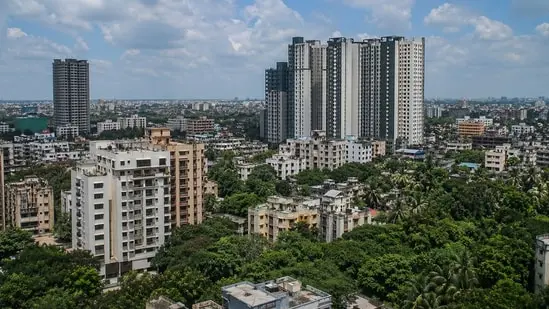
For much of the past two decades, India’s infrastructure story has been driven by expansion— more roads, more corridors, more urban clusters, and more vertical development to keep pace with population growth and economic ambition. Scale became the clearest symbol of progress. But that metric is no longer enough. As Indian cities enter a more demanding phase of urban growth, the debate is shifting from how fast infrastructure can be built to how well it improves everyday life.
Across India’s major metropolitan regions, infrastructure is no longer being judged only by the capacity it adds. It is increasingly being assessed through the lens of livability, environmental resilience, and long-term sustainability. The real question now is not simply whether cities can grow larger, but whether they can grow better.
That shift comes at a crucial moment for India’s urban future. Economic growth, rising mobility, and expanding employment corridors continue to accelerate urbanisation. New transit systems, expressways, and technology districts are redrawing the map of Indian cities, especially in high growth regions. At the same time, congestion, pollution, climate stress, and infrastructure strain are becoming harder to ignore. In many cities, these pressures are no longer future risks—they are part of daily life.
As a result, the definition of successful urban infrastructure is changing. Earlier development cycles rewarded projects that could be delivered quickly and scaled aggressively. Today, there is growing recognition that infrastructure must also support environmental comfort, public health, and user experience. Open space, pedestrian movement, airflow, water management, and ecological integration are no longer side issues; they are becoming central to how cities are planned.
This shift also reflects changing expectations among urban residents. People are more conscious of how the built environment shapes physical and mental well-being. Long commutes, rising heat, noise, and shrinking green cover have changed what citizens want from infrastructure. There is growing demand for cities that feel more breathable, better connected, and more balanced—not just more efficient on paper.
The pandemic accelerated this rethinking by exposing the vulnerabilities of hyper-dense urban systems. It brought renewed attention to ventilation, access to public space, and environmental quality—issues that had often been treated as secondary in infrastructure debates. Since then, wellness has become a stronger influence on how urban development is imagined. Infrastructure is now expected to support not only productivity, but healthier and more sustainable ways of living.
Climate pressure is reinforcing that change. Rising temperatures, erratic rainfall, flood risk, and heat stress are forcing cities to rethink conventional development models. Infrastructure that once emphasised concrete expansion is now being reconsidered through the lens of resilience and ecological adaptability. Green corridors, water-sensitive planning, shaded public spaces, and sustainable drainage are moving closer to the centre of urban design.
Vertical growth is also central to this transition. As land pressure intensifies, cities are increasingly growing upward rather than outward. But density will succeed only if it can coexist with environmental quality. That is why infrastructure planning is placing greater emphasis on cross-ventilation, natural light, integrated greenery, and thermal comfort in high-density zones. The aim is clear: compact growth must not come at the cost of livability.
Technology and construction innovation are accelerating this shift. Advanced building systems, precision engineering, and sustainability-focused materials are improving execution while strengthening long-term performance. The benchmark for successful infrastructure is no longer just speed of delivery, but durability, efficiency, and adaptability over time.
Governance and institutional credibility are also becoming central to the infrastructure agenda. As public and private investment in urban expansion rises, scrutiny of compliance, environmental responsibility, and long-term maintenance is intensifying. Citizens and investors alike are demanding greater transparency, accountability, and execution quality. Infrastructure is increasingly being seen not only as a sign of growth, but as a test of institutional trust.
Demand patterns are also shifting. New business districts, mobility corridors, and industrial clusters are reshaping urban geography across India. Peripheral zones around major cities are attracting investment because of stronger connectivity and economic potential. But this expansion also raises an old risk: repeating the mistakes of unchecked sprawl. The next phase of growth will need to embed environmental planning from the start, rather than treating it as an afterthought.
India’s next phase of infrastructure development is likely to be defined less by spectacle and more by intent. A period in which progress was measured mainly by scale is giving way to one shaped by quality, resilience, and human-centred planning. Infrastructure is no longer only about enabling movement or absorbing density; it is about shaping how cities function, feel, and endure.
In the years ahead, the most successful urban projects may not be the tallest or the fastest delivered. They will likely be the ones that strike a durable balance between growth and sustainability, density and openness, and economic ambition and environmental responsibility. As Indian cities continue to expand, the real challenge will not be simply to build more infrastructure, but to build cities that work better for the people who live in them.
(The views expressed are personal)
This article is authored by Nagabhushan Reddy, CEO, founder & managing director, NBR Group, Bengaluru.