



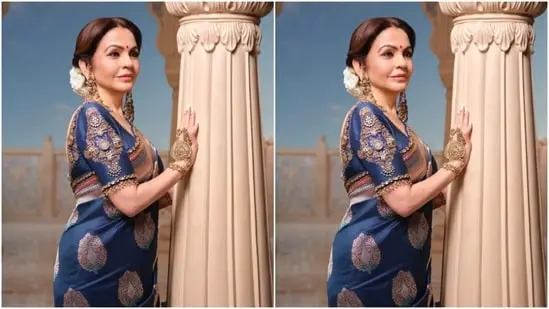
The recent star-studded Christmas Gala at Nita Ambani’s Swadesh Store in Mumbai captured everyone’s attention. While Bollywood icons filled our feeds, the true protagonists were the exquisite displays of Indian craftsmanship. For those who appreciate heritage, the store serves as a vibrant sanctuary for traditional arts.
From the intricate silk brocades of Varanasi to the masterful, feathered motifs of Odisha ikats, each fabric told a unique story. These textiles represent centuries of skill passed down through generations. Explore how these diverse patterns and textures continue to define India’s rich aesthetic identity.
Banarasi: Timeless splendour in silk
Banarasi silk remains an eternal favourite in the world of luxury. Nita Ambani’s peacock blue saree showcased the magnificent Kadhua technique. This laborious method involves weaving each motif individually, ensuring no loose threads remain on the back. Beyond Kadhua, these textiles feature diverse styles like Tanchoi for a satin-like feel. Jangla displays heavy floral patterns, while Cutwork offers a lighter texture. Each piece is a timeless masterpiece.
Kancheepuram: Regal silk heritage
Kancheepuram silk remains the ‘Queen of Silks’, celebrated for its weight and lustrous mulberry yarns. This laborious interlocking method weaves the border and body separately, then joins them seamlessly. Another hallmark is Petni, which attaches a contrast pallu. These heavy, handloomed treasures, often featuring temple motifs, represent the peak of South Indian artisanal heritage.
Odisha Ikat: Exquisite Sambalpuri weave heritage
Odisha ikat is a true testament to the weaver’s precision and artistry. Known locally as Bandhakala, this tradition relies on the complex Bandha technique. Before weaving begins, the threads are meticulously tied and dyed to create specific patterns. This process results in the iconic "feathered" edges that define the style. Famous varieties like Sambalpuri and Khandua often feature motifs of lions, elephants, and lotuses, reflecting the region's deep spiritual roots.
Paithani: The majestic Mahavastra silk
Paithani silk is truly the Mahavastra (Maha vastra in Marathi; the supreme royal garment) of weaves. This regal tradition is defined by its ornate, hand-woven borders and shimmering gold-thread work. The tapestry technique uses tiny wooden needles to create kaleidoscopic designs, such as the iconic peacock and lotus motifs. Paithani relies on plain weaving to produce its characteristic jewel-toned fabric. It remains an enduring symbol of Maharashtrian grace.
Patola Ikat: Precision Double Ikat Masterpiece
Patola is the exquisite double-ikat silk of Gujarat, often called the ‘Queen of Silks’. This rare craft relies on a complex resist-dyeing process where both warp and weft threads are tied and dyed before weaving. The precision required to align these threads into perfect patterns is incredible. Unlike the feathered edges of Odisha ikat, Patola features sharp, geometric clarity. Each piece is a reversible masterpiece of vibrant, enduring colour.
Jamdani: Ethereal art on air
Jamdani is a legendary textile tradition, often described as "art on air" due to its sheer, muslin base. This intricate technique involves weaving supplementary weft threads directly into the fabric by hand using bamboo needles. Unlike standard brocades, the motifs appear to float on the translucent surface. The precision required to balance these delicate threads is immense. Each diaphanous piece remains a breathtaking testament to the enduring mastery of Bengali weavers.
Chanderi and Maheswari: Light as woven air
Chanderi and Maheshwari silks are the pride of Madhya Pradesh, renowned for their translucent elegance. Chanderi is known for its "woven air" quality, using silk and fine cotton to create lightweight fabrics. At the Swadesh event, Karisma Kapoor stunned in a sophisticated Chanderi saree.
Maheshwari textiles are distinctive for their reversible borders and geometric patterns. These were famously revived by Rani Ahilya Bai Holkar in the 18th century to support local artisans. Both traditions use the extra-weft technique, weaving delicate motifs that float gracefully upon the fabric’s shimmering surface.
Similar articles for you
Warm, stylish and practical: Best fleece jackets for women to stay snug this winter
Shloka Ambani and Akash Ambani's shiny looks stand out at Swadesh store event
Isha Ambani looks spell-binding as she showcases Indian craftsmanship in luxe gold saree with statement blouse at event
Who wore what at Swadesh event: Ananya Panday in orange to Karisma Kapoor in white, see all the best saree looks