



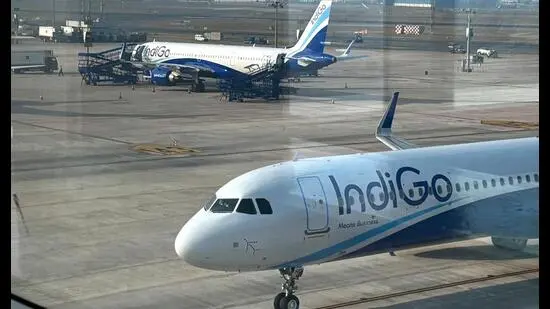
India’s aviation regulator imposed an unprecedented ₹22.2 crore penalty on IndiGo on Saturday for the airline’s operational collapse that stranded over 300,000 passengers last month. In three days, 2,507 flights were cancelled and 1,852 delayed — the most acute crisis in the country’s aviation sector. The unparalleled crisis deserved unforeseen penalties. But the question is not whether the penalty is unprecedented, but whether it is adequate—and the answer is no.
The inquiry committee’s findings are unambiguous. IndiGo pursued “minimal recovery margins” while maximising crew and aircraft utilisation, creating a system so brittle that normal operational stress shattered it. The airline had two years to prepare for stricter crew fatigue rules that took effect in November 2025. It chose instead to maintain hiring and pay freezes while expanding planned winter operations by 9.6% compared to the previous year. IndiGo projected “nil impact” from the new rules in October 2025, weeks before the meltdown. The inquiry found the airline “failed to adequately identify planning deficiencies”.
Now, consider the monetary consequences. The ₹22.2 crore fine represents 0.31% of the ₹7,263 crore net profit IndiGo recorded in the 2024-25 financial year, a year when it had a turnover of ₹80,803 crore. The penalty is a mere blip in its economics — amounting to less than 2.5 hours of the airline’s earnings last year. The fallout for its executives is a similar story. Chief executive Pieter Elbers received a “caution” and chief operating officer Isidre Porqueras Orea was “warned”. It was the senior vice president for operations who was removed — the only executive to face material consequences. The architects of IndiGo’s cost-cutting model appear to have escaped with administrative reprimands. And then there is the spotlight on the regulator’s own role. The inquiry cited “inadequate regulatory preparedness” — a rare admission that DGCA failed its oversight mandate, with little known consequence as of now.
European and American regulators impose penalties calculated as percentages of annual revenue, designed to hurt. India must follow suit. The country’s aviation market is a duopoly between IndiGo and Air India. When a carrier commanding 60% market share optimises to the point of systemic fragility, costs are socialised across passengers while profits remain private. IndiGo will emerge with market dominance intact, profitability barely dented, and leadership unscathed simply because of the market power it holds. Adequate regulatory deterrence must account for this power asymmetry, imposing penalties severe enough to make reckless cost-cutting genuinely uneconomical.