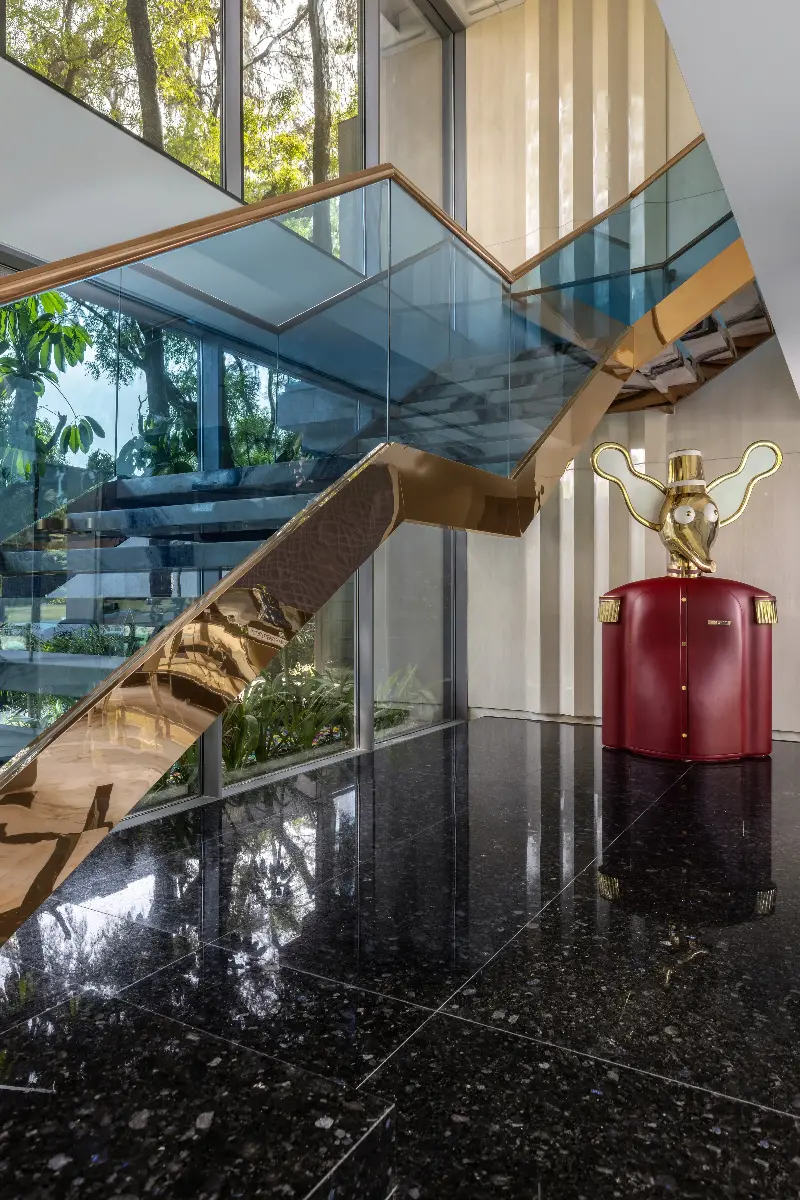
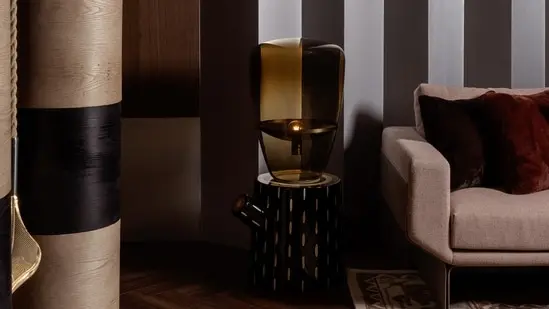
Luxury interiors in 2026 will move away from spectacle and towards sensibility. The focus will be on spaces that feel deeply personal, warm, and quietly indulgent, with interiors that offer emotional grounding rather than overt display. As the world turns inward, design will respond with greater warmth, tactility and thoughtful restraint.
The return of warmth
The colour palette of 2026 will be steeped in coffee, mocha and cappuccino tones, layered with jewel-toned browns and muted, brugue-inspired hues. These warm, burnished shades with subtle undertones are expected to lend depth, elegance and a sense of quiet drama, says Sanjyt Singh, a well-known interior designer.
These shades are expected to evoke comfort and permanence, offering a welcome counterpoint to years of cool minimalism. Warm colours create a cocooning effect, at once intimate and luxurious, making them especially resonant in today’s uncertain global and geopolitical climate, he says.
One of the defining trends set to shape the interior design palette of 2026 is colour drenching. What began as painting walls in a single hue will evolve into fully immersive environments, with ceilings enveloped in the same shade. When executed with nuance, colour drenching lends both compact apartments and sprawling residences a sense of depth, cohesion and quiet drama, Singh explains.
Personal sanctuaries: A new way of living at home in 2026
Homes are expected to be reimagined as sanctuaries in 2026. As socialising shifts from clubs to dining tables, interiors will be seen as adapting to more intimate rituals. Formal dining rooms are expected to give way to relaxed, informal dining spaces designed for long conversations rather than occasion-driven entertaining.
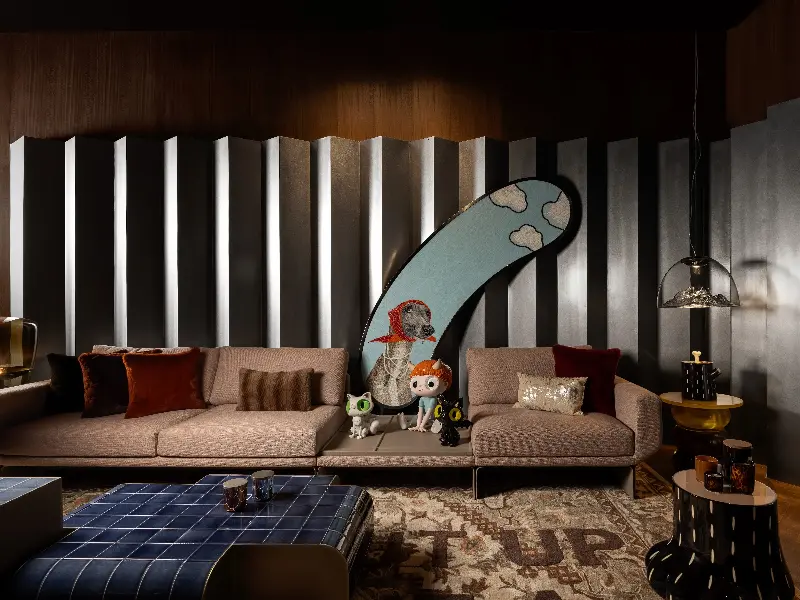
The traditional television-centric living room is set for a rethink. Many homeowners may prefer to keep screens out of formal spaces, giving rise to lounges, comfortable, flexible zones where families gather, and children can play within sight. There will be a renewed emphasis on family sit-downs and shared time, he says.
Also Read: Planning to buy an ultra-luxury branded residence? Here’s what you should know
Designing for wellbeing as AQI rises
Rising air pollution levels are expected to make wellbeing a non-negotiable pillar of luxury interiors. Advanced air-filtration systems will be increasingly integrated seamlessly into air-conditioning units, ensuring a continuous supply of purified, fresh air without visual intrusion. Concealed filtration and air-quality management systems are expected to become the norm rather than aspirational add-ons, says Singh.
Balconies, while still appreciated for their aesthetic value, may be rethought in dense urban settings. Though they enhance visual appeal, practical usage is likely to decrease as poor air quality may discourage people from spending time outdoors. In contrast, private bungalows will continue to open out into landscaped gardens, offering a more controlled and healthier connection with the outdoors.
Lighting that whispers: Coves and warm glow in 2026
Lighting in 2026 is set to be deliberately understated. Harsh overhead fixtures and glare-inducing pendants are expected to give way to indirect illumination, layered lighting and architectural coves integrated into walls and ceilings. The focus will be on creating sufficient light without it being intrusive, eliminating direct sources that hit the eye or reflect harshly off surfaces.
Warm white lighting is expected to emerge as the gold standard, carefully calibrated to avoid both clinical brightness and overly yellow tones.
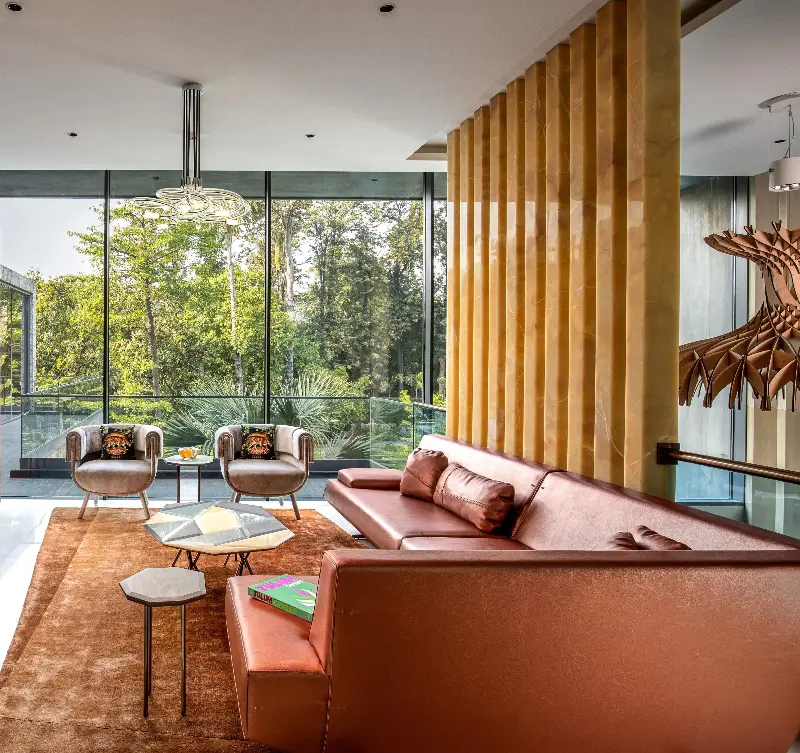
Thoughtful lighting design will be key, utilising coves, concealed fixtures, and ambient lamps to create spaces that feel effortless, elegant, and deeply inviting, where light enhances the mood rather than dominating the room, says Singh.
Beyond minimalism and maximalism: Why midimalism will define design in 2026
The long-standing divide between Nordic restraint and heritage maximalism is set to dissolve in 2026. In its place is expected to emerge a more nuanced, deeply individualistic approach to design, one that moves clients away from trend-driven interiors that date quickly, and towards spaces curated with intention and meaning.
Also Read: From luxe to simple: Homeowners weigh in on interior spending with some saying ‘Ghar ko ghar hi rakho, hotel mat banao’
In a midimalist home, a minimalist sofa may comfortably coexist with an eclectic artefact; a pared-back Nordic wall treatment might frame a grandmother’s shawl or a vintage carpet.
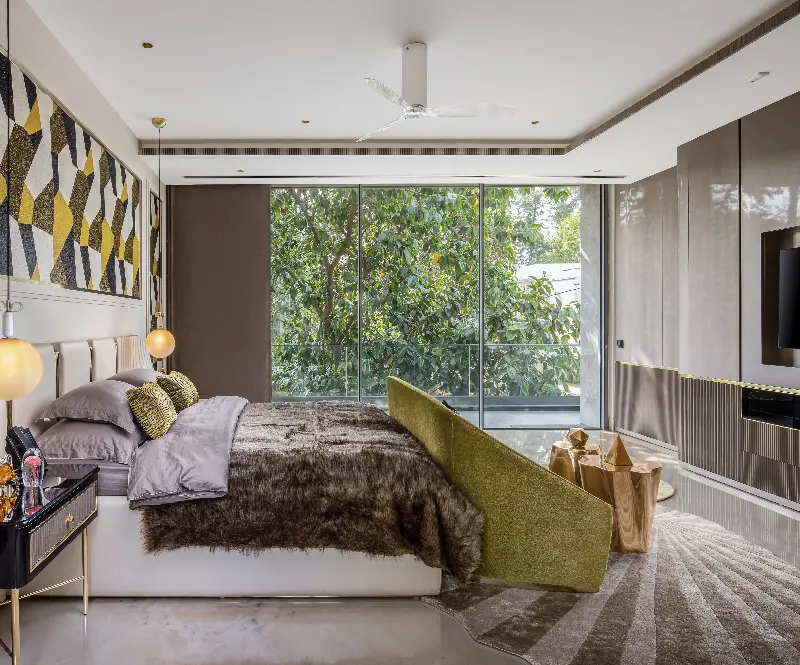
“We encourage clients to incorporate pieces they genuinely love, with the focus on creating an eclectic yet cohesive design that feels both personal and harmonious. The emphasis is not on following a rigid theme, but on achieving harmony through the right balance of scale, colour and proportion. The mix should feel personal, not chaotic,” he says.
For the uninitiated, midimalism, sometimes referred to as middle-malism occupies the refined space between minimalism and maximalism. It embraces colour, pattern and meaningful personal objects, yet remains anchored in balance and restraint. The result is an interior that feels expressive but never overwhelming; curated rather than crowded, where calm and order coexist effortlessly with character and warmth.
Collaboration - the new design ethos in 2026
In 2026, design is expected to become increasingly collaborative.
Interior design projects often begin with an inventory of what clients already own: handwoven carpets, vintage furniture, heirloom textiles. A grandmother’s silk stole may be framed as art; a modest bedside table may be reimagined as a sculptural statement, Singh explains.
Also Read: New Year 2026 reality check: Should AQI be the new homebuying filter?
Design is expected to become more fluid. “We encourage our clients to share objects discovered during travels, allowing homes to evolve over time,” he says.
Kitchens reimagined
The era of the open kitchen is set to decline in 2026, particularly in India, where cooking is elaborate and rich in spices. In its place, two- and three-tier kitchen layouts are expected to take centre stage. The primary kitchen will handle heavy cooking, while secondary spaces will be designated for plating and light preparation, ensuring that dining areas remain free from lingering aromas.
Stainless steel finishes are poised to trend, valued not only for their professional, polished aesthetic but also for their durability, hygiene and resistance to wear. In this evolving landscape, functionality will be increasingly recognised as the ultimate luxury, says Singh.
Bathrooms in 2026
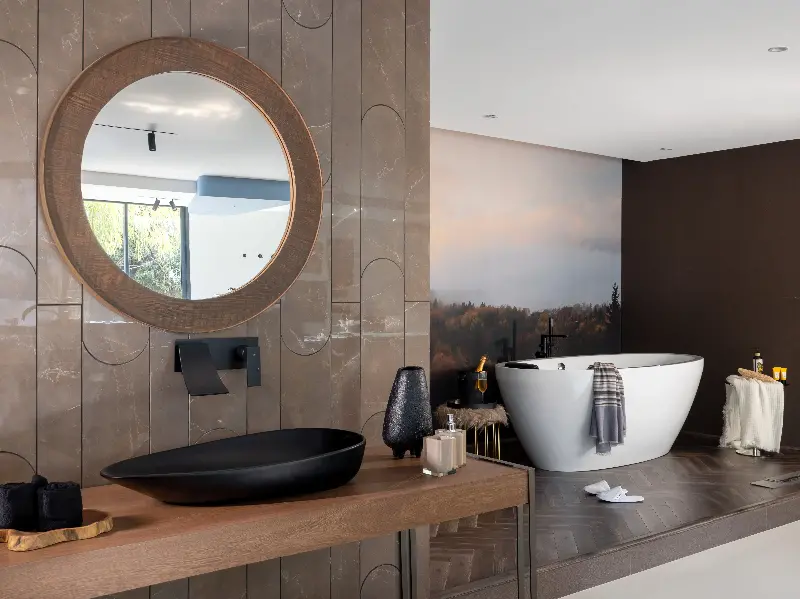
Matte-finish tiles in earthy, subdued tones are expected to replace glossy surfaces, creating spaces that feel calm, tactile and spa-like rather than clinical.
Interior design and the role of artificial intelligence
While artificial intelligence is increasingly used for visualisation and graphic support, it remains peripheral to true design. AI can generate images, but it cannot intuit personal history or emotional resonance. “Luxury interiors continue to rely on human discernment, on knowing where an heirloom belongs, or how memory shapes space,” says Singh.
Art to reclaim its position
Art will continue to remain central to design in 2026. The era of textured whites and neutral abstractions is expected to give way to appreciation for original canvas works. Collectable art, rich in colour and narrative, will once again anchor spaces and express individuality, says Singh.