



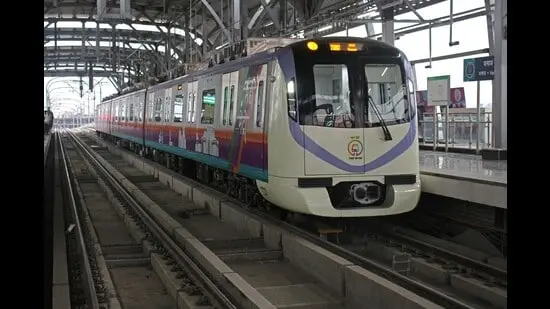
Last week’s borewell drilling incident that triggered water leakage into the Shivajinagar–Swargate underground Metro tunnel in Pune may appear, at first glance, like an isolated act of negligence. It is not. Within days, a similar lapse surfaced in Mumbai, where an illegal borewell on a government plot damaged a stretch of the underground Metro Line 3 tunnel near Chhatrapati Shivaji Maharaj Terminus, leading to the suspension of a civic official.
Two cities. Two incidents. One underlying problem: India’s fast-growing urban centres are building critical infrastructure without a clear understanding of what lies beneath their own ground.
This concern becomes sharper in Pune today, because the city is not just expanding on the surface — it is preparing to go big underground. The Pune Municipal Corporation (PMC), along with the Pune Metropolitan Region Development Authority (PMRDA) and the state government, is pushing an ambitious plan to develop an underground “Patal Lok” network spanning nearly 52 km. Touted as a flagship project and a priority for the chief minister Devendra Fadnavis, the plan aims to decongest roads by shifting utilities, parking, and even pedestrian movement below ground.
But the recent borewell incident raises an uncomfortable question: Is Pune ready for such a leap?
The metro project itself offers a cautionary tale. Underground corridors, especially in the dense old city, are complex engineering exercises that demand precise mapping of existing utilities — water pipelines, sewer lines, cables, and, crucially, legacy structures like wells. Yet, a single borewell drilling on private land was enough to cause water ingress into a metro tunnel. This is not merely about one errant contractor or a lapse in permissions. It points to a deeper governance gap.
Pune does not have a unified, publicly accessible, and actively used underground utilities map. Multiple agencies — the PMC, Maharashtra Metro Rail Corporation Limited (Maha-Metro), water supply departments, electricity utilities, telecom operators — maintain their own fragmented datasets, if at all. There is little real-time coordination, and enforcement of activities like borewell drilling remains weak.
The risks of such blind spots are not theoretical. In 2024, a PMC truck fell into a sinkhole within the City Post Office premises in Budhwar Peth. The ground beneath had given way because of what was later believed to be an old, filled-up well — one that did not exist on any official map. The incident was treated as a freak accident. In reality, it was a warning.
Mumbai’s recent episode reinforces the pattern. There, too, an illegal borewell went unnoticed until it caused damage to a critical underground metro tunnel. The suspension of a junior official may address accountability at the lowest level, but it does little to answer the larger question: how are such activities slipping through the cracks in cities that are simultaneously investing thousands of crores in underground infrastructure?
The answer lies in the way urban governance is structured. Permissions for borewells, building works, and utility digging are often processed in silos. Field-level verification is inconsistent. More importantly, there is no integrated command system that flags risks in real time — for instance, a borewell being drilled dangerously close to a metro tunnel.
As Pune moves ahead with its 52-km underground “Patal Lok” vision, this gap could prove costly. Building below the surface is not just about engineering prowess or budgetary allocation. It is about data — accurate, updated, and shared across agencies. Without that, every excavation becomes a gamble.
There is also the question of legacy infrastructure. Cities like Pune have layers of history beneath them — old wells, Peshwa era water lines, drainage channels, buried structures — many undocumented. Ignoring this while planning modern underground networks is akin to building on assumptions rather than evidence.
To be sure, the ambition behind taking infrastructure underground is not misplaced. With limited surface space and growing congestion, cities will have to look below ground. But ambition without preparation can backfire. The cost of a mistake is not just financial; it is about safety, disruption, and erosion of public trust.
The borewell incidents in Pune and Mumbai should serve as a moment of pause. Before tunnelling deeper, cities need to map smarter. A comprehensive underground utilities atlas, strict enforcement of drilling permissions, real-time coordination between agencies, and accountability that goes beyond token suspensions — these are not optional add-ons. They are prerequisites.
Otherwise, Pune risks building its future on a foundation it does not fully understand.