



Union Finance Minister Nirmala Sitharaman announced the Union Budget 2026-27 on Sunday, February 1 with some major takeaways for the tourism and hospitality sector. This year around, a heightened emphasis on cultural heritage is rather evident in the Budget. The plans to develop 15 archaeological sites including Lothal, Dholavira, Rakhigarhi, Adichanallur, Sarnath, Hastinapur and Leh Palace into more experience-forward destinations.
If you happen to be a thorough patron of incredible India, especially when it comes to satiating your wanderlust, these archaeological sites across the country carry a million stories rooted in the past.
Lothal, Gujarat
The story: The relevance of Lothal dates back to around 2400 BCE, with habitation going back to 3700 BCE. While floods are what led to its natural decline, the port city still stands tall as one of the earliest specimens of advanced town planning from the Indus Valley Civilisation.
Situated near the Bhogava river in the Gulf of Khambat, it's history speaks of a vital port for trading in beads, gems and ornaments. A brick-lined dockyard which enabled maritime trade in its time is a major attraction as is the highly organized city layout complete with advanced drainage systems, warehouses and a bead-making factory. Excavations by the Archaeological Survey of India (ASI) lead to the discovery of fire altars, seals from Mesopotamia/Persia, and pottery.
Must visit: The Archaeological Survey of India's museum in Lothal was established in 1976 and harbours paraphernalia from its glorious past. The government is currently developing a National Maritime Heritage Complex (NMHC) in the region.
How to get there: Ahmedabad's Sardar Vallabhbhai Patel International Airport is the closest airport to Lothal, the latter being located 90-91kms from there. Travel time is about 2.5 to 3 hours via a cab or private car.
Dholavira, Gujarat
The story: A top-notch Harappan city in its time, Dholavira's historical relevance comes from its state-of-the-art and sustainable water engineering mechanism, very topical today, given the current condition of the world from the lens of sustainability.
Unlike the trend noticed in other mud-brick Harappan cities, Dholavira was built in stone, a massive stone wall surrounding the city perimeters. The site houses 16 water reservoirs, check dams and drainage channels designed to serve an arid region. Excavation findings span seals, beads, bangles, pottery, and unique, perforated potsherds which are now displayed at the local site museum.
Must visit: An excellent specimen of preservation, the 5000-year old Dholavira has been meticulously preserved by UNESCO. Hiring a travel guide there is recommended so as to be able to immerse oneself in its sophisticated urban planning. November to February is the best time to visit Dholavira.
How to get there: Bhuj Airport in the Kutch District is the closest airport to Dholavira, the latter being located 220–250 kms from there. Travel time is about 4 to 5 hours by road.
Rakhigarhi, Haryana
The story: The largest known Harappan site, Rakhigarhi's size exceeds that of Mohenjodaro, with its archaeological findings also essentially pushing back the timeline of the Indus Valley Civilisation by a 1000 years - supremely major in terms of Bronze Age history.
Excavations have unearthed a planned township with mud-brick and burnt-brick houses, a complex sewage system, and seven mounds while artefact-discoveries include terracotta statues, beads, copper rods, seals and painted pottery.
The site was first excavated by the Archaeological Survey of India (ASI) in 1963. In the current scenario, a large, modern museum is being established by the Government of India to preserve and display its rich history.
Must visit: A government-funded tourism hub has been announced for the site.
How to get there: Hisar Airport in Hisar, Haryana is approximately 60kms away from the site though New Delhi's Indira Gandhi International Airport is better connected for reach, despite being between a 160-162 kms away. A cab, private car or train is the preferred mode of transportation here.
Adichanallur, Tamil Nadu
The story: Representing a 3,000-year old civilisation, Adichanallur is located on the banks of the Thamirabarani River in Tamil Nadu's Thoothukudi district. The Archaeological Survey of India (ASI) has excavated more than 169 paraphernalia casing its roots back to the Iron Age.
An urn burial site dating back to 1384 BCE–696 BCE was discovered there. The archaeological findings span burial urns, gold and bronze artifacts, and thousands of years old Tamil-Brahmi scripts.
Must visit: The Union Budget 2026 announced the development of an expansive drive to turn Adichanallur into a cultural heritage site.
How to get there: Tuticorin Airport also known as VOC Chidambaranar Airport in Thoothukudi are the airports located closest to the site. For a more well-connected option, Madurai Airport also presents itself as an option.
Sarnath, Uttar Pradesh
The story: Located about 10kms northeast of Varanasi in Uttar Pradesh, Sarnath marks the pilgrimage site where Gautama Buddha delivered his first sermon, Dhammacakkappavattana Sutta, after attaining enlightenment.
Must visit: Visiting the Dhamekh Stupa, Chaukhandi Stupa, Sarnath Museum and Mulagandha Kuti Vihar will keep you occupied through the day, as will the sense of peace and calm Sarnath stands to embody.
How to get there: Lal Bahadur Shastri International Airport in Babatpur, Varanasi is the closest airport to Sarnath, located at a distance of 25-30kms. About an hour-long journey by road, a travel ecosystem is quaintly in place for those visiting.
Hastinapur, Uttar Pradesh
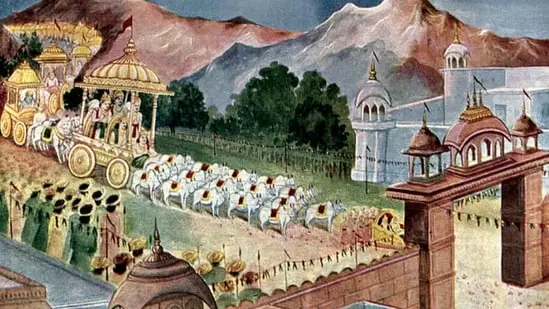
The story: Located on the right bank of the Ganga as per Jain texts, Hastinapur is mythologically upheld as the capital of the Kuru kingdom in sacred texts such as the Mahabharata and the Puranas. It is located in the Meerut district of Uttar Pradesh and is of major mythological significance in a real world context.
Must visit: Visits to the Shri Digambar Jain Prachin Bada Mandir, Jambudweep Jain Tirth, Ashtapad, Pandeshwar Temple and Karan Temple make for a spiritually-charged day with the Hastinapur Wildlife Sanctuary being a great option for those not aligned with the former.
How to get there: New Delhi's Indira Gandhi International Airport is the closest to Hastinapur, being located about 138kms away.
Leh Palace, Leh
The story: Overlooking the city of Leh in Tsemo Hill, Leh Palace, also known as Lachen Palkar Palace. The nine-story strucutre, formerly built and inhabited by the Namgyal dynasty back in the 17th century, Tibetan architecture, ornate details and panoramic views of the surroundings capture the magic of the Leh Palace.
Must visit: Best time to visit the Leh Palace happens to be between May to September, with entry fees practically negligible for Indian nationals (foreign nationals are charged ₹100.
How to get there: The Kushok Bakula Rimpochee Airport is about 3.8kms from Leh itself.
Which of these incredible sites are you looking forward to the most?