



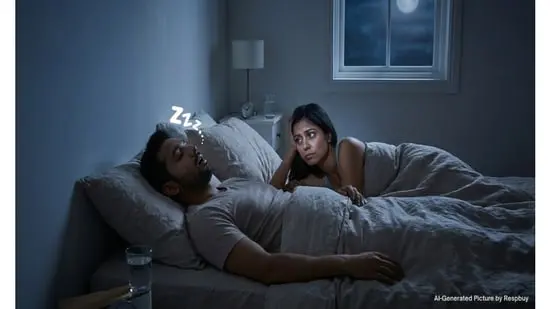
Most Indian homes know this scene. It is late at night. The TV is still on. One person is snoring loudly. The family laughs. Someone records a video on their phone and shares it on the family WhatsApp group.
For many people, snoring is still a joke.
For doctors, it is often the first warning sign that the body is struggling to breathe during sleep.
In the last few years, surveys have shown that a large share of Indians are sleeping less than 6 hours a night.
At the same time, Indian and global studies suggest that a very large number of people in the country may be living with an undiagnosed sleep issue commonly called sleep apnea. Yet very few have ever spoken to a doctor about snoring, choking at night or feeling sleepy in the daytime.
People treat tiredness as normal and snoring as funny. That is how a potentially serious health problem quietly grows.
What sleep apnea actually is, in simple terms
Sleep apnea is not uncommon, and it is not complicated to understand.
When people sleep, the muscles in the throat relax. In some cases, this relaxation is too much. The airway becomes narrow or closes completely for a few seconds. Breathing stops. Oxygen levels drop. The brain senses danger and briefly wakes the body to restart breathing.
This cycle can repeat dozens of times in an hour.
The person may not remember waking up, but their sleep becomes broken and shallow. This is why someone with sleep apnea can sleep for seven or eight hours and still wake up feeling exhausted.
Common signs include loud snoring, choking or gasping during sleep, dry mouth in the morning, headaches, daytime sleepiness, low energy and poor concentration. In many Indian homes, these signs are present, but rarely linked to a medical problem.
Why Indian cities are making the problem worse
Sleep apnea and poor sleep are rising faster in Indian cities for a reason.
Pollution plays a major role. In cities like Delhi NCR, air quality can remain poor for months. Polluted air irritates the nose and throat, making breathing harder at night and worsening snoring and airway collapse.
Noise is another factor. Traffic, construction, nearby markets and constant background sounds prevent the brain from entering deep sleep. Even if a person does not fully wake up, the quality of sleep drops.
Urban lifestyle adds more pressure. Long sitting hours, low physical activity, weight gain around the neck and belly, late dinners and alcohol use in some groups can increase the risk of airway blockage during sleep.
Cities are connected, productive and ambitious. But they are also creating a generation that is tired, breathless and sleep-deprived at night.
The real cost goes beyond tiredness
Untreated sleep apnea affects much more than sleep.
Repeated drops in oxygen put stress on the heart and blood vessels. Blood pressure becomes harder to control. Sugar levels fluctuate more. Over time, the risk of heart disease and stroke increases.
There is also a safety risk. People with severe sleep apnea may experience sudden daytime sleepiness. A brief microsleep while driving or riding a bike can be dangerous. This is especially relevant for night-shift workers, delivery partners and professionals driving long distances after late workdays.
Why most people in India never get diagnosed
Despite these risks, very few Indians get tested for sleep apnea.
Many believe snoring is normal. Others blame stress, age or work pressure for their tiredness. Awareness about sleep specialists and sleep tests is still low. Even in regular health checkups, sleep is rarely discussed unless the patient raises the issue.
Sleep testing options do exist today. In-lab sleep studies record breathing, oxygen levels, heart rate and sleep stages overnight. Home sleep tests use smaller devices to check breathing and oxygen at home. Both can help identify sleep apnea, but many people do not know these options are available.
Sleep study tests are available at various locations in India. Below is a cost breakdown to help understand the expenses better.
| City | In Lab PSG Cost | Home Sleep Test Cost |
|---|---|---|
| Delhi NCR | 12,000 – 20,000 INR | 3,000 – 8,000 INR |
| Mumbai | 5,000 – 15,000 INR | 2,500 – 7,000 INR |
| Bengaluru | 5,000 – 15,000 INR | 2,500 – 7,000 INR |
| Chennai | 5,000 – 12,000 INR | 3,000 – 6,000 INR |
| Hyderabad | 6,000 – 30,000 INR | 3,000 – 6,000 INR |
| Kolkata | 10,000 – 18,000 INR | 3,000 – 5,000 INR |
| Pune | 8,000 – 13,000 | 2,500 – 5,000 INR |
| Ahmedabad | 8,000 – 15,000 | 2,000 – 5,000 INR |
Table Courtesy: Respbuy
What’s the solution to treat sleep apnea? It is a CPAP Machine.
As awareness slowly improves, one clear trend is visible in Indian cities. Demand for CPAP machines is increasing.
CPAP stands for Continuous Positive Airway Pressure. It is a device that delivers a steady flow of air through a mask during sleep. This air keeps the airway open, preventing it from collapsing again and again through the night.
Earlier, CPAP was seen as a hospital machine meant only for severe cases. Today, that perception is gradually changing. Doctors are diagnosing sleep apnea earlier. Families are searching online for solutions. Couples are tired of nightly snoring struggles.
Another reason for rising demand is accessibility. CPAP rental options have made it easier for middle-class families to try therapy without a heavy upfront cost. Many prefer to rent first, understand the benefit, and then decide their next step.
How CPAP improves daily life
For people with moderate to severe sleep apnea, CPAP can make a noticeable difference.
Sleep becomes deeper and less interrupted. Snoring reduces or stops completely. Oxygen levels remain stable. Morning headaches fade. Energy levels improve. Focus and mood during the day get better.
Many users describe one simple change. They wake up feeling rested, something they had forgotten was possible.
CPAP does require adjustment. Masks need proper fitting. The first few weeks need patience. But with guidance and follow-up, it becomes a routine, much like wearing spectacles or using a blood pressure monitor.
A conversation India can no longer avoid
India speaks a lot about fitness, productivity and performance. Yet sleep remains ignored. People track steps, calories and screen time, but rarely ask how well they breathe at night.
Snoring, constant tiredness and poor sleep are not things to laugh off. They are signals. In cities that demand so much from the body and mind, protecting sleep is no longer optional.
India has learned how to stay awake and work harder. Now it needs to learn how to sleep better. Because real health does not start in the gym or the office. It starts quietly, every night, when people finally close their eyes.
Note to the Reader: This article is part of Hindustan Times' promotional consumer connect initiative and is independently created by the brand. Hindustan Times assumes no editorial responsibility for the content.