



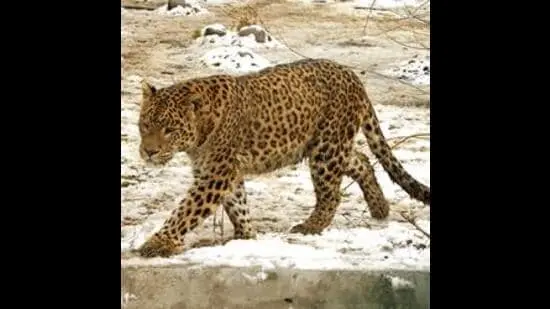
A surge in human–leopard conflict, marked by several fatal attacks, has led the Maharashtra forest department to intensify leopard capture operations across high-risk districts, including Pune, Ahilyanagar and Nashik. But the sweeping drive has triggered a new crisis: an unprecedented number of leopards in captivity, overwhelming an already stretched system.
In just the past two months, more than 150 leopards have been captured in the three districts. Forest officials acknowledge that while the action was driven by public outrage after human deaths, the department now faces severe constraints in housing and managing the animals in line with wildlife regulations.
Several officials said the escalating conflict has placed an enormous burden on field staff, with routine conservation and forest protection work suffering as most resources are diverted towards conflict response, rescue operations and captive animal management.
Captive leopard facilities in India are governed by the Wildlife (Protection) Act, 1972, and guidelines issued by the Central Zoo Authority (CZA), which mandate strict standards for enclosure size, animal welfare and carrying capacity. Overcrowding of wild animals in captivity is considered a violation of these norms. Despite repeated attempts, the CZA did not respond to queries on the issue. Calls and messages to Clement Ben, member secretary of the CZA, went unanswered.
In Pune district, the mass capture drive began in October after a five-year-old girl was killed in a leopard attack in Shirur taluka. Since then, the Junnar forest division has captured nearly 113 leopards, almost all of which are currently housed at the Manikdoh Leopard Rescue Centre (MLRC). The MLRC was originally designed to accommodate only 45 leopards. At present, it is housing more than double its sanctioned capacity.
“While the situation demanded urgent action, keeping such a large number of leopards in captivity for extended periods is not ideal and poses serious management challenges,” said a senior forest official, requesting anonymity.
With limited space available, the department has been forced to use an under-construction extension facility to house additional animals. Officials have also initiated a ‘socialisation’ experiment to manage space constraints. Under this initiative, two leopards are housed together in a single large enclosure under constant monitoring.
“In this initiative, two leopards are kept in one large cage. They are continuously monitored for any territorial aggression, but to our surprise, the leopards are coexisting quite well,” said Smita Rajhans, assistant conservator of forests, Junnar forest division.
Nashik, Ahilyanagar face acute infra crunch
While Junnar has managed temporary arrangements, the situation is far more precarious in Nashik and Ahilyanagar districts.
In Ahilyanagar, at least 35 leopards have been captured in the past two months. However, the district does not have a dedicated leopard rescue or holding facility.
“As the Manikdoh centre is already overcrowded and we do not have an exclusive facility of our own, leopards are currently being housed at various forest nurseries in makeshift cages,” said Dharmveer Salvithhal, deputy conservator of forests, Ahilyanagar forest division.
“We are exploring options to shift these leopards to other facilities, but so far, no positive response has been received. Managing these wild cats in captivity under such conditions has become a major challenge,” he added.
In Nashik, the forest department has a small Transit Treatment Centre (TTC) managed by RESQ Charitable Trust, Pune. The facility currently houses 17 leopards, exceeding its intended capacity.
“Although the facility is managed by an external organisation, the department is indirectly burdened due to a lack of manpower and infrastructure. Most of our field staff is engaged in conflict mitigation and capture operations, affecting other crucial conservation work,” said Prashant Khairnar, assistant conservator of forests, Nashik forest division.
Forest department preparing proposal for new facilities
Considering the growing burden of managing leopards in captivity, the Maharashtra forest department has agreed to establish additional facilities across western Maharashtra. Proposals are currently being prepared by respective forest divisions.
Speaking about the plan for Pune, Ashish Thakare, chief conservator of forests, Pune forest circle, said estimates were being prepared for facilities with a combined capacity of around 500 leopards.
“DCF offices are preparing detailed plans accordingly. Four locations have been identified — one at Manchar in Ambegaon tehsil, two centres in Shirur, and one at Kuran village in Junnar tehsil. Each facility will have the capacity to house around 160 leopards,” he said.
Plan to shift leopards to Vantara stalls
Plans to shift leopards from Maharashtra to the Vantara zoo facility have been stalled for nearly a month due to infrastructure constraints at the receiving end.
In November, Forest Minister Ganesh Naik, following a meeting with senior state forest officials, announced that around 500 leopards would be shifted to the Vantara facility as part of a long-term strategy to ease pressure on overcrowded rescue centres in Maharashtra. In the initial communication, Vantara had agreed to immediately accept 50 leopards from Junnar.
Based on this assurance, the proposal was forwarded to the Central Zoo Authority, and the Junnar forest division identified 20 leopards for the first phase of relocation. However, officials said the Vantara facility later expressed its inability to receive such a large number of leopards, citing inadequate infrastructure.
As a result, the relocation plan remains in limbo, adding to the forest department’s challenges in managing an ever-growing captive leopard population. Officials said the department, which had hoped for large-scale relocation, is now grappling with continued overcrowding at existing facilities and limited alternatives.