



India’s 2026 Padma Shri roll has a distinct sporting pulse: two of the country’s biggest cricket faces, a long-serving hockey goalkeeper, a Paralympic high-jump champion, and a set of names that spotlight coaches and keepers of traditional physical culture.
The Ministry of Home Affairs (MHA), in a press note dated January 25, 2026, said the President has approved 131 Padma awards. It also reiterated that Padma Shri is for “distinguished service” in any field, with the awards announced on Republic Day and usually conferred at Rashtrapati Bhawan around March/April.
Sports personalities set for Padma Shri in 2026
Among the 113 Padma Shri awardees, eight are listed under the field “Sports”: Rohit Sharma (Maharashtra), Harmanpreet Kaur Bhullar (Punjab), Savita Punia (Haryana), Praveen Kumar (Uttar Pradesh), Baldev Singh (Punjab), Bhagwandas Raikwar (Madhya Pradesh), K Pajanivel (Puducherry), and Vladimer Mestvirishvili (Georgia, posthumous).
Cricket: Rohit Sharma and Harmanpreet Kaur
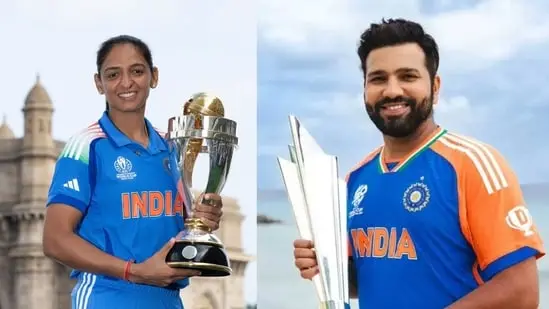
Rohit Sharma’s honour lands as recognition of an era and of leadership. Beyond his run-scoring footprint, the defining recent marker is captaining India to the Men’s T20 World Cup title in 2024. The ICC has described him as a two-time Men’s T20 World Cup winner, linking his place in the 2007 and 2024 title stories.
Harmanpreet Kaur, the India women’s captain, represents the women’s game’s shift from “promising” to established. A key achievement under her leadership was India winning the women’s ODI World Cup in 2025. Her Padma Shri fits a broader trend: institutional recognition catching up with the scale and visibility of women’s cricket.
Hockey: Savita Punia and Baldev Singh
Savita Punia has been India’s first-choice goalkeeper for much of a decade, and her reputation is built on the hardest currency in hockey: goals prevented. She played a major role as vice-captain in India’s Tokyo 2020 campaign, which ended with a record fourth-place finish for the women’s team. The Padma Shri acknowledges not just that tournament but the long, unglamorous grind of keeping a program competitive across cycles.
Baldev Singh’s selection tilts the list towards history. Records list him as part of India’s men’s hockey squad at the 1976 Montreal Olympics, and as a World Cup participant across the 1970s. In many sports, that generation’s contribution sits scattered across regional memory and old team sheets; a civilian honour brings it back into national view.
Para sport: Praveen Kumar
Praveen Kumar’s case is powered by results you can measure down to the centimetre. He won silver in the men’s high jump T64 at the Tokyo Paralympics with an Asian record clearance of 2.07m, then returned at Paris 2024 to win gold with 2.08m, also an Asian record. His arc captures modern Paralympic India: strong coaching ecosystems, better competition exposure, and athletes who come back not just to repeat a medal but to upgrade it.
Also Read: Alcaraz eases into last eight in bid for maiden Melbourne title; Sabalenka powers her way into the quarterfinals
Tradition, teaching and a coach’s legacy
The 2026 sports Padma Shri list is also a reminder that sport in India isn’t only what appears on prime-time scorecards.
Bhagwandas Raikwar of Madhya Pradesh has been recognised for a lifetime spent preserving Bundeli folk traditions and traditional combat arts, including akhara culture and weapon-based training, while passing on discipline and heritage to younger generations. Puducherry’s K Pajanivel is honoured for nurturing Silambam, an ancient Tamil weapon-based martial art, a role that is equal parts teacher, organiser and cultural custodian.
Then there is the posthumous Padma Shri for Vladimer Mestvirishvili of Georgia, a coach who became a significant figure inside India’s wrestling ecosystem. He came to India in 2003 and played a key role in developing elite wrestlers over the next two decades. Coaching work is often invisible because it lives inside other people’s medals; this honour, by design, pulls that contribution into the light.
Taken together, the eight names deliver a layered message: reward champions and captains, yes, but also recognise the specialists who hold the line, the athletes who redefine possibility, and the teachers who keep entire traditions alive.
As with most Padma honours, the official list does not attach a separate citation explaining each name. The framing is wider: distinguished service over time, whether that service shows up as medals, transformational leadership, or sustained contribution to a sport’s ecosystem. In that sense, the sports picks for 2026 feel intentionally cross-sectional. They move from high-visibility international arenas (World Cups, Olympics, Paralympics) to the spaces that feed them: coaching, grassroots training, and the safeguarding of traditional martial disciplines. It is also a quiet statement about what national contribution can look like — not only winning at the top, but building pathways, standards, and pride that outlast a single result. That breadth is what makes this year’s sports list stand out.