



Old Indian homes had a distinct charm that can be difficult to recreate in modern spaces. From open courtyards and traditional seating to handcrafted furniture and natural cooling techniques, many of these elements were designed with both beauty and functionality in mind.
Interior designer Sonika Khurana Sethi, who has spent 15 years working in the industry, in her June 22 Instagram post reflected on the traditional elements that continue to inspire her. (Also read: Step inside this stunning 3BHK Hyderabad home with Japandi-inspired design, earthy palettes and handcrafted detailing )
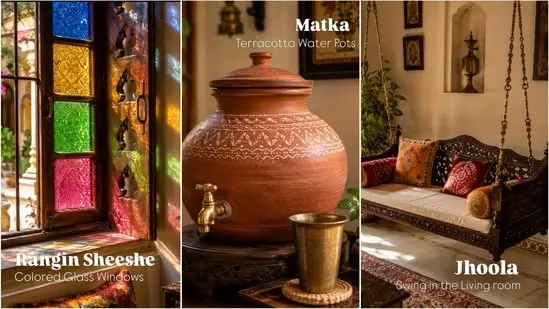
“Old Indian homes had a certain charm that’s hard to recreate today. Every element had character, meaning, and purpose. Aangan brought in light and ventilation, chik kept homes cool in summer, matkas chilled water naturally, and rangin sheeshe turned sunlight into art,” she said.
“Nothing was added just for aesthetics, everything was thoughtfully designed to make life better,” she added.
1. Aangan: The central courtyard
The aangan or central courtyard was an integral part of traditional Indian homes. It allowed natural light and ventilation to enter the house while creating a shared space for family members.
2. Aalas: Built-in wall niches
Built-in wall niches, traditionally used to display lamps, decor and everyday objects, added character while making clever use of available space.
3. Baithak: Low-floor seating
The traditional baithak encouraged people to sit together and socialise. Low-floor seating can still bring a relaxed, intimate feel to contemporary living spaces.
4. Karigari: Handcrafted wood furniture
Handcrafted wooden furniture brought warmth and individuality to homes. Traditional craftsmanship and detailed woodwork also ensured that many pieces were made to last.
5. Matka: Terracotta water pots
Matkas offered a simple, natural way of cooling drinking water. Beyond their functionality, terracotta pots can also add an earthy aesthetic to modern interiors.
6. Pathar Ka Farsh: Indian stone flooring
Indian stones such as Kota, marble and sandstone were commonly used for flooring and remain timeless choices. They can add texture, durability and a distinctly Indian character to a space.
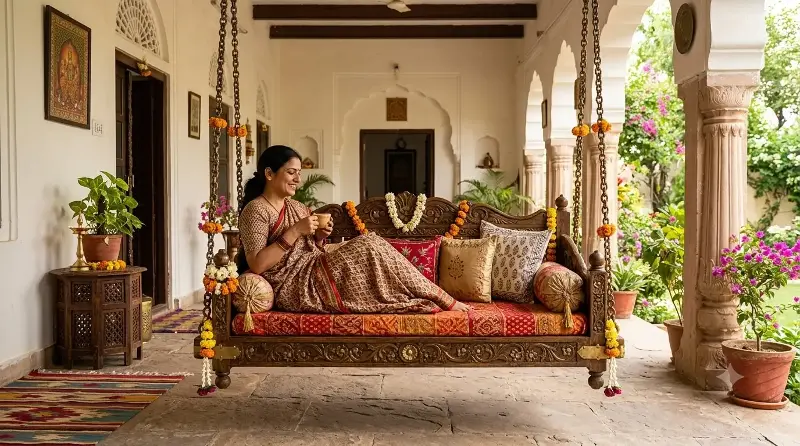
7. Jhoola: A swing in the living room
A traditional jhoola could serve as both a functional seating option and a statement piece. Bringing one into a contemporary living room can instantly add nostalgia and personality.
8. Rangin sheeshe: Coloured glass windows
Coloured glass windows transformed sunlight into patterns and shades, adding an artistic element to traditional homes. Used thoughtfully, they can create a striking visual detail in modern interiors.
9. Chik: Bamboo or jute blinds
Chik blinds were a practical way to filter sunlight and help keep interiors cool during warmer months. Bamboo and jute versions can still work beautifully in contemporary Indian homes.
10. Verandah: A transition between indoors and outdoors
The verandah created a natural connection between the home and the outdoors. It offered a shaded space to sit, relax and interact with the surrounding environment.
Reflecting on how Indian interiors have evolved, Sethi said that modern design does not necessarily have to mean leaving traditional influences behind.
“Over my 15 years as an interior designer, I’ve embraced many modern materials, technologies, and Western influences. And while I love the convenience and beauty they bring, there are some traditional elements that still spark so much nostalgia and remind us of a time when homes felt deeply connected to our climate, culture, and way of living,” she said.
“Perhaps the future of Indian interiors isn’t about choosing between old and new, but about thoughtfully blending both to create modern Indian homes with soul,” Sethi added.