



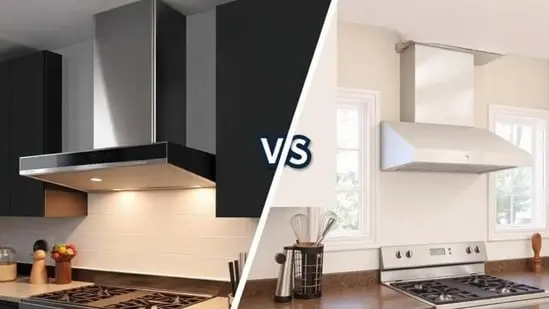
A kitchen chimney plays a critical role in maintaining indoor air quality. It manages smoke, oil particles, heat, and odours generated during cooking, all of which directly affect comfort, cleanliness, and long-term kitchen hygiene. Yet many buyers focus more on design or suction ratings than on how a chimney actually handles air.
The most important distinction lies between duct and ductless chimneys. Although both are designed to deal with cooking fumes, their working principles are fundamentally different. One removes polluted air from the kitchen entirely, while the other filters it and releases it back into the same space. Understanding this difference is essential because it influences performance, maintenance requirements, and overall effectiveness in daily use.
Duct chimneys and the advantage of complete air removal
Duct chimneys operate by extracting smoke, grease, moisture, and odours from the kitchen and expelling them outdoors through a duct pipe. This pipe usually runs through a wall, ceiling, or external shaft, allowing contaminated air to leave the home permanently.
The primary advantage of a duct chimney is efficiency. Since polluted air is removed rather than treated, the kitchen clears faster and stays fresher for longer. This is especially noticeable in households where cooking involves regular frying, grilling, or the use of strong spices. Odours do not linger, and heat buildup reduces significantly after cooking. Another benefit is grease management. Oil particles are carried outside instead of accumulating inside the kitchen. Over time, this reduces residue on cabinets, tiles, and walls, helping the kitchen remain cleaner with less effort. Open-plan kitchens benefit greatly, as smells are less likely to spread into adjoining living areas.
Duct chimneys also contribute to better thermal comfort. By expelling hot air, they help regulate kitchen temperature during extended cooking sessions, particularly in warmer climates or compact spaces. However, duct chimneys come with practical challenges. Installation requires access to an external outlet, which may not be feasible in many apartments or rented homes. Incorrect ducting can also compromise performance. Long duct paths, sharp bends, or poor-quality pipes increase noise and reduce suction efficiency.
Maintenance extends beyond the visible unit. External vents and ducts may require periodic cleaning to prevent airflow obstruction. A duct chimney performs exceptionally well when properly planned, but it leaves little room for compromise during installation.
Ductless chimneys and working within layout limitations
Ductless chimneys address situations where venting air outside is not possible. Instead of expelling air, these systems draw in cooking fumes, pass them through grease and carbon filters, and recirculate the cleaned air back into the kitchen.
Installation is significantly simpler. There is no need for duct routing or structural changes, making ductless chimneys suitable for apartments, high-rise buildings, and kitchens located away from external walls. This flexibility makes them popular in modern urban homes. Advances in filtration technology have improved ductless chimney performance. Grease filters capture oil particles effectively, while carbon filters help reduce odours. For households with light to moderate cooking habits, this level of filtration can be sufficient.
Despite these improvements, ductless chimneys have inherent limitations. Because air is recirculated, heat remains in the kitchen. Odours may reduce but rarely disappear completely, particularly after prolonged or heavy cooking. Over time, kitchens can feel warmer and less fresh compared to spaces using duct chimneys. Filter maintenance is a critical factor. Carbon filters lose effectiveness as they become saturated and must be replaced regularly. Delayed replacement leads to a gradual drop in performance that often goes unnoticed until air quality deteriorates. Running costs can increase due to frequent filter changes, especially in homes with regular cooking.
Ductless chimneys manage air rather than eliminate it. They are functional solutions for constrained layouts, but they require realistic expectations and consistent upkeep.
Airflow matters more than appearance
Choosing between a duct and ductless chimney is not a matter of which is superior overall, but which suits the kitchen environment and cooking habits better. Duct chimneys excel at complete air removal, offering cleaner kitchens, lower heat retention, and reduced odour spread. They are ideal for heavy cooking households but demand proper planning and installation.
Ductless chimneys provide flexibility where external venting is not possible. They are easier to install and visually versatile, but rely heavily on filter maintenance and are less effective in managing heat and persistent odours. The key is to view a kitchen chimney as an airflow system rather than just an appliance. When air movement is handled correctly, the kitchen stays cleaner, more comfortable, and healthier over time. The right choice is the one that aligns with how the kitchen is actually used, not just how it looks on display.
Similar articles for you:
I need a powerful chimney for my new open kitchen; My options under ₹15,000 are…
Chimney for modern homes designed to keep your cooking space fresh and clean: Top 8 picks from trusted brands
Best chimney in 2025 with high suction capacity, auto-clean function and lower noise levels: Top 9 kitchen chimneys
Best chimney brands: Top 10 choices from Faber, Hindware, Elica and more to make your kitchen clean and smoke-free
Disclaimer: At Hindustan Times, we help you stay up-to-date with the latest trends and products. Hindustan Times has an affiliate partnership, so we may get a part of the revenue when you make a purchase. We shall not be liable for any claim under applicable laws, including but not limited to the Consumer Protection Act, 2019, with respect to the products. The products listed in this article are in no particular order of priority.