



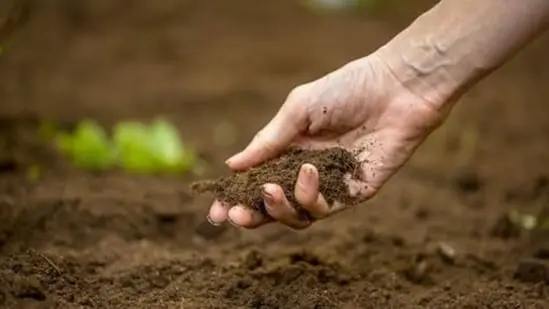
India’s soil has always been more than the ground we walk on. It is a living archive of our civilisation, a reservoir of nutrients, microbes, and organic matter that quietly sustains our food systems. Across India’s farmlands, the story is changing. Years of input heavy cultivation, thinning topsoil, and declining organic carbon have left vast stretches of land fatigued. For a nation advancing toward its vision of Viksit Bharat 2047, weakening soil health is not a sectoral concern but a national warning. The foundation of our food security, climate resilience, and rural prosperity is slowly eroding. The stakes are immense for India's 70% small and marginal farmers, who till most of the land but face rising input costs and erratic weather.
The good news is that India is not starting from zero. Across states, farmers are embracing climate smart innovations that work with nature instead of against it. Direct seeded rice, zero tillage wheat, and alternate wetting and drying are rebuilding organic matter and reducing emissions. For instance, regenerative practices like direct seeded rice, zero tillage, and cover cropping can restore this balance, cutting fertiliser use by 30-50% and boosting yields 10-30% in rice-wheat systems. These methods increase soil organic carbon from degraded levels of 0.4-0.6% to 0.8-1.2%, sequestering carbon and slashing agricultural emissions by up to 18%. Without action, we risk deeper poverty and hunger in rural heartlands. However, off farm livelihood options like mushroom cultivation, beekeeping, and integrated aquaculture are strengthening rural incomes while easing pressure on land. These grassroots solutions matter but they need a stronger and wider support system.
While the Soil Health Card scheme, launched in 2015, reflects a commendable government effort to promote better soil management through information and awareness, its impact remains uneven. However, broader and sustained gains in soil fertility and crop yields across regions suggest that these efforts, though valuable, need deeper integration with other sustainable agricultural practices and local capacity building. Equally important is investing in the skilling of rural women and youth under national skill development programs, which can be truly transformative. Facilitating collaborative skilling and certification programs, co-hosted through research-extension based public-private partnerships, would help mainstream gender balance and enhance youth engagement in agriculture. Such initiatives can create a more inclusive and adaptive agricultural ecosystem that builds long-term resilience and innovation capacity in rural communities.
The message is clear that when science is placed directly and purposefully in the hands of farmers, transformation follows. Policy tools already exist, but they demand bolder scaling. That is why, assessment alone cannot secure India’s agricultural future. The next leap must come from adoption at scale, backed by deeper diagnostics and real time intelligence. Soil is a dynamic living system and its care must evolve with climate uncertainties. A Digital Soil Health Mission could anchor this shift. Digital Soil Health Mission must integrate AI, satellites, and village-level labs run by women's groups and farmer collectives to deliver real-time advisories in local languages.
By merging satellite imagery, AI-led analytics, and data from soil health cards, India can build a precise real time soil intelligence network. Imagine advisories delivered in regional languages, early warnings on degradation or nutrient decline, and predictive models guiding sowing and fertilisation. This is not futuristic—it's essential for India's NDCs, targeting 45% emissions cuts by 2030 and a 2.5-3 billion tonne carbon sink. Regenerative agriculture on 1 million acres could avoid millions of tonnes of CO2 while enhancing water retention by 10-20%, shielding farms from droughts. It advances SDGs from zero hunger to gender equality, empowering women in agroforestry and beekeeping for diversified incomes.
Furthermore, to make this ecosystem work on the ground, soil testing must move closer to farmers. Village level mini labs operated by farmer producer groups, rural youth, and women led collectives can make diagnostics quick, affordable, and reliable. Portable spectrometers, drone led sampling, and IoT based soil sensors can help reach even the most remote fields. When connected to digital dashboards and advisory systems, these hubs become engines of informed decision-making. However, reviving soil fertility will also require reviving the soil microbiome, the invisible universe of organisms that feed our crops, store carbon, and enhance resilience. Excessive chemical use has disrupted this natural harmony. Biofertilisers, compost, biochar, and microbial inoculants can rebuild this living network and strengthen soil structure. Every incremental rise in organic carbon contributes to better yields, healthier food, and stronger climate action by locking carbon back into the earth. We must confront this crisis head-on through integrated Nutrient Management measures (INM). Nevertheless, INM must now evolve from a government guideline to a national movement, combining chemical, organic, and biological inputs based on diagnostics rather than tradition will allow farmers to reduce input costs and prevent nutrient runoff. With India’s precision agriculture market projected to grow rapidly by 2030, linking technology with traditional wisdom can unlock both sustainability and profitability.
Incentives are another critical lever. Farmers who restore soil organic carbon, adopt balanced fertilization, or use certified bio inputs should receive preferential benefits under PM KISAN, PMFBY, and credit linked schemes. Verified soil carbon gains can also open access to carbon credits, offering new income streams and connecting rural India to emerging green finance markets. Incentives under PM-KISAN and carbon credits can reward adopters, while reviving soil microbiomes through stable-carbon-based-biofertilizers protecting biodiversity and cutting pesticide needs by 20-40%. At the same time, Water stewardship too is tightly linked with the future of soil. Smart water management, rainwater harvesting, and efficient irrigation can significantly reduce degradation and increase productivity. Aligning initiatives like the PM Krishi Sinchai Yojana and the National Mission for Sustainable Agriculture with the proposed Digital Soil Health Mission can accelerate impact.
For this shift to take root, India’s agricultural extension systems must be strengthened. Krishi sakhis, agri entrepreneurs, and field officers need training in soil biology, microbiology, digital tools, and precision practices. Collaboration between agricultural universities, ICAR institutions, and IITs can help design modern curricula that blend field knowledge with scientific learning. Regional soil intelligence hubs connected to the Soil Health Card database, ICAR, and state universities can help forecast risks, identify hotspots of degradation, and guide state level planning. Standardising soil data from various sources is essential for national scale modelling. Investments in soil health yield far reaching returns for food security, water availability, and climate resilience. The private sector and civil society will have to play a role as well. Public private partnerships can help develop localised microbial solutions, smart testing kits, and cloud based advisory platforms. Companies can collaborate with farmers to build sustainable sourcing models where restoring soil becomes part of the value chain.
At its heart, soil restoration is rural restoration. When farmers understand the biology of their soil, they gain the power to enhance fertility, reduce costs, and build resilience against climate shocks. Healthier soil means healthier crops, healthier communities, and a healthier nation. The soil that has supported us for centuries is asking for renewal. If we strengthen it today, it will strengthen India tomorrow. Healthy soil is not only an environmental necessity, but also the bedrock of economic security, climate adaptation, and national well-being. In nurturing the soil, we nurture the future of Bharat. Therefore, Bharat should pledge urgent investment in soil-first strategies to secure harvests, communities, and a resilient future.
This article is authored by Suman S, director of operations, Dr Reddy’s Foundation.