



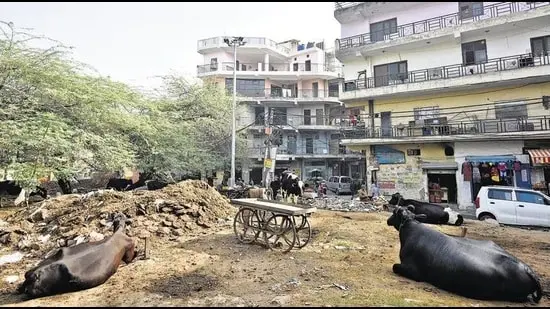
New Delhi: The Municipal Corporation of Delhi (MCD) standing committee has cleared a proposal to grant urban status to 48 villages across the Capital, paving the way for improved civic infrastructure and planned development in areas that have long outgrown their rural classification.
Standing Committee chairperson Satya Sharma on Sunday said the decision, taken under the provisions of the Delhi Municipal Corporation Act, 1957, would enable more efficient delivery of essential services such as roads, sewerage and drinking water. “Several of these villages have already acquired an urban character. Bringing them under a formal urban framework will ensure better planning, regulation and service delivery,” she said.
“We (the standing committee) have approved 48 villages. After this, the proposal will go to the House, and it will definitely be approved there as well. Ultimately, it will go as a recommendation to the central government. We want to bring Delhi’s villages into the mainstream, especially in terms of infrastructure, health and education,” she added.
Villages identified for urbanisation include Palla, Singola, Mungeshpur, Nizampur, Fatehpur Beri, Jhatikra, Kanganheri, Rawat, Dhansa, Kadipur, Chilla, Bakoli, Hamidpur, Sangarpur, Tajpur Kalan, Daulatpur, Rajpur Kalan, Auchandi, Shahpur Garhi, Rasidpur, Tatesar, Jagatpur, Sabhapur, Badarpur Khadar, Chandan Hola, Ghumanhera, Jaitpur and Mundela Kalan.
Sharma said she has granted anticipatory approval to the proposal, as the standing committee is still being reconstituted following the retirement of half its members last month.
The move follows an earlier decision by the Delhi Development Authority (DDA), which in February approved a proposal to urbanise the 48 villages, citing persistent infrastructure gaps. Of the 357 villages in Delhi, 309 have already been urbanised. The remaining 48, identified by the Delhi government’s land and building department, are located near urban clusters but continue to be governed by agricultural land-use norms under the Delhi Land Reforms Act.
Officials said the rural classification has slowed development works, as any change in land use requires approvals from the revenue department, often leading to delays. “Declaring these villages urban under Section 507 will streamline approvals and allow faster execution of civic projects,” an official said. Once notified, these areas will become eligible for a range of development policies, including green area development, regeneration of planned and unplanned colonies, and transit-oriented development. The transition will also align with newly constituted revenue subdivisions and districts, aiding administrative efficiency.
Section 507 of DMC states that the corporation, with the previous approval of the government, may, by notification in the official gazette, declare that any portion of the rural areas shall cease to be included therein and be included in and form part of the urban areas.
The proposal also ties into the broader Master Plan 2041, which is in its final stages of approval. The plan, prepared by the DDA and pending clearance from the Union housing ministry, outlines a roadmap for accommodating Delhi’s growing population through planned expansion and infrastructure upgrades.
Last year, Delhi minister Parvesh Verma had termed the urbanisation of these villages a “historic shift” in the Capital’s development strategy, promising access to better roads, drainage, street lighting, schools and healthcare facilities.