



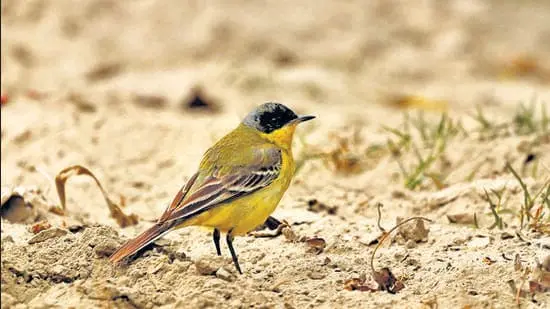
More than 9,000 birds belonging to 131 species were recorded along the Yamuna floodplains over the weekend during the Asian Waterbird Census (AWC), even as birders flagged a growing number of ecological threats that could undermine the area’s long-term ability to support avifauna.
The count was conducted along a 22-kilometre stretch of the floodplains between the Wazirabad and Okhla barrages on January 3 and 4 as part of the AWC, which is being carried out in collaboration with the eBird project and Wetlands International. Nearly 20 birders participated in the exercise, which will continue across wetlands in the National Capital Region until January 18.
Surveyors were divided into four teams and systematically scanned the riverbed, wetlands and adjoining areas, documenting both bird numbers and pressures on the ecosystem, officials said.
Black-headed gulls dominated the count, with close to 2,500 individuals recorded, followed by around 1,700 barn swallows. Other species documented included pied avocet (136), ruddy shelduck (112), white wagtail (108) and house sparrow (90).
Alongside the species count, birders flagged several threats affecting the floodplains. These included sand mining, removal of reeds, cultivation of the riverbed, dumping of construction and demolition waste, plastic pollution, open burning of waste and predation by free-ranging dogs. Declining water quality due to sewage discharge and agrochemical runoff was also identified as a major concern.
Pankaj Gupta, AWC eBird project coordinator for Delhi-NCR, said habitat degradation could directly impact bird populations. “The ecological threats can degrade the habitat of birds. If the condition of the floodplain is not improved, there may be a decline in the number of birds here,” he said. Gupta added that a key objective of the AWC is to provide feedback to Wetlands International. “This essentially tells them about the health of the wetlands and the challenges impacting them,” he said.
Echoing these concerns, Akash Gulalia, director of Amaltas Nature Walks, said the Yamuna river ecosystem was under severe stress. “The quality of Yamuna’s water is polluted due to industrial and domestic waste. Cutting and clearance of aquatic and riparian vegetation left very little space for birds to breed. Illegal mining is another issue,” he said. Gulalia added that fresh mining activity was observed on the Uttar Pradesh side during the survey on January 3 and 4, with heavy machinery operating on the floodplains. “This impacts the overall habitat,” he said.
The Yamuna survey forms part of a wider AWC exercise planned across the NCR this month. Apart from the floodplains, birders will also cover smaller wetlands in north Delhi, including Rohini, as well as Sultanpur, Chandu, Jhanjrola, Bhindawas, Dhigal, Mandothi, Okhla Bird Sanctuary, Surajpur and Dhanauri.