



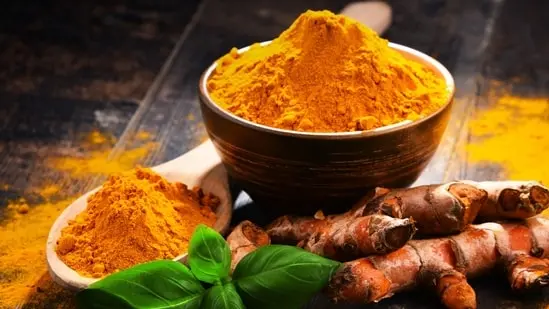
Turmeric has long been hailed as a superfood in Indian households, but according to a doctor, most of could be flushing its benefits down the drain. Dr Pooja Reddy, a Hyderabad-based dermatologist, took to Instagram to debunk common myths about the vibrant spice. Her message was clear: if you’re consuming turmeric on its own, your body is likely gaining almost nothing from it. Also read | How to grow turmeric in pots: A step-by-step guide to healthier plant options at home
The '1 percent' problem
While turmeric contains curcumin, a compound famous for its potent anti-inflammatory and antioxidant properties, there is a catch. "Turmeric is not the powerful anti-inflammatory you think it is (on its own)," Dr Reddy explained in her January 27 Instagram post.
The biological hurdle lies in our metabolism. When ingested solo, the human liver treats curcumin as a foreign substance and works overtime to metabolise and excrete it before it can ever reach the bloodstream. Dr Reddy said, “When you consume it alone, your body absorbs less than 1 percent curcumin. Studies show that blood levels are either undetectable or extremely low. Your liver breaks it down before it even enters your bloodstream.”
The hack: use black pepper
The solution to this 'absorption crisis' isn't found in a lab, but in a standard spice rack. Dr Reddy pointed to black pepper as the essential partner for turmeric. Black pepper contains a compound called piperine that inhibits the metabolic pathway that eliminates curcumin. Combining the two increases curcumin absorption by a staggering ‘2,000 percent’.
According to Dr Reddy, "Our grandmoms knew the fix: black pepper. Research shows combining turmeric with black pepper increases absorption by 2,000 percent. 20 times more curcumin actually reaches your blood. Piperine in black pepper stops your liver from destroying curcumin too quickly and helps it pass through your gut wall into your bloodstream."
The third ingredient: fat
Beyond pepper, Dr Reddy revealed a 'third secret' to unlocking the spice's potential: fat. Because curcumin is fat-soluble (meaning it dissolves in lipids rather than water), it requires a carrier to move through the gut wall effectively. She said, “There is a third secret: fat. Curcumin is fat-soluble; it needs fat to dissolve, not water. Turmeric, black pepper, and ghee — this combination is not random. It is centuries of wisdom that science is now proving.”
The traditional Indian 'golden trio' — turmeric, black pepper, and ghee —is not just a matter of taste. According to Dr Reddy, it is a precise delivery system designed to ensure the body actually uses what it consumes. So, if you are looking to fight inflammation or improve skin health through your diet, stop taking plain turmeric shots or capsules – and to get the most out of the 'golden spice', ensure it is always accompanied by a pinch of pepper and a source of healthy fat.
Note to readers: This report is based on user-generated content from social media. HT.com has not independently verified the claims and does not endorse them.
This article is for informational purposes only and not a substitute for professional medical advice.