



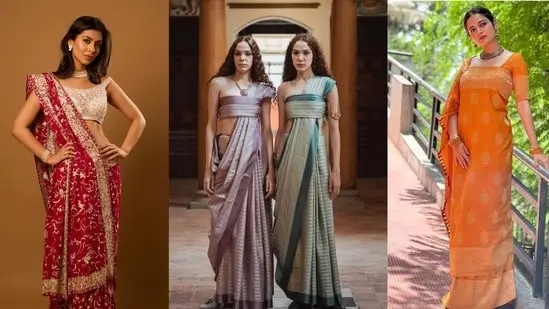
Sarees have long been connected to India's heritage and culture since almost the beginning of time, with roots in the ancient Indus Valley Civilisation. This 6-yard cloth is draped around the body and worn for major life events like weddings and festivals (Diwali, Navratri, Durga Puja, etc.) and even during formal events.
Talking about this open-ended fabric, draping it is an art in itself. On World Saree Day, we bring to you some of the most well-known and also lesser-known traditional drapes from different regions of the country.
Coorgi saree drape from Karnataka
The Coorgi or Kodagu drape is a unique style from the state, where all pleats are tucked at the back of the waist, and the pallu is brought from the rear, over the shoulder, and often secured with a knot at the front. This drape's story mixes mythology and practicality, with a popular legend linking its back-pleated style to sage Agastya and his wife, Cauvery; when she transformed into the Cauvery River, the force of the water supposedly pushed the pleats from front to back, inspiring the unique, mountain-friendly drape worn by Kodava women for ease of movement on hilly terrains.
Nivi saree drape from Andhra Pradesh
This drape is the most common, recognisable saree style, featuring neat pleats tucked at the front waist and the pallu (loose end) draped elegantly over the left shoulder, offering ease of movement while looking timeless and graceful, often using a blouse and petticoat for a structured silhouette. It has ancient roots seen in sculptures, but was popularised in its modern blouse-and-petticoat form by Jnanadanandini Devi Tagore in the 19th century to blend Indian tradition with Victorian modesty, allowing women to function in colonial society while retaining Indian identity.
Mundum neriyathum saree drape from Kerala
This drape reflects the traditional way of draping a saree without a blouse, which was the most common method in ancient times. This drape specifically is Kerala's conventional two-piece attire, resembling a saree, consisting of a lower garment (mundu) and an upper cloth (neriyathu) with golden borders, draped elegantly with the neriyathu covering the upper body and left shoulder. It evolved from ancient Indian drapes like the 'antariya' and 'uttariya', especially for Nayar women, gaining prominence with royal patronage in Balaramapuram and playing a key role in rituals like weddings, while also famously depicted by Raja Ravi Varma, yet its history also involves the significant Channar Revolt, where lower-caste women fought for the right to wear the upper cloth.
Pin kosuvam saree drape from Tamil Nadu
The Pin Kosuvam (or Pinkosu) saree drape is a traditional, back-pleated style popular in villages and for temple rituals, known for being cool and practical as it's often worn without a petticoat, using strategic hip knots to keep thick cotton sarees in place for ease of movement and a unique, elegant look. It was historically used by women in manual labour like farming; the name means back pleats, and it's a forgotten art, but revived for its elegance and functionality, especially with coarse cottons.
Atpoure saree drape from Bengal
One of the most recognisable drapes from the state is this one, in which you can see broad, loose pleats tucked at the front waist and a flowing pallu (end piece) draped casually over the left shoulder, sometimes pleated or left open, making it simple, elegant, and perfect for festive occasions like Durga Puja, especially with classic red-bordered white sarees. The drape was pioneered by Jnanadanandini Devi, sister-in-law of Rabindranath Tagore, in the 19th-century Bengali Renaissance; she adapted Parsi/English styles with blouses and petticoats to create a practical, mobile drape for public life, transforming the saree into a symbol of modern freedom while retaining tradition.
Halaki Vokkaliga saree drape from Karnataka
This saree drape is a practical style for tribal agriculturalists in the Western Ghats of the state, involving a 9-yard saree worn without a blouse or petticoat, with many hidden pleats around the waist for freedom of movement, and the pallu wrapped across the chest and secured over the shoulder, reflecting their deep connection to nature and a life of ease.
Kappulu saree drape from Andhra Pradesh
Often worn by older women, characterised by draping the saree left-to-right (opposite of the usual), this drape features thin pleats tucked at the back, and two graceful cascades of fabric wrapped around the body, giving it a distinctive, almost Grecian look, ideal for everyday wear as it allows ease of movement. Its story is one of local tradition, discovered by chance by a researcher, highlighting regional diversity and the deep history within Indian textiles, with hints of potential Greek influence.
Kunbi saree drape from Goa
The drape is usually worn by the Goan Kunbi tribe, featuring a short, knee-length, checkered red-and-white cotton saree tied with a shoulder knot for easy fieldwork, symbolising Goan heritage and cultural identity, a revival of which was championed by designer Wendell Rodricks. It was designed for practicality in paddy fields with its shorter length (below the knees) for easy movement, using natural dyes (iron ore, rice starch) for red/black checks, worn simply without a blouse, embodying a resourceful, nature-connected lifestyle before Portuguese influence faded its usage, now undergoing revival as a symbol of Goan heritage.