



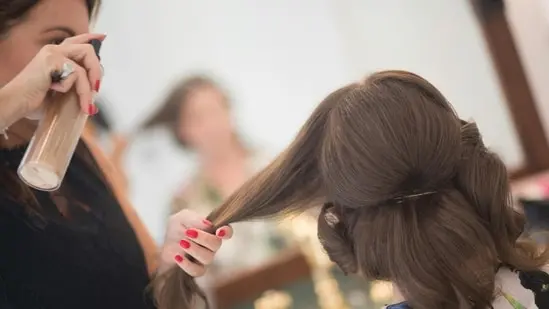
From drying your wet hair with a hair dryer right after your shower to the use of straightening tools before your evening parties, we've all been there. In fact, hairstyling has become so integrated into daily grooming that most people don’t realise how frequently they subject their scalp to heat, chemicals, and tension. A quick blow-dry before work, a smoothening treatment every few months, or the regular use of straighteners may not seem excessive. But when these habits accumulate, the roots begin to absorb ongoing stress.
Dermatologist and Hair Restoration Expert, Dr Abhishek Pilani, tells HT ShopNow, “Excessive use of hairstyling shows up on your scalp as thinning, limpness, or increased hair fall, often traces back to months of silent damage at the follicle level."He notes that most people believe their hair loss began suddenly, but the roots have usually been under strain for months.
Can styling your hair damage it?
Heat, chemicals, and tight hairstyles all leave an imprint on the follicle. Once we calm the scalp and support it correctly, the improvement is visible. Healthy roots always reflect in the quality of the hair.
How styling tools weaken follicles
Heat-based tools such as hair straighteners, curlers, and blow-dryers operate at temperatures the hair is not naturally designed to handle. Dr Pilani says, “While hair may look polished after styling, the repeated thermal exposure irritates the scalp around each follicle. And over time, this reduces the follicle’s ability to grip the hair firmly.” He further notes that this is why many people experience “sudden hair fall,” even though the weakening has been progressing gradually with each styling session.
Chemical treatments and scalp sensitivity
“Colouring, bleaching, smoothening and keratin treatments work by restructuring the internal bonds of the hair. But they also disturb the scalp’s barrier”, says Dr Pilani.
He notes that the scalp beneath the surface becomes inflamed and more sensitive, and that when chemical treatments are applied too close together, the scalp cannot recover, leading to reduced density and slower regrowth. He considers this the reason many people notice thinning after frequent salon visits.
The impact of daily tension from hairstyles
Dr Pilani notes that confident grooming choices affect root health. As per Dr Pilani, “Tight ponytails, buns, braids, and extensions tug at the same areas every day. This traction is especially harsh on the temples and hairline, causing follicles to shrink and produce finer strands."
Product build-up and congested follicles
Dr Pilani notes that serums, sprays, dry shampoos, and setting products pose an additional challenge. They accumulate on the scalp and trap dirt and sweat if not washed properly. “Over time, this build-up clogs the follicle openings, making it difficult for new hair to grow strong, resulting in flat and lifeless hair”, he says.
How to restore root strength
Dr Pilani mentions that most styling-related damage is reversible with consistent scalp care. “Clean your scalp using a gentle exfoliating cleanser once a week that removes product build-up and allows follicles to function normally again. This improves both growth and density over time”, he asserts.
He further mentions that supporting the follicle with targeted ingredients is equally important. “Peptides, niacinamide, caffeine, and biotin help improve micro-circulation and nourish the roots. Though they work gradually, their long-term impact on density and breakage is significant”, he states.
Professional treatments help
As per Dr Pilani, “Some dermatological treatments can accelerate recovery if your hair looks thinner and needs more advanced treatments."He mentioned some professional therapies, such as PRP therapy, which delivers growth factors to stimulate weakened follicles. Low-level laser therapy boosts cellular activity and encourages stronger regrowth. Hydration and oxygenation treatments reduce inflammation and restore the scalp's environment. He says that these procedures work best when combined with a balanced at-home routine.
Adopting gentler styling habits
“Alongside treatment, lifestyle adjustments are essential”, he claims. Lower heat settings, occasional air-drying, spacing out chemical treatments and avoiding tight hairstyles give the follicles the breathing room they need. He also recommends using heat-protectant sprays and bond-repair masks to help prevent external damage from reaching the root.
The takeaway: Scalp first, styling second
Ultimately, strong hair begins with a healthy scalp. Styling can remain a part of personal expression, but it works best when paired with thoughtful care and recovery time. When the scalp is treated as the foundation, hair naturally becomes shinier, thicker and more resilient.
Similar articles for you:
Dermatologist explains why pollution is a silent risk for hair fall; suggests tips to reduce the negative impact
Men’s skincare and grooming in India have evolved: Experts reveal what's driving this shift
Dermatologist says there is a clear link between teenage acne and depression; warns, ‘The signs need attention’
The right way to use salicylic acid in a minimal routine: Expert explains
(Note to readers: This article is for informational purposes only and not a substitute for professional medical advice. Always seek your doctor's advice with any questions about a medical condition.)