



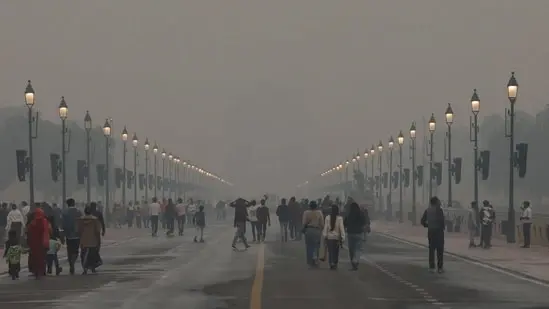
Delhi's air quality on Monday morning was hazardous with the Air Quality Index recorded to be 403 as the national capital continues to breathe toxic air. Though Sunday started with AQI in the ‘very poor’ category, it worsened towards the end of the day as the Capital remained trapped under a combination of dense fog and high levels of pollution.
Hazardous air in major stations
Some of the monitoring stations that recorded 400+ AQI on Monday morning include Anand Vihar (458), Ashok Vihar (430), Burari Crossing (401), Chandni Chowk (426), Jahangirpuri (439), Mundka (416), Narela (404), Okhla Phase-2 (411), according to the Central Pollution Control Board data.
As the air quality turned hazardous amid the continued dip since December 25, experts flagged health concerns, especially for children, the elderly, and those with respiratory or heart conditions.
Cold and fog grips Delhi
The weather department has issued an orange alert for Delhi on December 29. The maximum temperature is expected to be around 22 degrees Celsius, while the minimum will settle at 7 degrees Celsius.
Parts of north India are expected to remain under dense to very dense fog conditions over the coming days. Fog is likely to persist during night and early morning hours across Himachal Pradesh, Punjab, Haryana, Chandigarh and west Uttar Pradesh till December 31, while east Uttar Pradesh may continue to see reduced visibility till January 1, with gradual improvement thereafter.
CAQM likely to meet today
A Commission for Air Quality Management (CAQM) official on Sunday said the body was monitoring the situation and a meeting of the Graded Action Plan (GRAP) sub-committee would likely be called if it worsens. “No meeting is scheduled as of now. If the AQI keeps rising by Monday morning, a meeting may be convened,” the official said earlier.
As the situation remains grim, the central agency is likely to meet for further strategy on pollution control in Delhi.
At present, Stage-3 measures — which ban private construction and plying of BS-3 petrol and BS-4 diesel vehicles in Delhi — are already in place across the national capital region (NCR). For Grap-4 restrictions, which were lifted on December 24, the AQI would need to cross 450.
What the govt said
According to a Delhi Chief Minister's Office (CMO) statement, the government believes effective pollution control is not possible without reducing vehicle numbers on the roads; in this context, shared transport and electric mobility are being actively promoted. The Delhi Government is also increasing the number of automated commercial vehicle fitness testing stations to ensure that no vehicle operating in the capital contributes to pollution, ANI reported.
Delhi chief minister Rekha Gupta said that the core objective of the Delhi government's transport policy is to reduce the number of vehicles on the roads while ensuring that passengers do not face any inconvenience in their daily commute.