



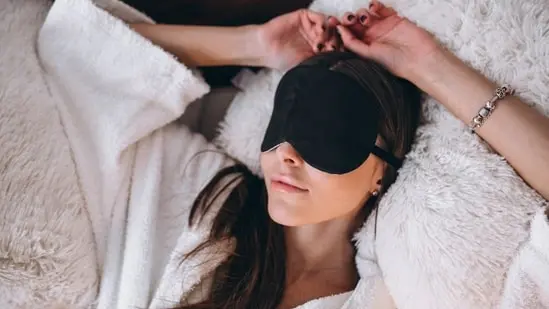
Sleep is the bedrock of entire well-being. Neglecting quality sleep is detrimental to your health, and it shows up in a variety of ways, from poor energy levels, impaired concentration, and weak immunity, and even affects how you age. That's how critical your sleep is for your entire psychological and physiological functioning, so it's wise not to treat it as an afterthought. It's a reminder to put your phones away at night, those extra hours of lazy scrolling before bed throw your system's balance off completely.
Lately, with more conversations around wellness, people are recognising that sleep is indeed an integral part of good health. But while the number of hours you sleep often gets the attention, the quality of sleep also deserves just as much focus.
Addressing the importance of sleep and how to achieve deep sleep, Dr Vassily Eliopoulos - a longevity expert with an MD from Cornell University and Co-Founder and Chief Medical Officer of Longevity Health took to Instagram on November 18.
He highlighted the new trend of sleep-maxxing, where people would talk about quirky hacks to improve their sleep. Further, Dr Vass, also talked about the value of sleep, revealing how it cleans your brain and strengthens neural pathways. “Your brain cleans itself while you sleep. It literally flushes out toxins and repairs connections." But most people never sleep enough or well, for these benefits to actually kick in.
So for deep sleep, Dr Vass recommended these 3 hacks:
1. Keep your room cool
Temperature does influence your sleep quality significantly. Dr Vass encouraged to keep your room cool for better sleep. “Cool your room to 18 to 20 degrees Celsius, that helps to signal your body to drop into deep restorative sleep,” he added.
2. Change light colour
Dr Vass advised to swap blue light for red light 30 minutes before bed. “Swap your blue light for red light, at least for 30 minutes before bed. Blue light tells your brain it's noon, red light says it's nighttime.” Light is directly associated with circadian rhythm, and when you balance the internal clock well, you also sleep better. This means put aside your devices, which emit blue light and turn on the warm, amber lighting in your room, like a calming bedside lamp. Before sleeping, don't keep very bright light sources near you, because then the brain thinks it's still daytime. But amber tones don't lower your sleepiness and signal you that it's bedtime.
3. Nasal breathing
Ever thought about breathing much? No, right? It is pretty much an autonomic activity, more reflex than conscious. But turns out when you practice to become more conscious about the way you breathe, you likely sleep better. Dr Vass suggested opting for nasal breathing, as opposed to mouth breathing, with which many are familiar.
Suggesting how to practice nasal breathing, he shared, “Try nasal breathing- a gentle mouth tape or a nasal dilator can help keep oxygen levels steady, which can lower nighttime stress spikes and help your heart rate variability to climb.”
Additionally, he associated better ageing with sleep quality, as the right kind of recovery is vital in the ageing process. He called sleep a ‘training block,' a special window where the body rests, restores and rebuilds.
Note to readers: This article is for informational purposes only and not a substitute for professional medical advice. It is based on user-generated content from social media. HT.com has not independently verified the claims and does not endorse them.