



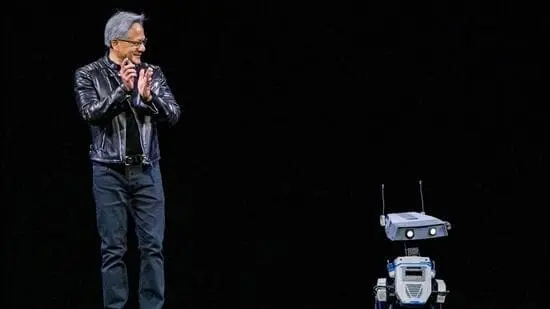
This writer first noticed the leather jacket, casually slung over a chair in a corner office in a deep-tech startup; then at a community event for techies in Bengaluru, she noticed more. Sure, there were worn-out T shirts and ill-fitting jeans, but there were as many smart chinos, sneakers from Comet and leather jackets.
Even though they are a little out of place in Bengaluru’s mild weather, it would appear that the leather jacket, now ubiquitous in certain parts of the city – a trend started by NVIDIA CEO Jensen Huang – is the new tech bro look.
The founder of NVIDIA, one of the most valuable companies on the planet today, has been wearing leather jackets for 20 years, thanks to his daughter’s influence. It’s only now, that he’s become a billionaire (worth $179 billion) that these jackets have become a trend.
Not for everyone, though; only the hardware guys. Tech bros adapting the trend in Silicon Valley and in Bengaluru show a larger trend in technology. If the fashion in the last two decades was inspired by “software CEOs” as a Berkeley founder once called them in an interview, this is the time for the hardware boys. After all, everyone today is way more exposed to deep tech then they were a couple of years ago.
From robotics to satellites, from fast chargers to mechatronics, from data centers to quantum chips, the hardware boys are being brought out of the labs, funded, put on stage and celebrated. They’re the new “it” boys of tech. And they’re wearing leather jackets to differentiate themselves from the software tech bros. Even in Bengaluru.
Through the 1980s in the US, employees and founders of hardware and maintenance working in the Silicon Valley wore formal suits and ties, according to archives held by The Computer History Museum in the US, which has hundreds of prints and negatives containing formally dressed employees.
This changed in the 1990s. Everyone has seen Steve Jobs and his turtleneck sweaters from that decade. It was this understated neutral fashion that was adapted by software founders across the world – neutral coloured turtlenecks or collared tees, blue jeans and New Balance sports shoes (The turtleneck craze never caught on in India. Thanks to the city’s mild weather). Though some might say the dress code that Jobs adopted through his life was to show his dedication to work and building Apple, that’s not true. No one knew the importance of design and how it was perceived by others better than Jobs.
According to Jobs’ biographer, Walter Isaacson, Apple’s founder was inspired when he noticed how at Sony’s office in Japan, employees wore matching clothes, designed by Japanese avant-garde designer Issey Miyake – known for fuss-free, no-nonsense fashion. Jobs approached Miyake for a similar uniform for Apple employees, but the plan was rejected by his American co-workers. Finally, Jobs asked Miyake to build his own personal uniform – a signature style, just like the products he created. Miyake gave Jobs a hundred turtlenecks – enough to last him a lifetime – which he wore till his death.
By the early 2000s, software founders were disrupting not only the way our society communicated but also what it wore on stage. The geek-next-door look of checked flannel shirts with T-shirts and ill-fitting jeans became the fashion. This “revenge of the nerds” look was sported most popularly by Facebook’s Mark Zuckerberg with his sloppy sweatshirts and shapeless jeans.
This was the hedonic era of tech optimism – of social media that would disrupt legacy media and turn societies into democratic utopia (or so everyone believed at the time). The casual, relaxed look of young founders of Silicon Valley was a stark contrast to the staid, stuck-up suits and ties that Wall Street types wore. And thus was sealed the fate of fashion in the tech industry for the next two decades.
Casual hoodies, neutral coloured polo necks, Henley neck shirts (Sam Altman’s signature style) worn with jeans and sneakers. Even the business guys around the geeks kept it classic and casual. Venture capitalists made Patagonia’s vests popular, while nerds going for a meeting wore a jacket over their black T-shirts like Nikhil Kamath of Zerodha often does.
As internet and digital spaces became an integral part of our lives, and tech disruptors turned billionaires, designers started to woo them. The 2010s was the era of stealth wealth. Athleisure wear and quiet luxury designer brands became popular with these casual-style loving tech bros. Tech tycoons sported bespoke clothing from Kiton or Zegna or upmarket streetwear brands such as John Elliott.
Recently, some billionaires have even moved on from their understated look towards a flashier style of luxury. Mark Zuckerberg, has ditched ill-fitting sweatpants for custom-made designer street wear, gold medallions and flashy, luxury watches. It’s almost like the tech industry is coming to finally accept and play their role of power and influence – the very thing they were trying to disrupt.
You must be wondering why there’s little talk of fashion for women in tech. That’s because the industry in India and even in Silicon Valley remains woefully devoid of any female fashion icons. The celebrities, the billionaires in the industry, are all mostly men. The few women founders you see in technology tend to emulate the casual dressing sense of men. They wear jeans and sneakers, or if they’re a VC then a relaxed shirt with angle-length pants and sneakers.
Ever since Nike Air Jordans hit the world running, sneakers have remained the mainstay of tech fashion. It used to be Adidas and New Balance but now limited edition sneakers have become the ultimate status symbol in the technology industry. No matter if you’re a software or a hardware founder that’s one thing you sport – sneakers.
Elon Musk wears high-end brands such as Common Projects while both Google CEO Sundar Pichai and Microsoft CEO Satya Nadella love Lanvin patent leather low-top sneakers. Zuckerberg’s Nike’s Flyknit range is priced at well over a thousand dollars. Bengaluru’s startups run on Bengaluru-grown native limited edition Comets and this writer’s personal favourite , Japanese brand Onitsuka Tiger.
Leather jackets might have taken over from turtlenecks and black-tees, but comfortable, relaxed, limited edition sneakers are here to stay.
(An author and columnist, Shweta Taneja tracks the evolving relationship between science, technology and modern society)