



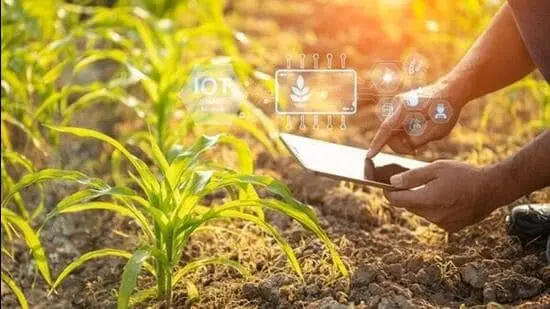
Punjab once led India’s Green Revolution. Today, agriculture stands at another turning point. This time, the driver is not more water, fertiliser and new seed varieties, but better decisions powered by data, precision tools, and artificial intelligence (AI).
Farmers across Punjab are facing a familiar set of pressures: Unpredictable weather, rising input costs, and growing stress on soil and groundwater. The wheat-paddy system is already strained by depletion, soil fatigue, peak-season labour shortages and tight margins. In this reality, small efficiency gains matter, and timely, reliable advice can mean the difference between profit and loss.
AI is proving to be a powerful force capable of improving productivity while promoting sustainability. With the global population approaching 10 billion by 2050 and food demand projected to rise by 70%, pressure on productive states like Punjab will intensify.
AI, in simple terms, is software that learns from patterns in data to make recommendations. In farming, that data can include satellite imagery, local weather forecasts, soil health information, crop growth signals and market prices. Used well, AI helps shift decisions from guesswork to precision; how much to irrigate, when to apply inputs, where pests may emerge, and when to sell.
Smarter farming
Globally, the AI-in-agriculture market is expanding rapidly, signalling a structural move toward smarter farming.
Across India, early pilots suggest measurable benefits when advisories reach farmers in time and in a usable form. Platforms such as Bharat-VISTAAR provide multilingual crop advisories and pest alerts. In Telangana’s Saagu Baagu initiative, chilli growers using AI-enabled advisories reported higher yields, improved prices and reduced chemical use within a season. Similar sowing advisories in Andhra Pradesh have also reported yield gains. Though outside Punjab, these examples show what timely, trusted local information can achieve.
Punjab is already seeing the early shape of this shift. The state’s collaboration with IIT-Ropar is one sign of momentum. At the field level, digital platforms such as CropIn, DeHaat and IFFCO Kisan provide advisories on weather risks, input timing and pest alerts. Meanwhile, precision tools, GPS-enabled tractors, laser land levellers and smart seeders demonstrated by Punjab Agricultural University, Ludhiana, are improving input efficiency and water management.
Drones are beginning to reduce labour pressure during peak seasons, and soil-moisture sensors can help avoid unnecessary irrigation in over-exploited zones.
One of AI’s most immediate promises is reducing losses from pests and disease. These losses quietly drain incomes every year. New phone-based image tools can detect early disease symptoms from a simple photo, enabling targeted spraying instead of blanket pesticide use. Done responsibly, this can cut costs and chemical load while protecting soil health and the environment.
Intelligence improves outcomes
AI can also strengthen farm economics through better market intelligence. Predictive analytics can track mandi trends, estimate likely yields and suggest better selling windows. Even small improvements in timing and price realisation can matter in Punjab’s tight-margin farm economy, especially when debt and input costs are high.
Mechanisation is another area where “intelligence” improves outcomes. Labour shortages during sowing and harvesting seasons are real, and delays can reduce yields. Satellite-guided tractors, AI-assisted transplanters and drone spraying are gradually entering the landscape. The goal is not to replace farmers, but to reduce drudgery, improve timing and make scarce labour more productive.
Yet the biggest challenge is not whether AI tools exist, it is whether they can scale affordably and fairly. Nearly 85% of India’s farmers are smallholders, and many cannot invest individually in advanced equipment. Cooperative ownership models, custom-hiring centres, and targeted subsidies can help small farmers access expensive tools without taking on unmanageable risk.
Design matters as much as technology. Farmers often prefer visual and voice-based guidance over text-heavy apps. Tools that work in simple Punjabi, use voice prompts, and offer short video explainers are more likely to be adopted than complex dashboards. Demonstration plots and farmer-to-farmer learning can also build trust, particularly when advice is shown to work under local conditions.
Prioritise AI training
Policy and institutions can accelerate this transition. Punjab should prioritize AI literacy and digital agriculture training within universities, rural colleges and extension networks.
Krishi Vigyan Kendras can expand digital training, while skill programmes in drone operation, sensor maintenance and agri-data services can create rural jobs alongside farm efficiency.
Finally, AI is only as good as the data behind it. Building reliable agricultural data infrastructure, soil health coverage, weather stations, crop information and market data, will determine whether AI advice is accurate at scale. Standardised, high-quality datasets can help ensure that recommendations are local, practical and trustworthy.
Punjab has led once before. The shift now is from input-intensive to intelligence-intensive farming. If AI tools are made affordable, designed for local farmers, and backed by strong extension support, they can help conserve water, reduce chemical dependence, improve price realisation and make farming more viable for the next generation. [email protected]

The writer is a former professor of physics at Guru Nanak Dev University, Amritsar. Views expressed are personal.