



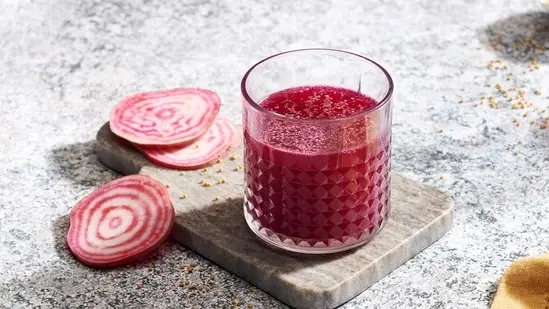
Kanji is a traditional summer drink enjoyed across India. It is a low-calorie health drink full of good bacteria and packed with fibre, antioxidants, and essential vitamins and minerals. While drinking kanji daily is a natural way to enjoy its full benefits, including improved digestion, better hydration, and enhanced immunity, did you know that making it can also be quite easy?
Also Read | Ronit Roy at 60 is one of Bollywood’s fittest stars, proves age is just a number with his 6-pack abs and heavy lifting
On March 4, chef Pankaj Bhadouria, the MasterChef India season 1 winner, took to Instagram to share her refreshing, delicious recipe for beetroot kanji. Sharing the recipe, she wrote, “Say hello to India’s original probiotic drink Kanji! Kanji is a fermented drink made with carrots, black carrots, or beetroots, mustard seeds, spices and hing. It is quite popular in northern India and is made especially around Holi. Nutritionally, kanji is high in antioxidants and good for digestion, too.”
According to MasterChef, the drink takes three to four days to prepare and is best enjoyed cold. The preparation time for her kanji recipe is 20 minutes, and the fermentation time is three to four days.
Ingredients:
Two tbsp rai
One tbsp black mustard seeds
Two to three large carrots, peeled
Two large beetroots peeled
Two litre water
One tsp salt
One tsp black salt
One tsp red chilli powder
Half tsp heeng
Method:
- Grind the rai and black mustard seeds to a fine powder.
- Then, cut the peeled carrots and beetroots into batons.
- Add all the ingredients to a clean glass jar and keep it in the sun to ferment for three to four days.
- Enjoy the kanji when it is fermented!
Health benefits of kanji
According to a July 2019 study published in ScienceDirect, kanji is a naturally fermented drink containing probiotic organisms. The organism identified in kanji was Lactobacillus plantarum. Thus, consumption of kanji might provide beneficial lactic acid bacteria when consumed in an appropriate amount.
Moreover, our traditional cuisine is rich and diverse, offering a window into the functional properties of various fermented foods. With kanji, along with probiotics, you also get an extraordinary source of calcium, fibre, and antioxidants, so it is a win-win.
Note to readers: This article is for informational purposes only and not a substitute for professional medical advice. Always seek the advice of your doctor with any questions about a medical condition.
This report is based on user-generated content from social media. HT.com has not independently verified the claims and does not endorse them.