



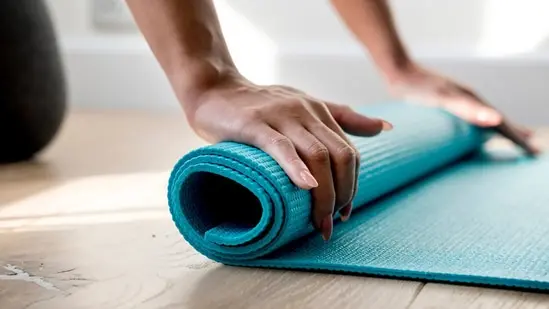
Anti-slip yoga mats can prevent tripping and slipping, which can lead to injuries and muscle strains, whether temporary or long-term. Unlike regular mats, anti-slip surfaces absorb moisture quickly, keeping your grip steady even during intense sessions. Plus, their cushioning ensures comfort, even when you sit or stay on them for extended periods. But do we really need them? The answer is yes, especially if you want to avoid unstable postures and reduce the risk of slipping on hard surfaces.
Dr Akhilesh Yadav, Orthopaedics & Joint Replacement surgeon at Max Super Speciality Hospital, tells Health Shots: "A mat with good grip on both sides provides stability; supports proper posture and balance; and reduces the risk of ligament strain or falls, especially for people with joint pain, weakness, or coordination issues.”
What are anti-slippery yoga mats?
According to the orthopaedic surgeon, anti-slip yoga mats offer grip while you exercise. The top surface provides grip for your hands and feet, while the bottom surface provides floor stability. These types of yoga mats also help you maintain proper joint alignment as you perform movements. They reduce the risk of slipping during weight-bearing poses, which can put pressure on your joints like the knees, wrists, and ankles.
Why do we need this?
Non-slip mats are important for safety addition during yoga or rehabilitative exercises. If the surface is unstable, there is a higher risk of slipping, which can lead to ligament injuries, muscle strain, or even falls. A stable base allows individuals to perform their exercises safely while maintaining proper posture and balance, both of which are essential for preventing musculoskeletal injuries, explains the orthopaedic surgeon.
What to keep in mind before you buy an anti-slip yoga mat?
Yoga mats used for exercise should be made of non-slippery materials to ensure stability and adequate cushioning while exercising. Cushioning protects joints and knees. A mat with a thickness of 4-6 mm provides the ideal balance of comfort and support for yoga and rehabilitative exercises. Natural rubber and TPE (thermoplastic elastomer) are regarded as superior materials due to their durability, grip, and comfort. Good-quality mats also provide effective shock absorption and help distribute body weight evenly, thereby supporting the joints during repeated movements or extended workout sessions.
How to choose?
When selecting a yoga mat, it is important to consider factors such as grip and thickness. If you frequently experience joint pain, choose a slightly thicker mat that can provide extra cushioning and support. It is also important that the surface maintains good traction even during sweaty sessions to ensure better stability and safety.
Maintenance tips for long-lasting grip
- Clean regularly with mild soap or mat spray
- Avoid excessive sun exposure
- Store in a dry place
- Let it air dry after sweaty sessions
Common mistakes to avoid
- Choosing mats only based on price
- Ignoring material quality
- Picking overly thick mats that reduce balance
- Not cleaning the mat (reduces grip over time)
Disclaimer: This article is for informational purposes only and not a substitute for professional medical advice. Always seek the advice of your doctor with any questions about a medical condition. At Hindustan Times, we help you stay up-to-date with the latest trends and products. Hindustan Times has an affiliate partnership, so we may get a part of the revenue when you make a purchase. We shall not be liable for any claim under applicable laws, including but not limited to the Consumer Protection Act, 2019, concerning the products. The products listed in this article are in no particular order of priority.