



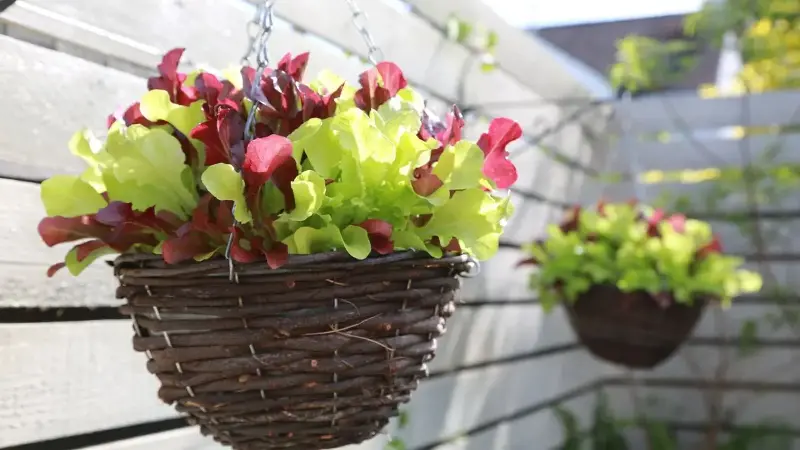
It is dreamy to have spacious beds, but the reality is that urban homes don’t usually come with a kitchen garden. This doesn’t mean you can’t grow vegetables, as you can get harvests from containers, grow bags, and even hanging baskets. Most gardeners may see hanging baskets as reserved for flowers, but let's change that mindset and look at the best vegetables for hanging baskets.
Hanging baskets are a small-space gardener’s friend. Growing vertically not only saves valuable floor space but also raises crops away from ground-dwelling pests. It just takes a few smart decisions to pick the best plants for hanging baskets, such as opting for compact or trailing plants to dazzle as they cascade over the edges.
I was blessed at work to grow crops in vegetable gardens, but I spent many years with a small courtyard at home. I had to get savvy with raised beds and pots, and I also experimented with hanging baskets. I want to help you get great results, so here are my seven best vegetables for hanging baskets, including growing tips and my picks for the top varieties for a patio, deck, or balcony.
1. Cucumbers
Like some other vegetables on this list, you may assume that cucumbers are too large to fit in a hanging basket. Alas, that is not the case. There are compact varieties of cucumber that are perfectly suited to hanging baskets, whose vines can trail over the edges and be a beautiful addition to any small space.
To grow cucumbers in this way, pick a compact plant that produces smaller cucumbers. There are some great varieties to choose from, such as ‘Salad Bush’, ‘Spacemaster’, or ‘Boston Pickling’ that can thrive in a large, sunny hanging basket and give you lots of cucumbers to pick.
Get ‘Salad Bush’ cucumber seeds at Burpee
Get ‘Spacemaster’ cucumber seeds at Amazon
You can either buy young plants to place into your hanging basket (usually only one or two cucumber plants per basket is recommended) or plant cucumber seeds directly into the basket in spring.
Whenever you grow cucumbers in pots or hanging baskets, they need regular watering, especially on hot days, and feeding to keep the plants hydrated and nourished.
Use your fingers when watering plants in containers to assess the moisture levels a few inches under the surface. Or get a soil moisture meter, like this one at Amazon.
2. Lettuce
Lettuce ranks among the best vegetables for hanging baskets for several key reasons: its choice, its harvests, and its lack of pest problems. All in all, it makes growing lettuce in a hanging basket a smart choice in urban spaces.
The best option for hanging baskets is always loose-leaf and cut-and-come-again lettuce varieties. By enjoying regular pickings of the largest, outer leaves, you can get multiple harvests from a small space.
As there is a mix of spring, summer, and fall lettuces to choose from, you can mix it up seasonally, such as transitioning summer hanging baskets for fall. Plus, if you plant lettuce in a hanging basket, you are raising it away from slugs, who perennially love to nibble lettuce, and it is an annual battle with growers to keep leaves intact.
Going for a mix of lettuces in a hanging basket is a good way to enjoy a variety of leaf textures, colors, and flavors.
A blend like this loose-leaf mix from Burpee works well, which features Black-Seeded Simpson, Lollo Rossa, Red Salad Bowl, Royal Oak Leaf, and Salad Bowl seeds all in one pack.
The most important job will be watering. You will need to regularly water lettuces in hanging baskets to prevent them from bolting in warm weather.
3. Peas
An advantage of growing peas in a hanging basket is that they can trail over the edges. This is far simpler than building a vegetable garden trellis or support structure when you grow them in the ground.
The stems can cascade thanks to gravity, not only looking stunning but giving you lots of peas to pick at a nice height for harvesting.
Pick a compact variety, such as ‘Blue Bantam’ or ‘Tom Thumb’, the latter of which grows to around 10 inches in height but produces a bounty of sweet, tender pods with 6-8 peas in under eight weeks from sowing.
You can get packets of ‘Tom Thumb’ seeds at Amazon to sow indoors in early spring or outdoors after the last frosts. Or opt for ‘Blue Bantam’ pea seeds at Burpee for compact plants with early blue-green pods.
Peas don’t like root disturbance when transplanting. If you sow seeds indoors, pop the seeds into recycled toilet rolls or biodegradable pots, like these at Amazon, filled with seed compost.
Come planting time, simply pot the plant and the pot into the soil; you won’t disturb the roots, and you remove the risk of transplant shock.
4. Chili Peppers
If you want to grow something a little spicier in a small space, there are great opportunities to grow chili peppers in hanging baskets. Many compact or trailing types of chili peppers will not only look beautiful but also produce plenty of peppers throughout the summer.
There are lots of chili varieties you can grow in a container or hanging basket. These include Hungarian Hot Wax (Get Hungarian Hot Wax pepper seeds at Burpee), which I have found great success with growing in compact spaces, or the stunning Numex Twilight (Get Numex Twilight pepper seeds at True Leaf Market) that produces fruits that develop from purple to yellow to orange to red as they ripen.
The hanging basket must drain well, and you need to fertilize chilli plants every week or two once they start flowering.
This ensures they have all the essential nutrients they need to continue producing fruits for picking. You can use a liquid tomato feed or a specially formulated chili fertilizer like this one at Amazon.
5. Spinach
Spinach is an easy superfood to grow at home for leaves full of vitamins, minerals, and antioxidants. You can get great spinach harvests by growing the cool-weather plants in an edible hanging basket, whether on its own or mixed with other lettuces or leafy greens.
Spinach prefers cooler weather and is liable to bolt in hot weather. The fast-growing vegetable can be planted in hanging baskets in spring, for a summer harvest, or late summer for a fall harvest. The options are to sow seeds indoors and transplant seedlings, or sow directly into the hanging baskets once the temperatures warm in spring.
Hang the basket in a part-shade spot to prevent it from bolting, or partner it with taller crops to enjoy some shade in the warmer parts of the day. Watering plants is important when you grow spinach in pots or hanging baskets; regular deep watering is required to keep the soil consistently moist.
‘Space’ makes a great spinach for hanging baskets as it grows more compact, upright leaves than other varieties. And it also has tolerance to bolting. You can get packets of ‘Space’ spinach seeds at Botanical Interests to plant in your hanging basket.
6. Swiss Chard
If you are after vegetables for hanging baskets that are as ornamental as they are delicious, you must consider growing Swiss chard. The colorful stems are a mind-blowing addition to any basket, and you can enjoy that rainbow of blooms at eye height.
Some chard varieties are taller than others. My advice is to go for ones that offer a double-whammy of compact stems and vivid stems. ‘Bright Lights’ is always a winner, growing to 12-16 inches and producing mixed stems in colorful shades of yellow, pink, purple, red, and white.
You can get a packet of ‘Bright Light’ Swiss chard seeds at Burpee to brighten up any hanging basket.
Plant Swiss chard seeds indoors in late winter or early spring, and you will have plants to go into your hanging baskets after the last frosts. If you plant earlier in the year, you can start harvesting Swiss chard from early summer onwards.
Harvest it as a cut-and-come-again vegetable, and you’ll be picking stems for many months.
7. Cherry Tomatoes
I know, tomatoes are a fruit, botanically speaking. But they are commonly treated as vegetables, and eaten as vegetables, so they can be included here. In that regard, cherry tomatoes must be considered one of the best vegetables for hanging baskets.
Cherry tomato plants are small, productive, and you can get trailing types that look stunning cascading over the edges of hanging baskets. Plus, as the plants are raised high off the ground, they are at the perfect height for harvesting tomatoes.
A compact plant like this ‘Veranda Red’ from Burpee works well in a hanging basket, or a trailing tomato variety like ‘Tumbling Tom’ (you can get ‘Tumbling Tom’ tomato seeds at Amazon) makes a perfect trailing plant for a hanging basket.
To grow tomatoes in hanging baskets successfully, place them in a warm, sunny spot and keep plants well-watered. Also, fertilize tomatoes weekly with a liquid feed, such as this water-soluble tomato food at Walmart.
As well as there being choices of vegetables for hanging baskets, you can also grow fruit in one. Undoubtedly, the best pick for this is growing strawberries. You can get great harvests by growing trailing types of strawberries in hanging baskets.
It means crops in small spaces, and blemish-free strawberries as they are lifted away from pests that are known to nibble on the fruits.
A set of two hand-painted rustic metal hanging baskets with strong iron hooks and chains. They measure 20.08" W x 30.71" H.
A pack of two hanging basket liners made from 100% natural coconut fiber to retain moisture and promote air circulation.
This premium potting mix is suitable for filling hanging baskets. It contains coconut coir to retain moisture and nutrients to feed plants for up to three months.