



Ground cover plants that thrive on neglect are some of the hardest-working additions you can make to a garden. These low-maintenance spreaders quickly cover bare soil, suppress weeds, and help lock in moisture – all while delivering a carpet of foliage and, in many cases, flowers. And right now, in spring, is an ideal time to plant them, giving roots a chance to establish before the heat and dryness of summer.
In every garden I’ve worked in, from large Italian estates to compact city plots in London, I’ve come to rely on these resilient plants to fill awkward gaps and soften challenging spaces. That said, no plant is entirely maintenance-free. While these varieties will tolerate drought, poor soil and shade, they still benefit from the occasional trim or tidy. Some, like vinca or wild ginger, can also spread more vigorously than expected, so it’s always worth checking what’s suitable for your region.
Below are five of the best ground cover plants I’ve grown and trusted over the years as a professional gardener. From the silver foliage of lamb’s ear softening a stone path to Japanese spurge filling bare spots beneath shrubs, these reliable performers prove that beauty and resilience can go hand in hand.
A Note on Groundcovers You Can Neglect
Once they’re established, these are tough and versatile species that will manage without regular watering, feeding, or attention.
That said, plant with caution. Many of these plants are vigorous, and while they like to be left alone to scramble and crawl and creep, in some regions, they can get out of control, and may be considered invasive ground cover plants to avoid in your region.
1. Wild Ginger
One of the best native ground cover plants to stop weeds has to be wild ginger. Hardy down to zone 3, this tough North American species thrives in dark and damp woodlands across much of Canada and the United States.
You can purchase live wild ginger starter plants from Amazon, which will be fast to establish, and also find wild ginger seeds at Walmart.
In terms of how to grow wild ginger, or Asarum canadense, this plant does best in shady spots and in soils that retain a little bit of moisture.
However, I have known this species to thrive in moist, swamp-like soils, as well as dry, rooted soil under large trees. So wherever you plant it, wild ginger tends to grow just fine.
Be warned, however, that this vigor can be a problem, and if left alone to spread, wild ginger can be considered an invasive plant outside of its native range. For this reason, always do your homework before planting in your yard.
2. Periwinkle
If you are seeking evergreen ground cover plants to fill beds and borders year-round, periwinkle is a fast-growing, reliable choice. Vinca minor and Vinca major form low, spreading mats that are particularly useful on slopes, where their creeping habit helps bind soil and reduce soil erosion.
Exceptionally tough, periwinkle is hardy to zone 4 and thrives in dry shade, though in my experience it will grow almost anywhere – from hot, exposed beds to dark, tricky corners.
Periwinkle can be purchased online at Nature Hills. You can also find live starter periwinkle plants at Amazon.
It spreads by rooting where stems touch the soil, making it ideal for quickly covering large areas. However, this vigorous growth can also be a drawback. In many parts of the eastern US, periwinkle is considered an invasive perennial, so only plant it if you are prepared to manage and contain its spread.
3. Wild geranium
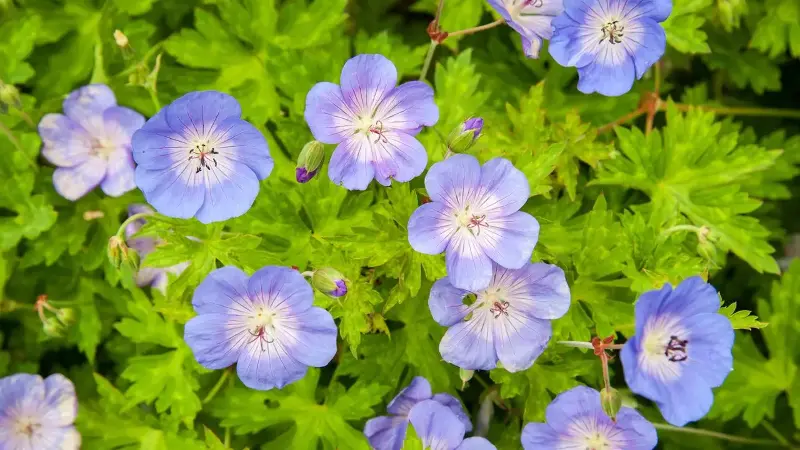
For a hardy geranium variety, you will not find much better than wild geranium. Native to woodlands across North America, wild geraniums, or Geranium maculatum, are some of the easiest ground cover plants to grow.
In terms of how to grow wild geraniums, this hardy and pest-resistant species can be planted from zone 3 to zone 8.
This lilac 'Rozanne' variety of wild geranium from Nature Hills is stunning and has fragrant flowers that bees love.
These are considered perennials that thrive on neglect, and can be left alone to root and spread under large trees and woodland beds.
They are remarkably adaptable to a wide range of climates and situations, growing just fine in both shade and sun. In cooler, northern regions, including zone 3 and 4, I would suggest providing some sunshine, but in southern areas, shady protection is best.
Once settled, wild geraniums will produce masses of pale pink blooms in spring, whilst the attractive palmate foliage will last right through to the first frost.
4. Japanese Spurge
Japanese spurge, or Pachysandra terminalis, is an evergreen ground cover plant I have used in several backyards.
Garden designers love this species, and it is easy to see why. It’s not flashy, but it offers reliable, year-round coverage with thick, waxy green leaves that hold up well in shade.
I think Japanese spurge is one of the best plants for under trees, thriving in a situation where little else survives.
Growing best from zone 4 to zone 8, it is ideal for spaces where you want coverage without fuss.
A word of caution, however, is that Japanese spurge can be slow to get going. Often, it can take a year or two to establish, but with time, it will cover bare soil and fill challenging areas with dense foliage.
Japanese spurge plants are available at Walmart.
As with other plants in this list, Japanese spurge is considered thuggish in the right situation, growing a little too well for low-maintenance gardeners.
In both Washington and Virginia, it is classified as an invasive plant, so check with your local government office before planting in your yard.
5. Lamb's ears
Stachys byzantina (lamb’s ears) is an excellent ground cover for full sun, where it thrives in full sun and copes well with drought once established. Its soft, silvery foliage makes it one of the most reliable and ornamental low-growing plants for dry, exposed areas.
You can find this tactile Stachys byzantina 'Helene Von Stein' at Nature Hills.
I’ve grown it in a Tuscan gravel garden where it crept naturally along the edges of sun-baked paths, thriving in poor, free-draining soil with almost no attention. It’s one of the best silver-foliaged plants for both beauty and resilience, forming dense mats that suppress weeds and tolerate light foot traffic in the right conditions.
Hardy from zones 4–10, lamb's ears also produce upright pink flower spikes in late spring and early summer, although these can be removed if they start to look untidy. Late spring is an ideal time to plant, giving it the full season to establish before peak summer heat.
Tools for Planting Groundcovers
With a long, sharp blade, this hori hori knife is perfectly designed for planting plugs and ground covers in tough spots under trees and shrubs.
Made from wood and strong stainless steel, this neat trowel will help you to complete your weeding and planting jobs with no problem.
These stylish gardening gloves are tough and durable, helpful when pruning and planting ground cover plants in your yard.
When adding ground cover plants that thrive on neglect to your yard, be sure to firm them before deep watering, giving these tough species the best start in your yard. And, in no time at all, they will begin to settle and spread.
Once established, most of these species can be ignored, save for the odd spot of pruning and dividing on an annual basis.
For more plant inspiration, see our guide on the best flowering ground cover plants, and fill your yard with color. Our list has some unusual and bright species to try this year.
And if you love inspiring garden ideas, outdoor advice, and the latest news, why not sign up for our newsletter and get the latest features delivered straight to your inbox.